Home › Etchu Yatsuo › Owara Kaze no Bon
Owara Kaze no Bon
September 1 to 3, every year — next in 2027. To the plaintive tone of the kokyu (bowed lute), dancers in amigasa (woven straw hats) drift down streets lit by paper lanterns. A guide to the three days when Etchu Yatsuo breathes deepest.
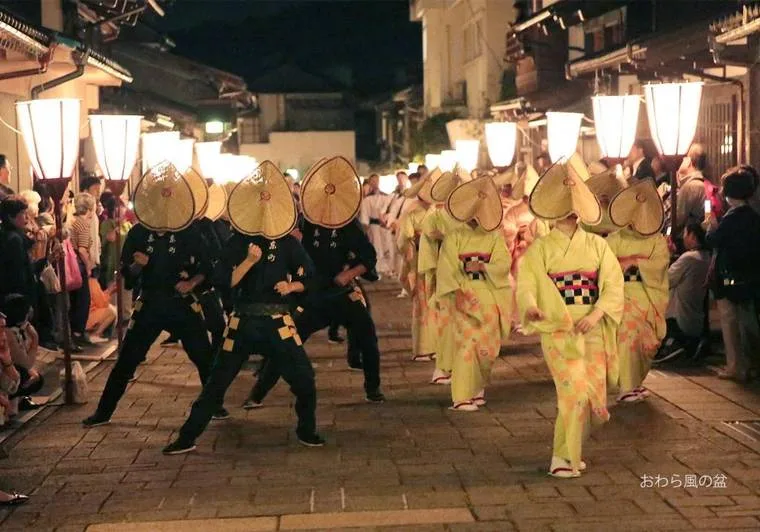
Song and dance flow through the town
At Owara Kaze no Bon, the streets of the old quarter are themselves the stage. Each district, in its own costume, dances its way down the street with shamisen, kokyu and drums — this is machinagashi, the street procession. It is not a festival watched from seats in front of a stage; the songs pass through streets where people live.
After dark, the town takes on an entirely different face. The bonbori lanterns are lit, a kokyu drifts in from somewhere far off, and around a corner you meet a file of amigasa hats. And some say the true festival is the singing that lingers in the quiet lanes late at night, after the crowds have gone.
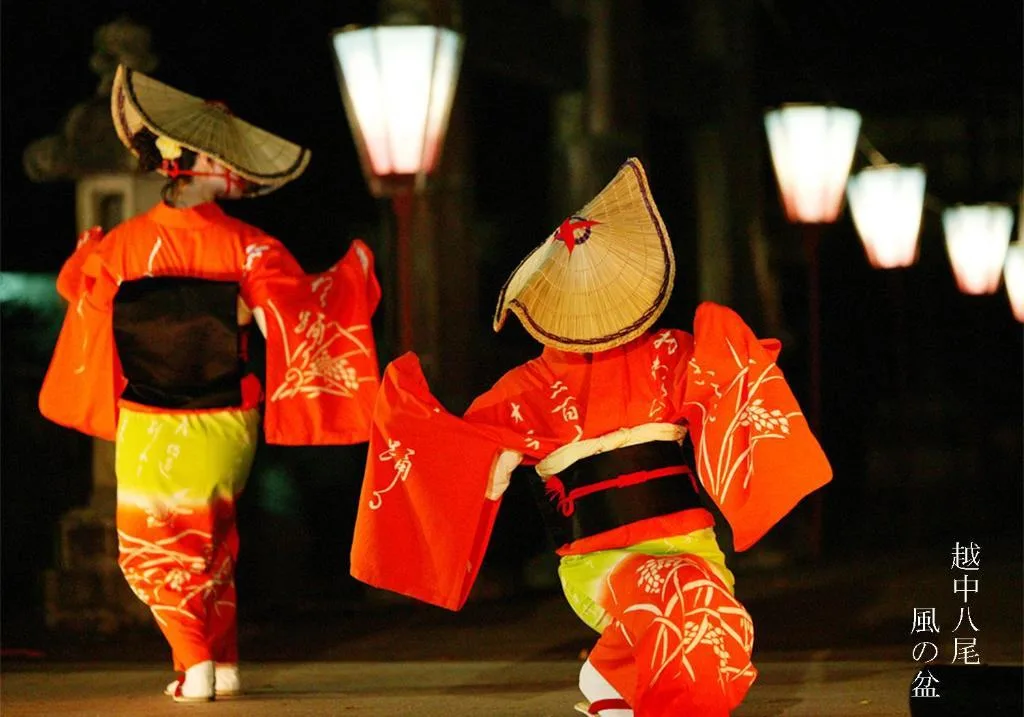
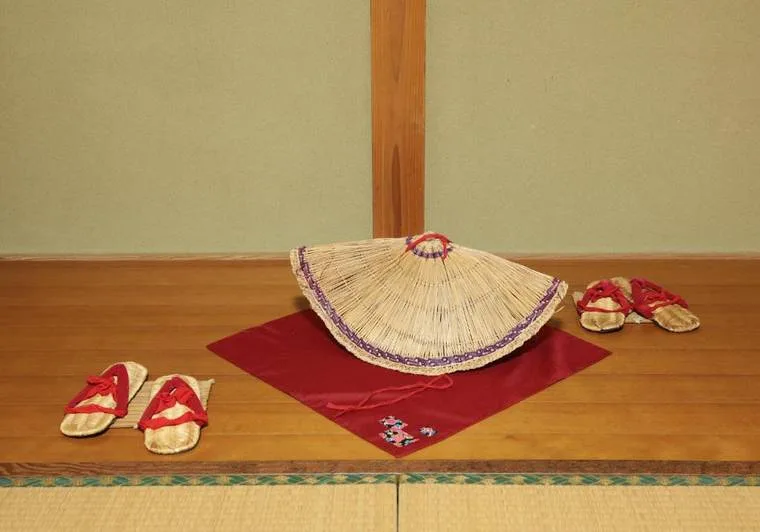
The rhythm of the three nights
- Early evening — the town begins to stir. Watch the preparations at dusk over an early dinner.
- Around 7 p.m. — machinagashi begins in each district, and lights start to sway along the streets.
- Past 9 p.m. — the crowds peak. On the popular streets you move with the throng.
- From 11 p.m. — the real festival begins as the crowds thin. Take in the songs of the quiet lanes to your heart's content.
- Late night — machinagashi continues into the small hours. Whether your bed is within walking distance decides how you spend the hours from here.
In short, this festival looks entirely different depending on whether you day-trip or stay. Push through the crowds to head home — or make one more round of the town after the crowds have gone.
Two bases for staying overnight
Inside the old quarter — Kazenoyado
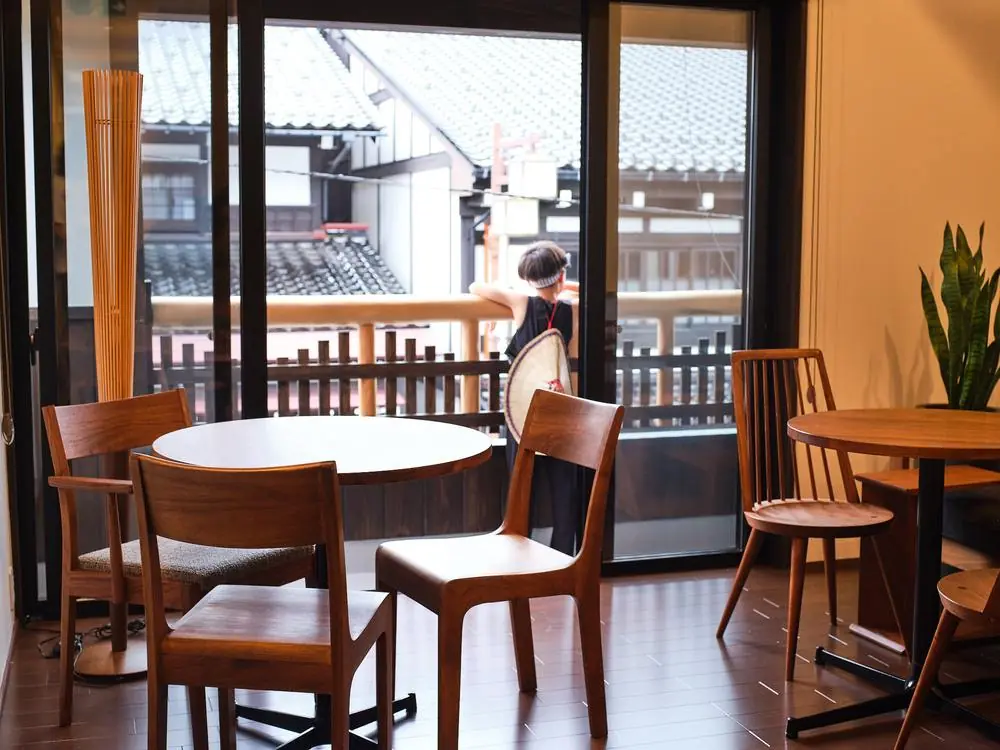
During the three days of Owara, the old quarter is closed to vehicles. Inside that zone, facing a street the machinagashi passes along, stand Kazenoyado Main House and the Annex. The Annex in particular looks down on the Kamishinmachi street from its shared second-floor veranda and lounge — on Owara nights, whichever room you take, the railing becomes a front-row seat. Fall asleep to the sounds of the festival and wake to the quiet stone pavement at dawn — an experience only for those staying in the heart of town.
Park outside the restricted zone and walk — Oyado Kazane
If you come by car, one approach is to base yourself outside the traffic restrictions. Oyado Kazane stands outside the restricted zone, with free parking on site. Leave the car and luggage at the inn, head out to the festival unencumbered, and come back to sleep when you tire. A setup suited to those who want to follow Owara through all three of its late nights.
Good to know
- The festival is held September 1–3 every year. During this period, the old quarter is closed to vehicles.
- Machinagashi shifts with the weather and the flow of the night. This is not a festival that promises "what time, at which street" — which is exactly why a stay that keeps you in town pays off.
- During Owara, both inns offer special rates and book by the room. Kazenoyado opens bookings for the following year each year after that year's Owara ends (from September 4 onward). Oyado Kazane also tends to fill up fast in this season, so checking early is recommended.
Photos courtesy of Kazenoyado (Etchu Yatsuo) and Oyado Kazane (directly partnered inns)
Where to stay for Owara Kaze no Bon: inns & when to book →
Articles
- Owara Kaze no Bon in the Rain: Why the Dancing PausesThe short answer first: rain means a pause, and light rain means waiting. Once you know why a wet kokyu stops the music and how to wait under the eaves, a rainy night at Owara loses its panic.
- Why Owara Dancers Hide Their Faces Under Amigasa HatsThe more the face is hidden, the more eloquent the dance becomes. Where does the eye go when expression disappears beneath the woven straw hat — a reading of the Owara costume through the watcher's gaze.
- Owara Kaze no Bon with Kids: Stay Close, Go EarlyStart from one decision: don't turn it into a late-night endurance test. Dancing before dusk, how to plan now that the eve festival is suspended, a base within walking distance, knowing when to stop — concrete ways to fit the festival to a child's timetable, not the other way around.
- The Kokyu Behind Owara's Melancholy: A Bowed Lute's Unbroken NoteWhy does Owara Kaze no Bon sound so mournful? The answer is the unbroken note of the kokyu (bowed lute). Untangling the melancholy of Yatsuo's night lanes, starting from how it differs from the struck strings of the shamisen.
- No Timetable for the Machinagashi: Two Ways to See Owara Kaze no BonChance encounters with the street procession, or a guaranteed view at the stage? The answer is both — but there is a knack to the order you see them in, and to watching on the narrow slopes.
- Why Owara Kaze no Bon Begins on September 1The answer lies in the old calendar. Learn about nihyaku-toka, the 210th day from the first day of spring, and you begin to see not just the date but where the festival's plaintive tone comes from.
- Driving to Owara Kaze no Bon: Park Outside and WalkOne rule covers everything: park outside the restricted zone and walk. From handling parking information that changes every year to shoes that can manage the stone-paved slopes, a trip by car can be planned from this single line.
- Getting Back After Midnight: Owara Kaze no Bon's Last-Train ProblemOwara Kaze no Bon is deepest late at night, on no timetable — while a commuting itinerary is built backward from the ride home. Three things to decide if you commute, and the one way to dissolve the problem.
- Owara Kaze no Bon: Three Days in September When Yatsuo Becomes Another TownEvery year from September 1 to 3, the cars disappear and the stone-paved streets belong to people on foot. From the preparations of August 31 to the morning after the festival, an hour-by-hour look at a town transformed.
- Why Owara Kaze no Bon Lodging Looks Fully Booked: The Structure Behind ItSearch for a place to stay and all you see is "fully booked." Few inns, dates that never move, and an order in which rooms fill — reading the reasons from the inns' side, and working backward to how to move.
- Owara Kaze no Bon Eve Festival Suspended: Which Night Should a First-Timer Choose?The late-August eve festival has been suspended for the time being due to a shortage of performers, organizers have announced. So where should a first-time visitor begin? A look at the quiet entry points that remain within the main three days.
- Late-Night Owara Kaze no Bon: Why You Should Stay OvernightWhat happens in Yatsuo at 11 p.m., after the tour buses have gone? Only one condition decides who gets to witness the dancing of those hours — and it comes down to distance.
- The Morning After Owara: Yatsuo's 362 Days of QuietThis is not a piece about avoiding the crowds — quite the opposite. It is about the 362 days that begin on the morning of September 4, quiet enough to hear the wind, and why they are the real Yatsuo.
- Walk Suwamachi Street in the Morning — Yatsuo's Stone-Paved RoadThis is not a road you visit to check a plaque on a list of Japan's top 100. On an empty early morning, dew-wet paving stones and a wide sky free of power lines — the same street changes its worth with the hour you walk it.
- Yatsuo Hikiyama Festival: Floats That Turn to Lanterns at NightOwara is not Yatsuo's only festival. Every year on May 3, hikiyama floats of carving and lacquer transform at dusk into mountains of lantern light — here is how to watch a festival that changes its face twice in one day.
- Why Yatsuo, Toyama Became a Town of SlopesThe answer lies in the river terrace carved out by the Ida River. Trace the reasons a town was set on top of long stone walls, and the slopes turn out to be not a nuisance but the very framework of Yatsuo.
- Silkworm Eggs and Washi: The Wealth Behind Yatsuo's FestivalsHikiyama floats of carving and lacquer, and Owara refined to the last degree — festivals almost too lavish for a small mountain town. Their wealth came from two unexpected trades: silkworm eggs and paper.