Home › Etchu Yatsuo › Owara Kaze no Bon › Why Owara Dancers Hide Their Faces Under Amigasa Hats
Why Owara Dancers Hide Their Faces Under Amigasa Hats
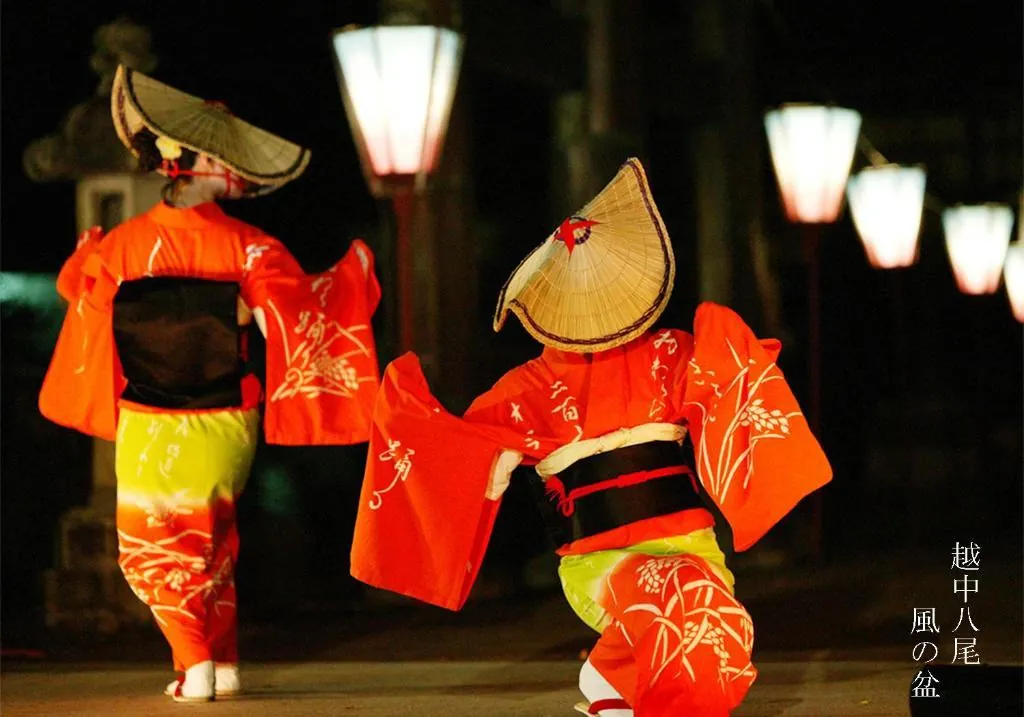
Choosing to erase the face
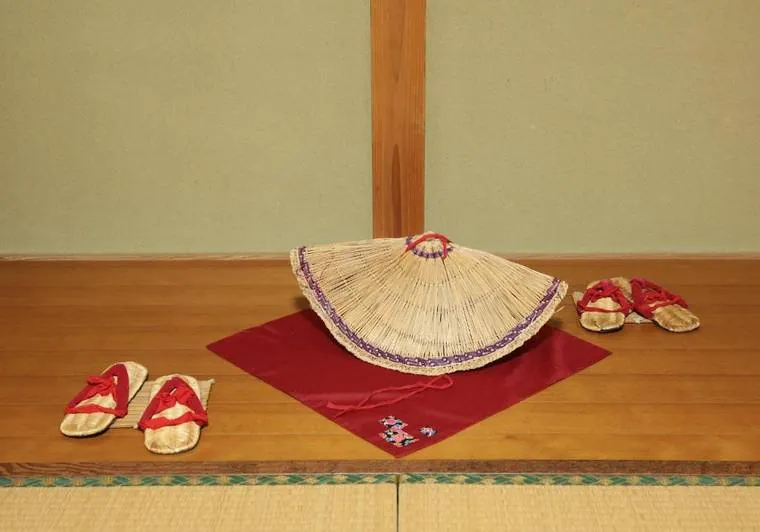
Why do Owara dancers wear their amigasa (woven straw hats) so low? The hats are tilted until they cover the eyes, so from the street a dancer's expression is almost invisible. The brim comes down to eye level — deep enough, it seems, to limit even the dancer's own view to the ground near their feet. In most dances, smiles and glances are part of the expression. Owara deliberately gives them up.
When the face cannot be seen, the watcher's eye goes looking for somewhere to rest. And it is drawn, naturally, to the fingertips, the wrists, the movement of the hips. The line of a hand extending out from under the shadow cast by the brim. Even the angle of the lowered head is quietly matched down the whole line of dancers. Because you cannot tell who is dancing, only the dance itself remains. The amigasa works as a device that makes the gestures the protagonist by making the dancer anonymous.
Matching dress that differs town by town
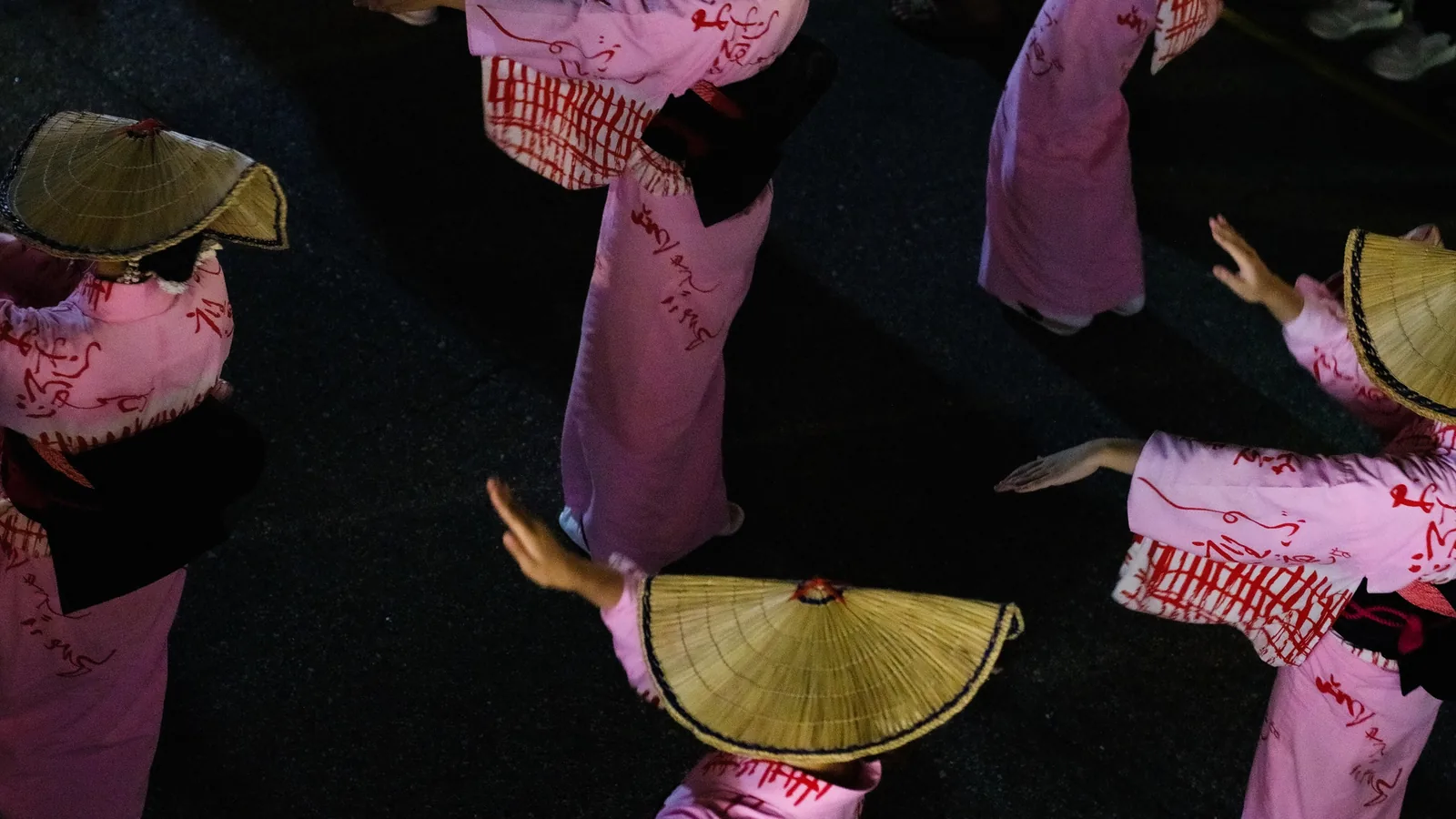
The costume, meanwhile, speaks not for the individual but for the town. Dress is matched within each town (district): the women in identical yukata with obi sashes, the men in happi coats. Colors and patterns differ from town to town, and one look at the dress tells you which town a dancer belongs to. Hide the face to erase the individual; wear matching dress to declare the town — the Owara costume is built on these two promises.
Compare a few machinagashi (street processions) and you notice that the towns differ not only in the colors and patterns of their dress but in the timing and phrasing of the dance itself. Those differences show far better in the quiet hours than in the evening crowds.
How the costume reads also changes with the hour. Under daylight the colors and patterns of the yukata stand out clearly; at night, in the glow of the paper lanterns (bonbori), the shadow of the amigasa deepens, the patterns sink into the dark, and only the white fingertips float free. On a street where expression, the usual protagonist, has been erased, what cannot be seen takes the lead. That is the amigasa's answer.
Frequently asked questions
- Why do Owara dancers wear their amigasa hats so low?
- To make the dancer anonymous and the gestures the protagonist. With the brim tilted down to eye level the face is almost invisible, and the watcher's eye is drawn instead to the fingertips, the wrists and the movement of the hips.
- Do Owara costumes differ from town to town?
- Yes — dress is matched within each town (district), and the colors and patterns differ from one town to the next. The women wear identical yukata with obi sashes and the men happi coats, so one look tells you which town a dancer belongs to.
- How does the Owara costume look different by day and by night?
- In daylight the colors and patterns of the yukata stand out; at night, in the glow of the paper lanterns, the shadow of the amigasa deepens, the patterns sink into the dark, and only the white fingertips float free. The differences between towns show better in the quiet hours than in the evening crowds.