Home › Etchu Yatsuo › Owara Kaze no Bon › No Timetable for the Machinagashi: Two Ways to See Owara Kaze no Bon
No Timetable for the Machinagashi: Two Ways to See Owara Kaze no Bon
The short answer: see both, and the stage first
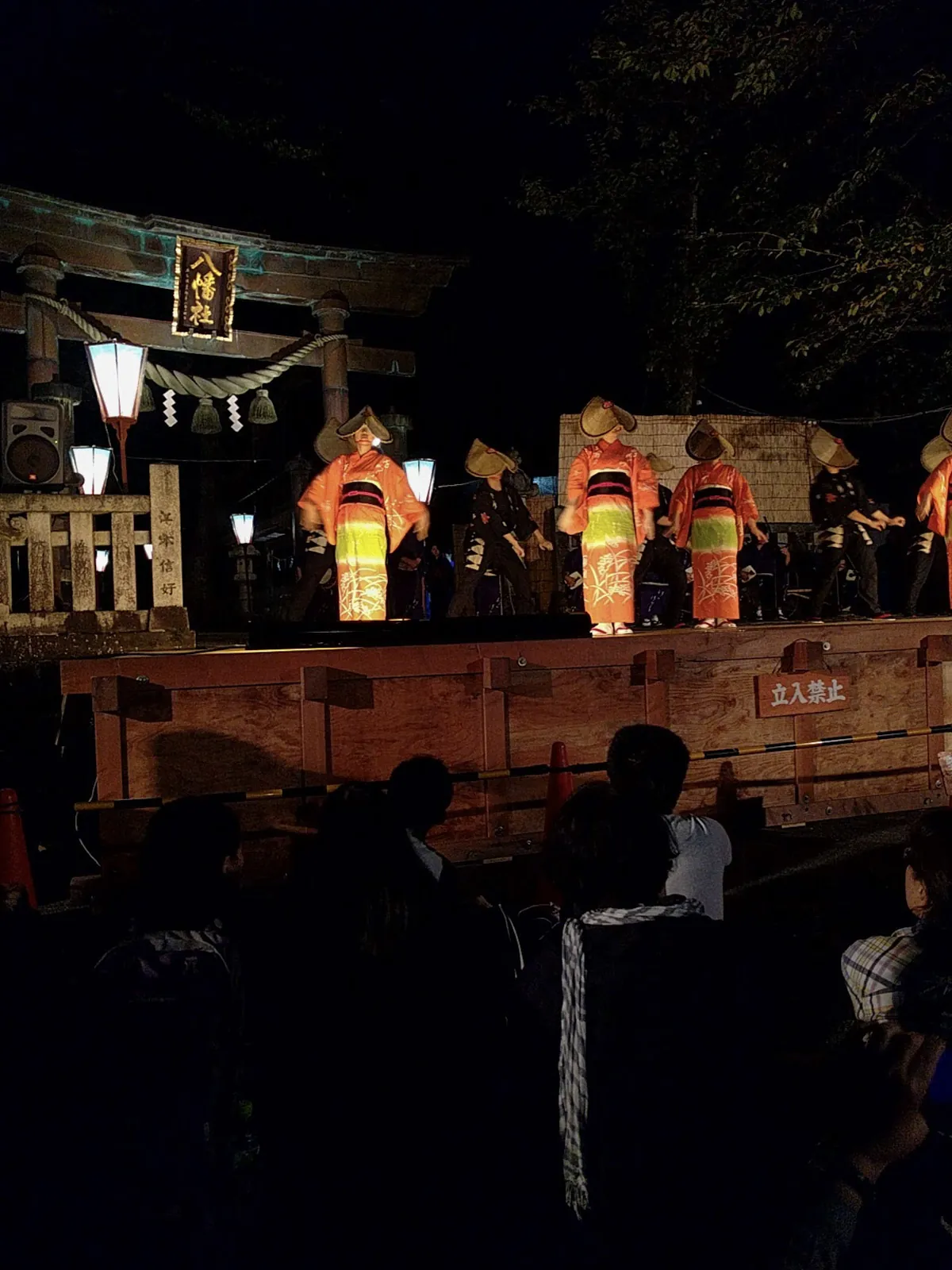
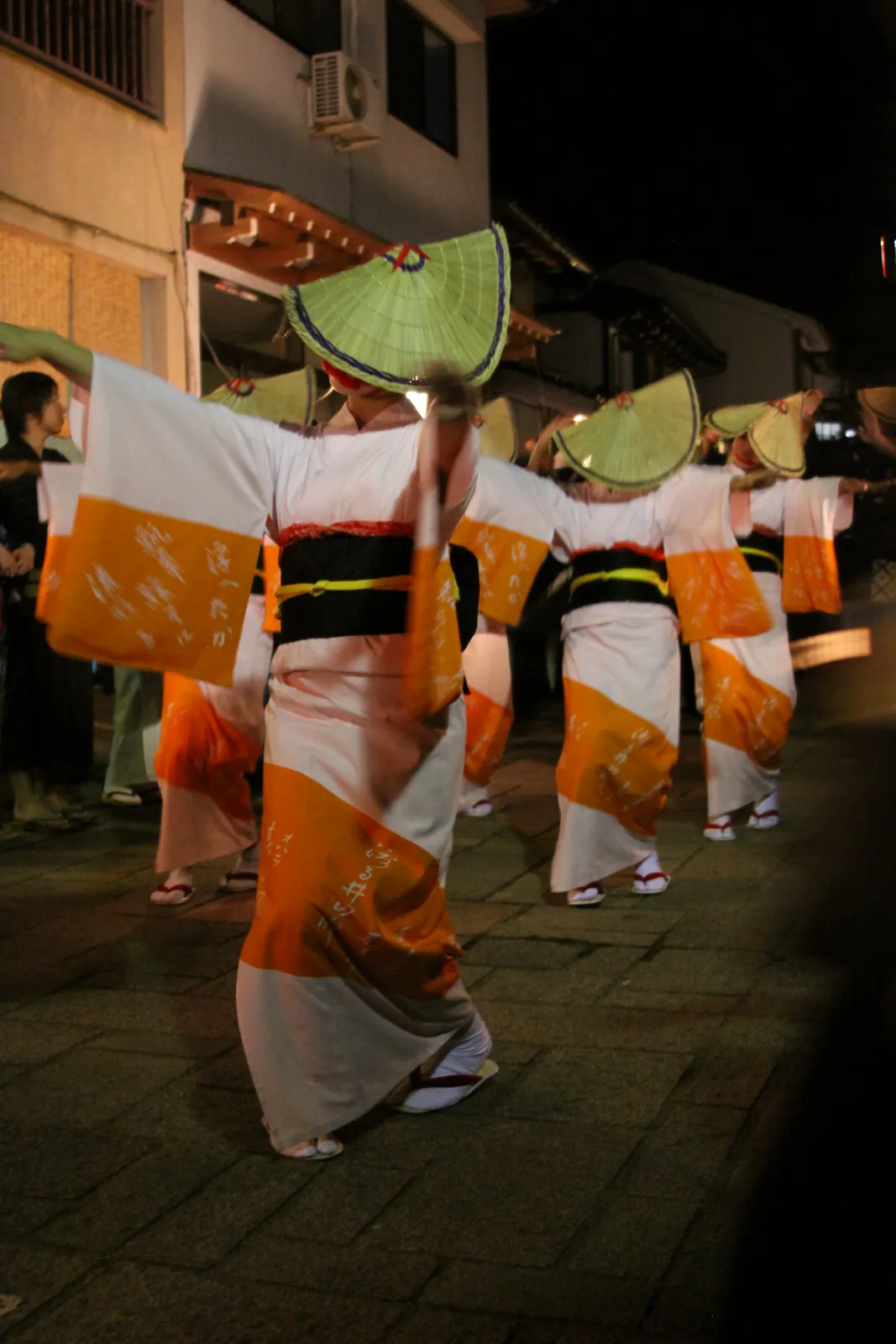
There are two ways to see Owara Kaze no Bon: the machinagashi (street procession), in which the dancers and the musicians known as jikata move through the streets, and the staged performances presented at set venues. If you are torn between them, the answer is to see both — and if this is your first Owara, seeing a stage performance first makes the evening much easier to plan.
The machinagashi is unpredictable by nature
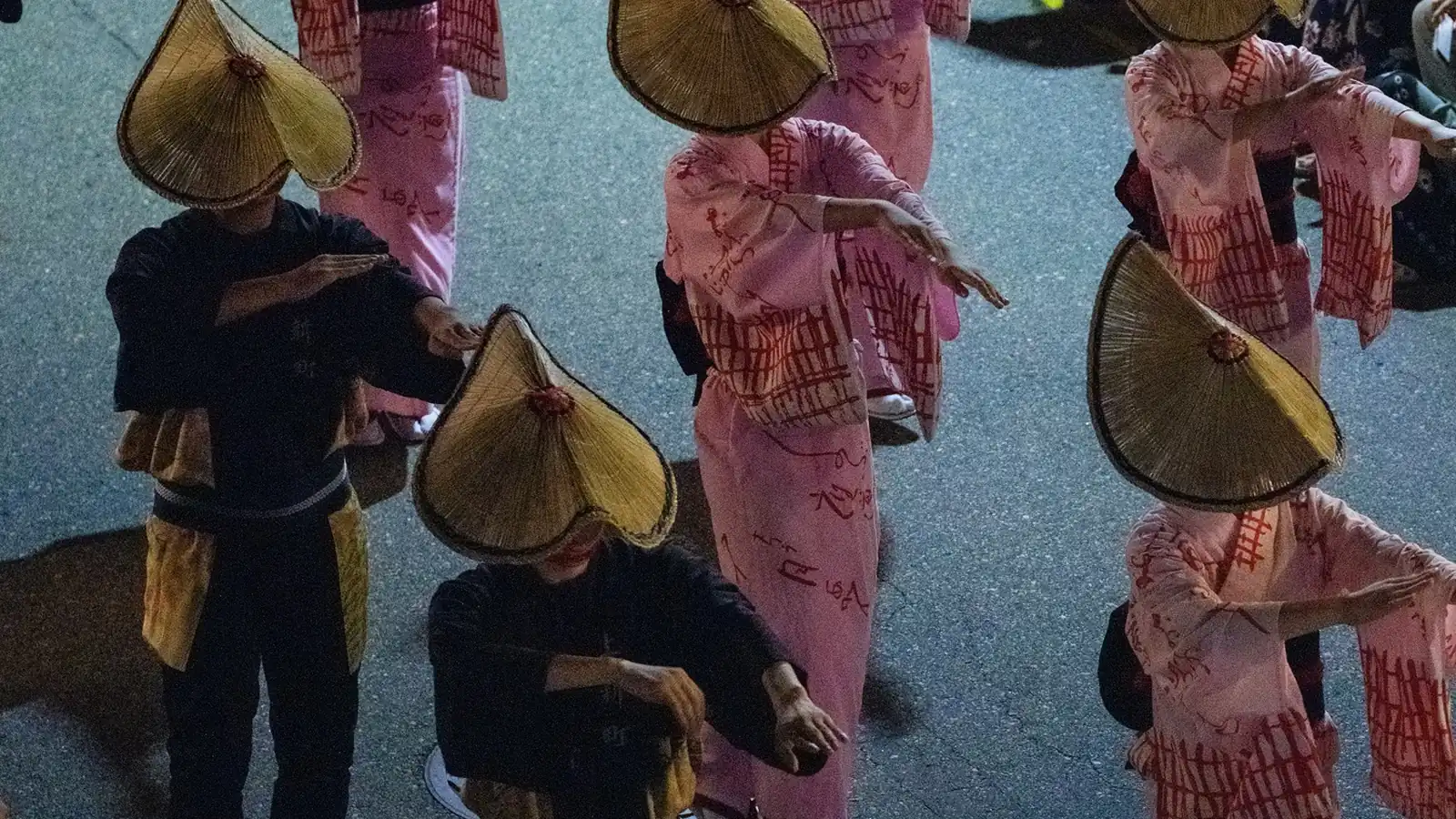
The machinagashi has no timetable. It is hard to know when or on which street it will begin; you may turn a corner and walk straight into the sound of a kokyu (bowed lute), or wander for a while without meeting it at all. But this is not a flaw. A dance drifting down an everyday street, against a backdrop of stone paving and latticed houses, is a scene that can only be had as a chance encounter. Unpredictability is not the machinagashi's weakness — it is the very substance of it.
The stage, on the other hand, lets you settle in at a fixed spot. Changes of formation and the overall structure of the dance are far easier to follow from a stage than in fragments glimpsed through a crowd. Learn the shape of the dance at a stage performance first, and when you meet the machinagashi in the streets at night you will begin to see the details — the turn of a dancer's fingertips, the shared breathing of the line. And when a phrase of song you learned at the stage drifts unexpectedly out of a late-night alley, it will stop you where you stand. The two are not separate programs but two faces of the same festival.
A few points for each
- For the machinagashi, trust your ears over a map: walk toward the distant sound of the kokyu
- On the narrow slopes, do not stop and surround the dancers — keep moving with the procession as you watch
- Stage performances are a sure thing, so they draw crowds; allow plenty of time
- Do not fret if you end up behind a wall of onlookers. The night is long, and there will be more than one chance
If you want it all, though, there is one piece of arithmetic to keep in mind: both in a single night is a rush. With two nights, you can give each one its own.
Frequently asked questions
- What time and where does the Owara machinagashi start?
- There is no set time or place — the machinagashi has no timetable, and it is hard to know when or on which street it will begin. Trust your ears over a map and walk toward the distant sound of the kokyu.
- Should I watch the machinagashi or the stage performances at Owara Kaze no Bon?
- See both — and if it is your first Owara, see a stage performance first. Learn the shape of the dance on stage and you will notice the details, from the turn of the fingertips to the shared breathing of the line, when you meet the machinagashi in the streets at night.
- Can you see both the machinagashi and the stage performances in one night?
- Both in a single night is a rush; with two nights, you can give each its own. Stage performances draw crowds, so allow plenty of time, and do not fret if you end up behind onlookers at the machinagashi — the night is long.