Home › Etchu Yatsuo › Owara Kaze no Bon › The Kokyu Behind Owara's Melancholy: A Bowed Lute's Unbroken Note
The Kokyu Behind Owara's Melancholy: A Bowed Lute's Unbroken Note
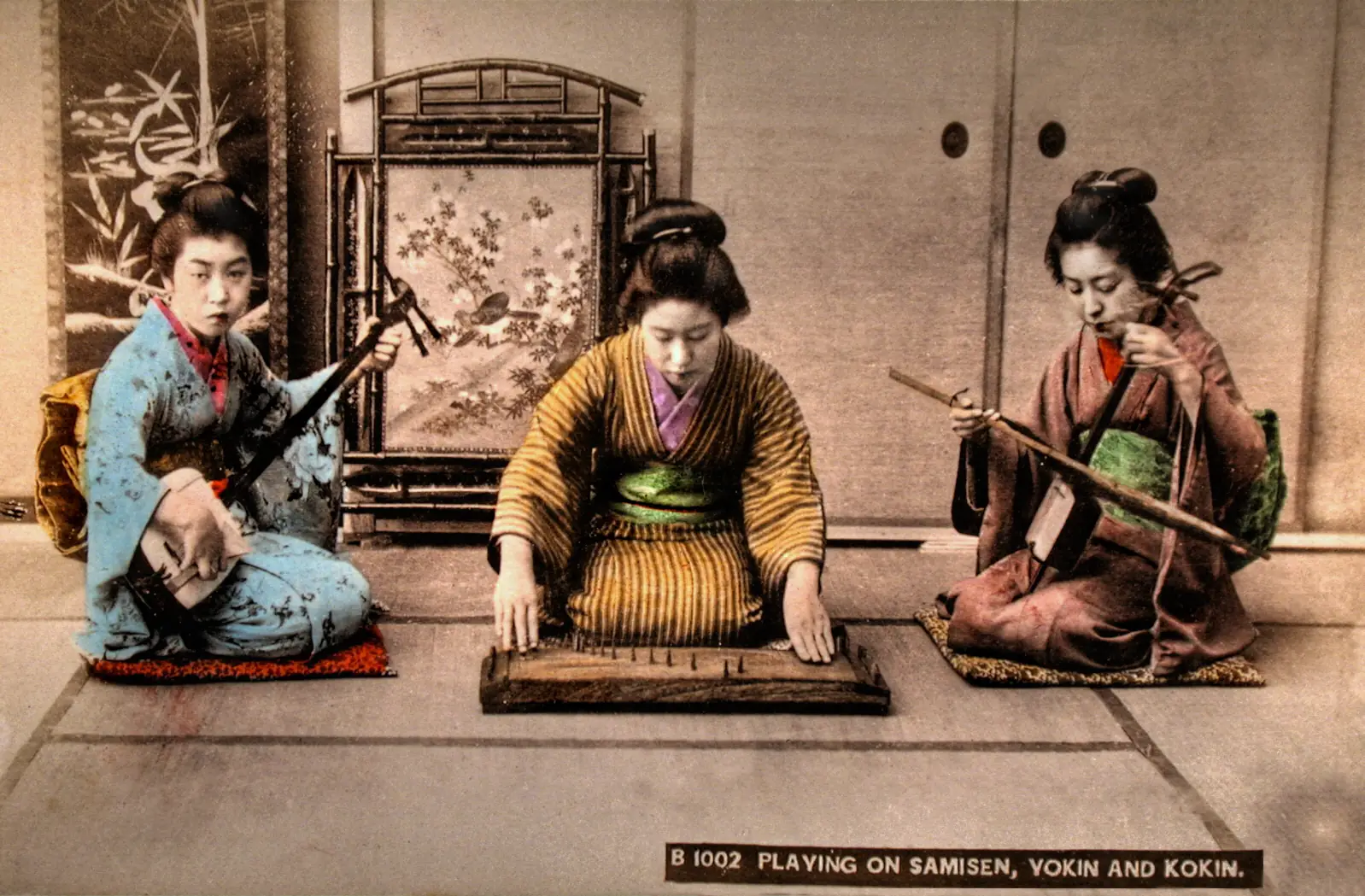
The Sadness Comes from a Sound That Never Breaks
Why does Owara sound so sorrowful? It is not because of the singing, nor the paper lanterns (bonbori) at night. The answer is the kokyu (bowed lute) — and, above all, the fact that this instrument's sound never breaks off.
The shamisen is a struck instrument: its strings are hit with a plectrum, loudest at the instant they sound and fading from there. Its notes have clear outlines, well suited to marking rhythm. The kokyu looks much like a shamisen, but it is played in an entirely different way — its strings are stroked continuously with a bow, on the same principle as a violin. As long as the bow keeps moving, the note does not decay; it becomes one long, sustained breath of sound.
Over the beat laid down by drum and shamisen, this unbroken sound settles in a slow layer. A line of sound drifting over a music of points. That plaintive tone — half sobbing, half wind — is created first of all by this structure of the sound, before any sadness in the melody.
In the Lanes, the Sound Arrives Before the Dancers
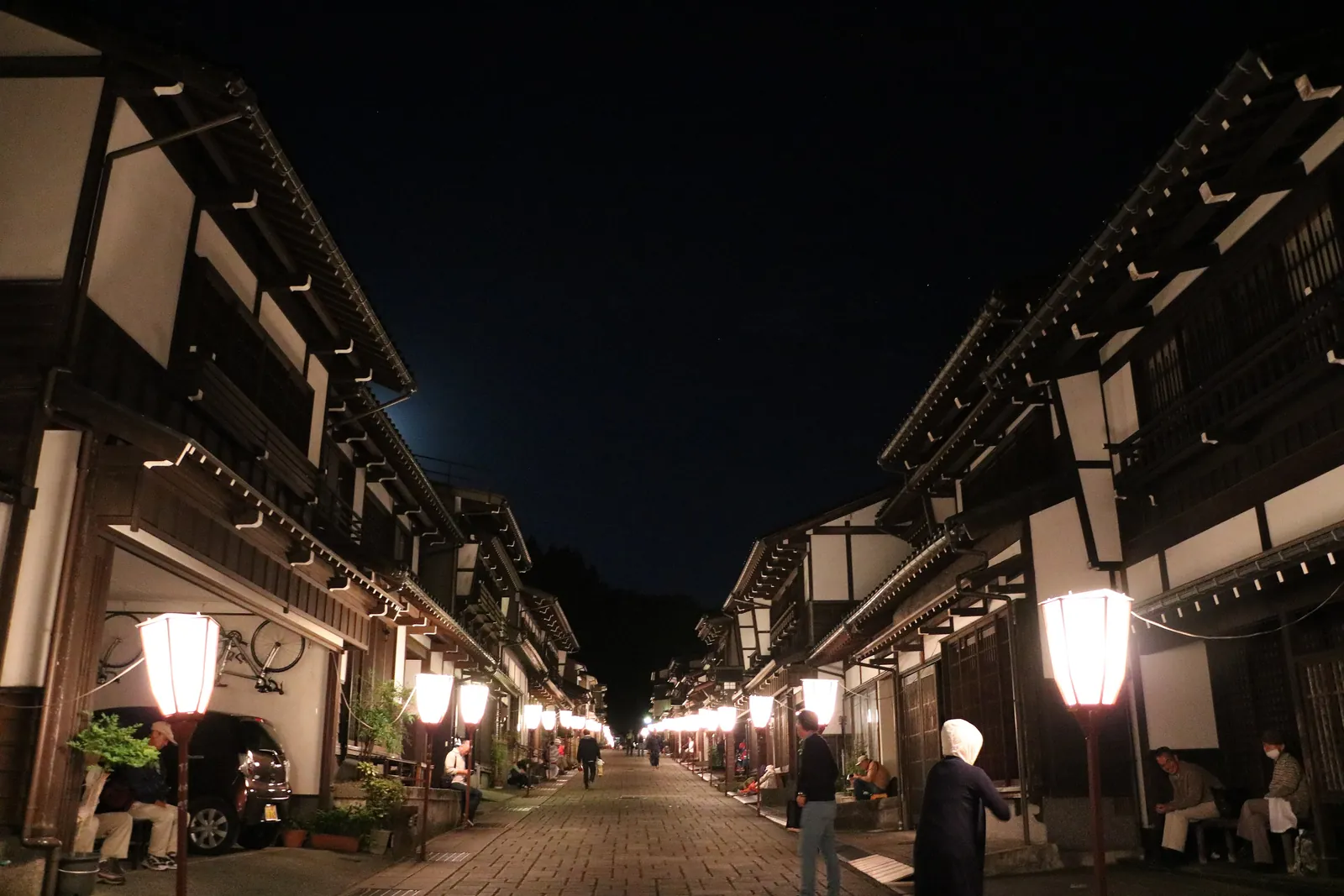
Because it never breaks, the sustained note carries far. Walking through Yatsuo at night, you may find the sound of the kokyu turning the corner and reaching you before a single figure comes into view. In the narrow streets squeezed between stone-paved slopes and storehouse walls, it is hard to tell where a sound is coming from, and you walk on unsure whether it is near or far. You climb a slope by ear until at last you come upon the line of amigasa (woven straw hats) — encounters with the machinagashi (street procession) usually happen in exactly this order.
Note that the kokyu is vulnerable to rain and humidity, and when rain falls the playing stops to protect the instruments. Whether you meet the live sound depends on that night's weather and on chance. All the more reason why the moment the tremor of the strings reaches you directly from the darkness just ahead becomes a memory no recording can replace. Owara's melancholy is not something you search out and find; it is something that comes to you, out of the night streets.