Home › Etchu Yatsuo › Owara Kaze no Bon › Owara Kaze no Bon: Three Days in September When Yatsuo Becomes Another Town
Owara Kaze no Bon: Three Days in September When Yatsuo Becomes Another Town
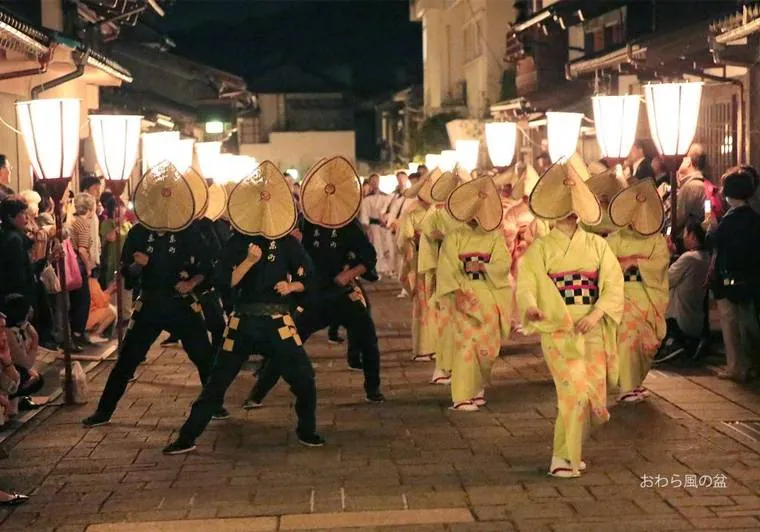
August 31: an evening of paper lanterns
At dusk on August 31, paper lanterns (bonbori) line the slopes of Yatsuo, and under the eaves the lights are being made ready. There is no festival music yet — though from deep inside a latticed house you may catch the sound of shamisen being tuned together. Walk the stone-paved streets and you can feel the whole town quietly steadying its breath. For the next three days, this small town in the hills will show the most different face it wears all year.
September 1: the cars vanish and sound fills the streets
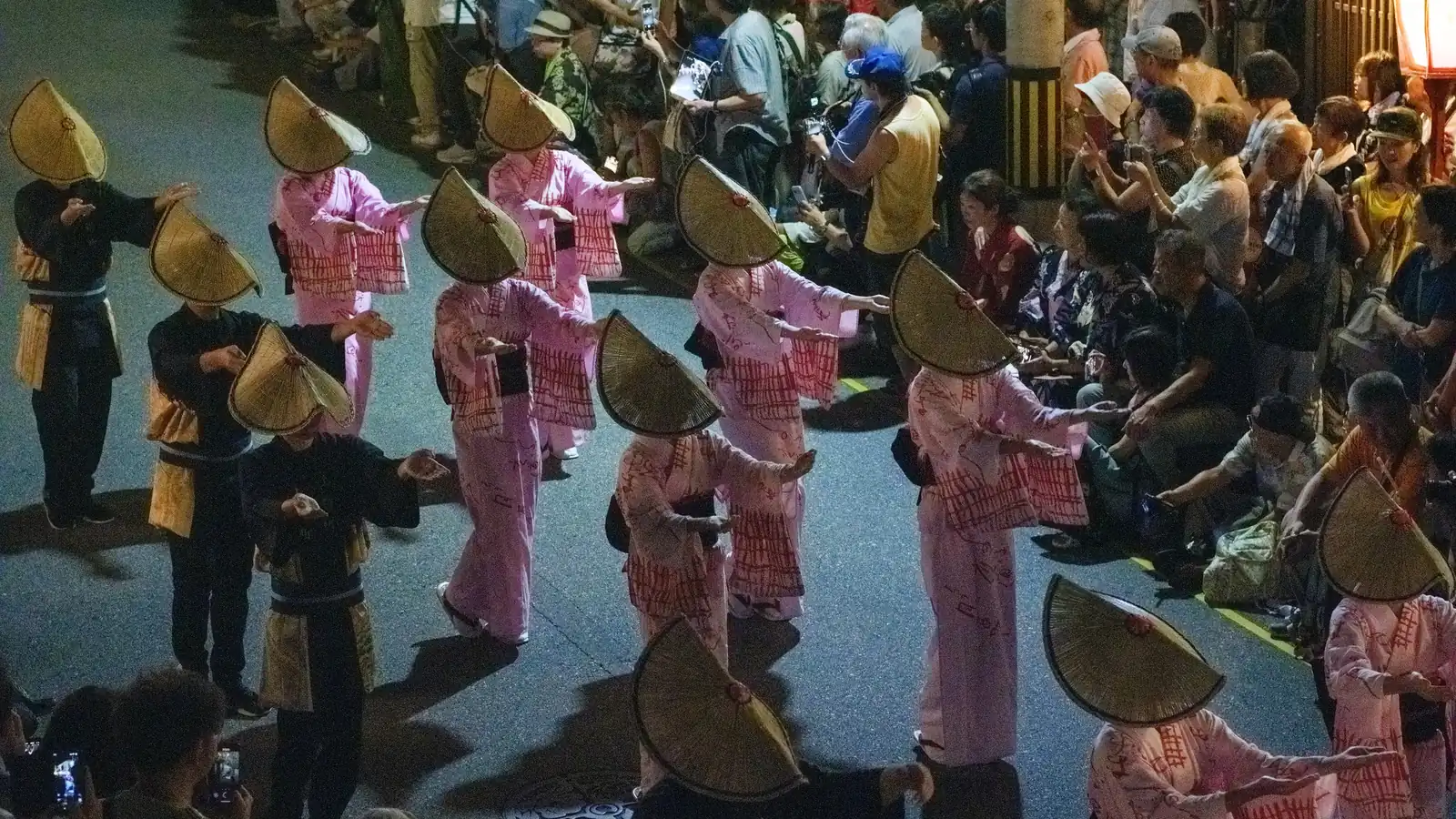
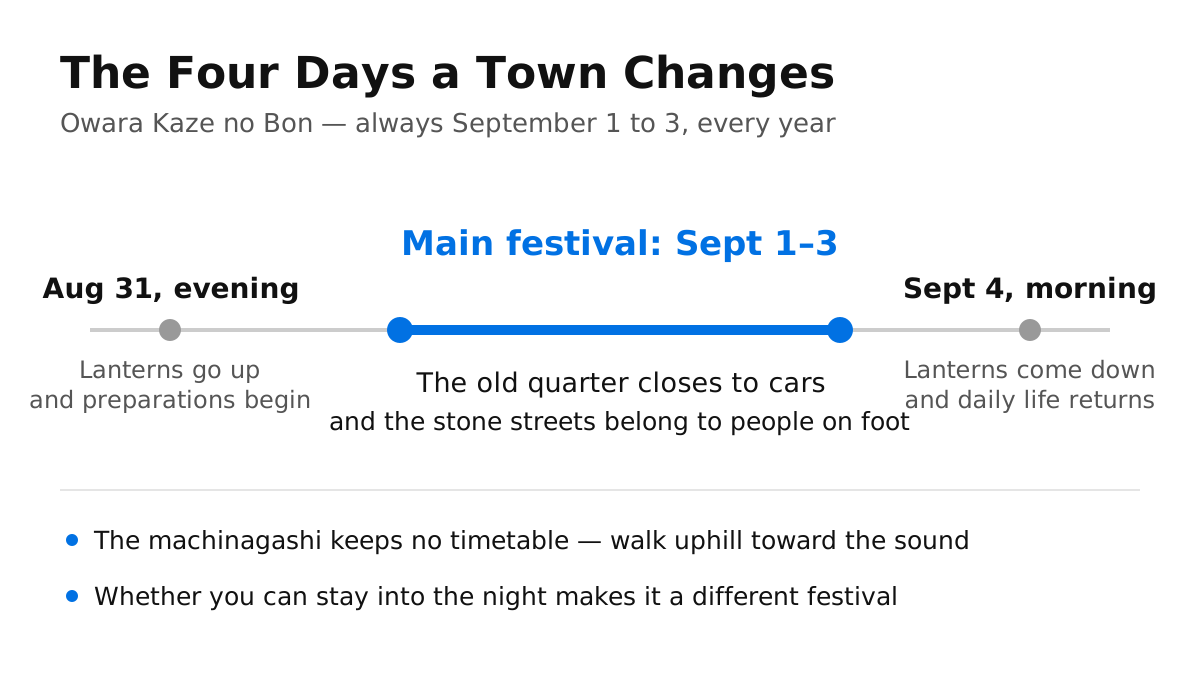
Owara Kaze no Bon runs every year from September 1 to 3; the dates never move. For those three days, the old town is closed to vehicles, and the stone-paved slopes become a space for people on foot alone. Down the middle of streets that usually carry cars, people walk slowly, stop, and walk on. Simply changing how the streets are used changes how time itself flows through the town.
After dark, lantern light falls on the paving stones and layers of sound rise up: the low beat of drums, the ticking rhythm of shamisen, the singers' voices — and above them all, the thin, unbroken line of the kokyu (bowed lute). The machinagashi (street procession) has no timetable, and whether you will meet a line of dancers in amigasa (woven straw hats) around the next corner is something you can only find out by walking. Sometimes the sound reaches you from far off before you see anyone at all. Climbing the slope toward the music — that is how these three days are meant to be walked.
The song is Etchu Owara Bushi, carried by eleven neighborhoods
The song sung at Owara is Etchu Owara Bushi. Accompanying the lines of dancers are the musicians known as jikata: the singers' voices joined by shamisen, kokyu, and drums. Without this song and this music, the procession does not take a single step.
And Owara is not one single thing. It is carried by eleven neighborhoods (branches) in and around the old town, each processing along its own streets in its own attire. The colors and patterns of the yukata and happi coats are coordinated by neighborhood, so a glance at the costumes tells you whose procession you have met. The song is the same, but each neighborhood's procession has an expression subtly its own. How many neighborhoods' Owara you encounter in three days depends on how you walk.
The morning of September 4: the town returns to itself
As the third night deepens, the town begins its slow return to quiet. By the next morning the lanterns have come down, and the streets fill again with the everyday sounds of school runs and shopping errands. All those crowds, all that sound, recede without a trace. It is precisely because this festival appears for only three days and then vanishes that its intensity, while it lasts, stands out so sharply.
You can watch the evening crowds and head home, or stay to see the stillness after the crowds have gone. Whether or not you can remain into the night makes this, in effect, two different festivals.
Frequently asked questions
- When is Owara Kaze no Bon held?
- Every year from September 1 to 3, and the dates never move. For those three days the old town is closed to vehicles, and the stone-paved slopes belong to people on foot alone.
- What time does the machinagashi street procession start at Owara Kaze no Bon?
- The machinagashi has no timetable. Layers of sound rise once the bonbori lanterns light the paving stones after dark, but whether you meet a line of dancers in amigasa around the next corner is something you can only find out by walking.
- What song is sung at Owara Kaze no Bon?
- The song is Etchu Owara Bushi, carried by the musicians known as jikata who accompany the dancers with voice, shamisen, kokyu and drums. It is performed by eleven neighborhoods of the old town and its surroundings.