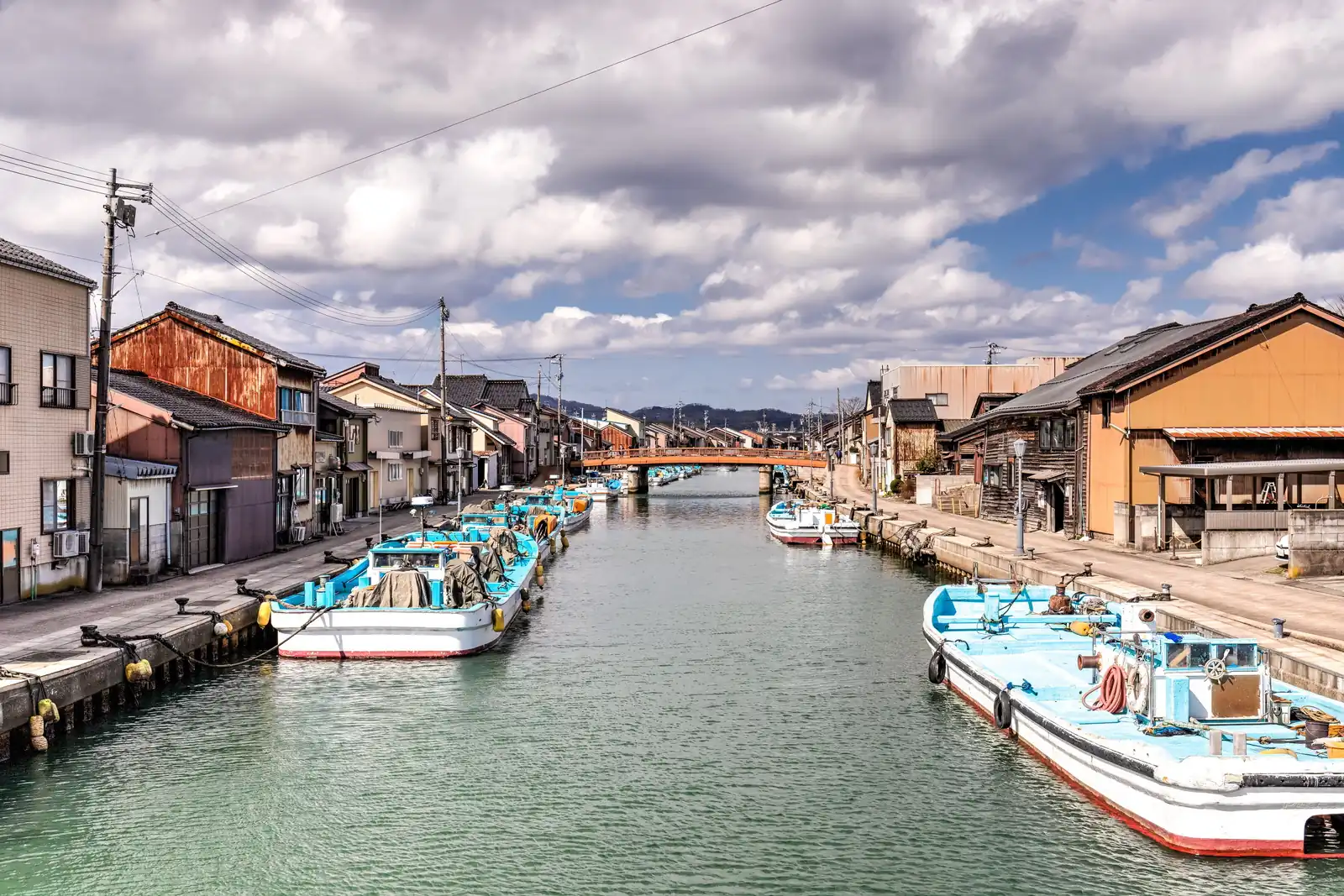
Dusk on the Uchikawa. From the middle of a bridge you look down at the water: fishing boats moored bow to stern along both banks, and on the surface, the latticed houses and the last embers of the sky. A boat comes home, the reflected town sways slowly, then settles again. This is Uchikawa, in the Shinminato district of Imizu — and to savor this waterside hour, you need no itinerary.
A town where fishing boats park in front of the houses
What sets Uchikawa decisively apart from other scenic waterfronts is that it is still a working fishing harbor. The boats along both banks are not scenery arranged for visitors; they are the daily reality of the fishermen. Imagine a street where what is parked in front of each house is not a car but a fishing boat, and you have the makings of this town. The river itself is brackish, fresh water meeting the sea, and the smell of salt reaches you up on the bridges. This working landscape is what people call Japan's "Venice" — but before any nickname about a city of water, this is first of all a river with a job to do. That is the true source of the place's beauty.
Cross a bridge again, and the town changes its face
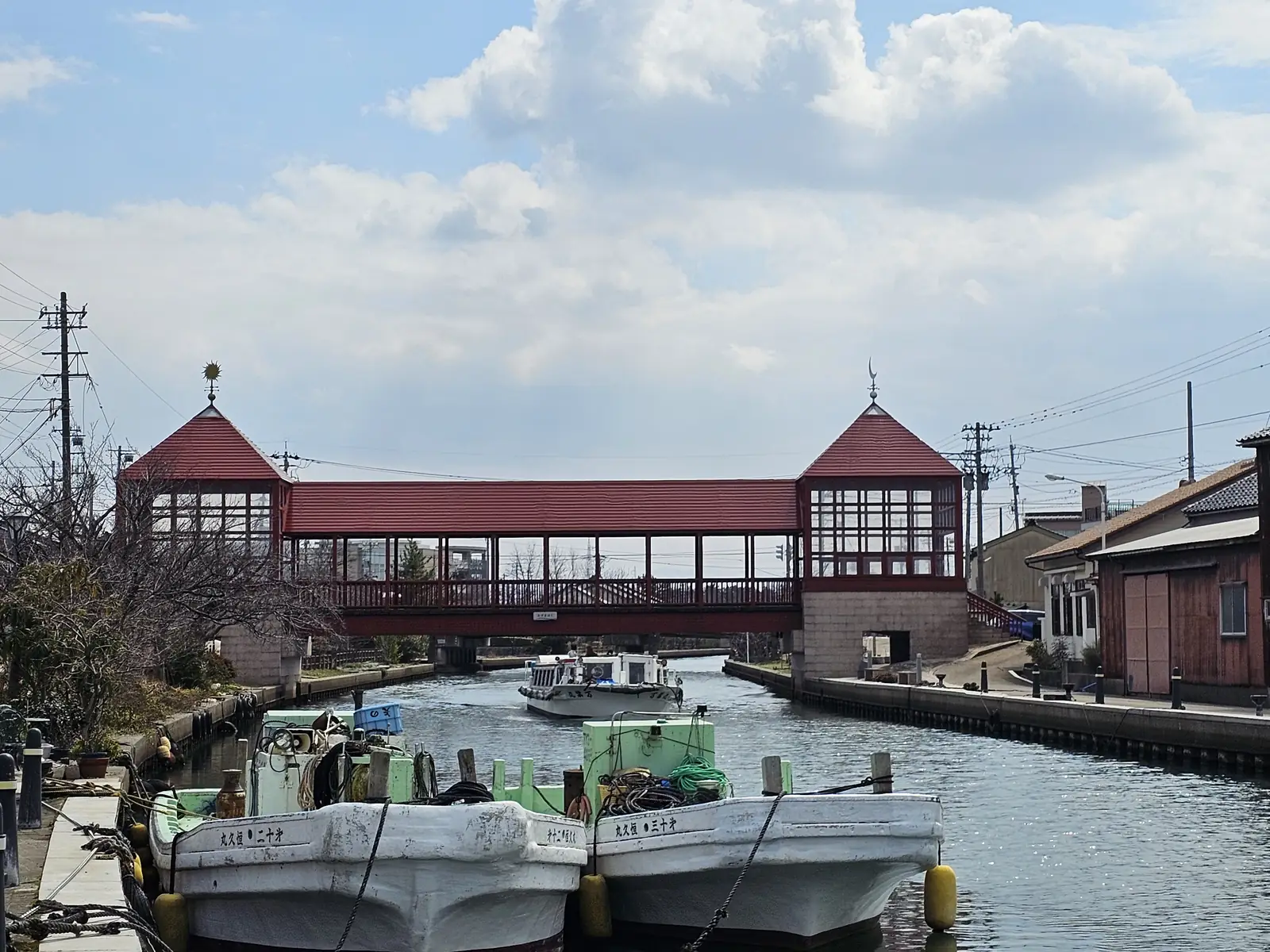
There is no set route for walking Uchikawa. With bridge after bridge spanning the water, the finest way is to zigzag: walk one bank, cross a bridge, drift back a little along the far side, then cross again at the next one. Each bridge has its own character. Higashibashi is a covered bridge for pedestrians only, and the river seen from under its wooden roof looks like a picture in a frame. Kagurabashi carries panels of stained glass in its railings — a bridge that stops your feet, without fail, halfway across.
Every recrossing turns the bank you just walked into the far shore, and swings the sunlit houses into silhouette. The same river, and yet the town shows a different face depending on which side you stand. That is why a walk that is nothing more than going over and coming back refuses to end.
Memories of merchant ships, and today's water
The depth in these streets comes from Uchikawa's past as a port of call for the kitamaebune, the merchant ships that once plied the Sea of Japan. Houses that keep the air of the town's hikiyama festival line the water, and even on days without a festival the streets carry the feel of an old harbor quarter. There are sightseeing boats on the river as well, and on clear days the Tateyama mountain range can show itself across the sea.
Still, the best thing Uchikawa offers is not a named view but time itself. When the sun goes down, lights come on in the houses, and the moored boats fade into shadow, walk back once more to the bridge where you began. The boats that will head out to fish in the morning are resting quietly now. That stretch of water will stay in your memory longer than the view from any bridge you crossed and recrossed to reach it.