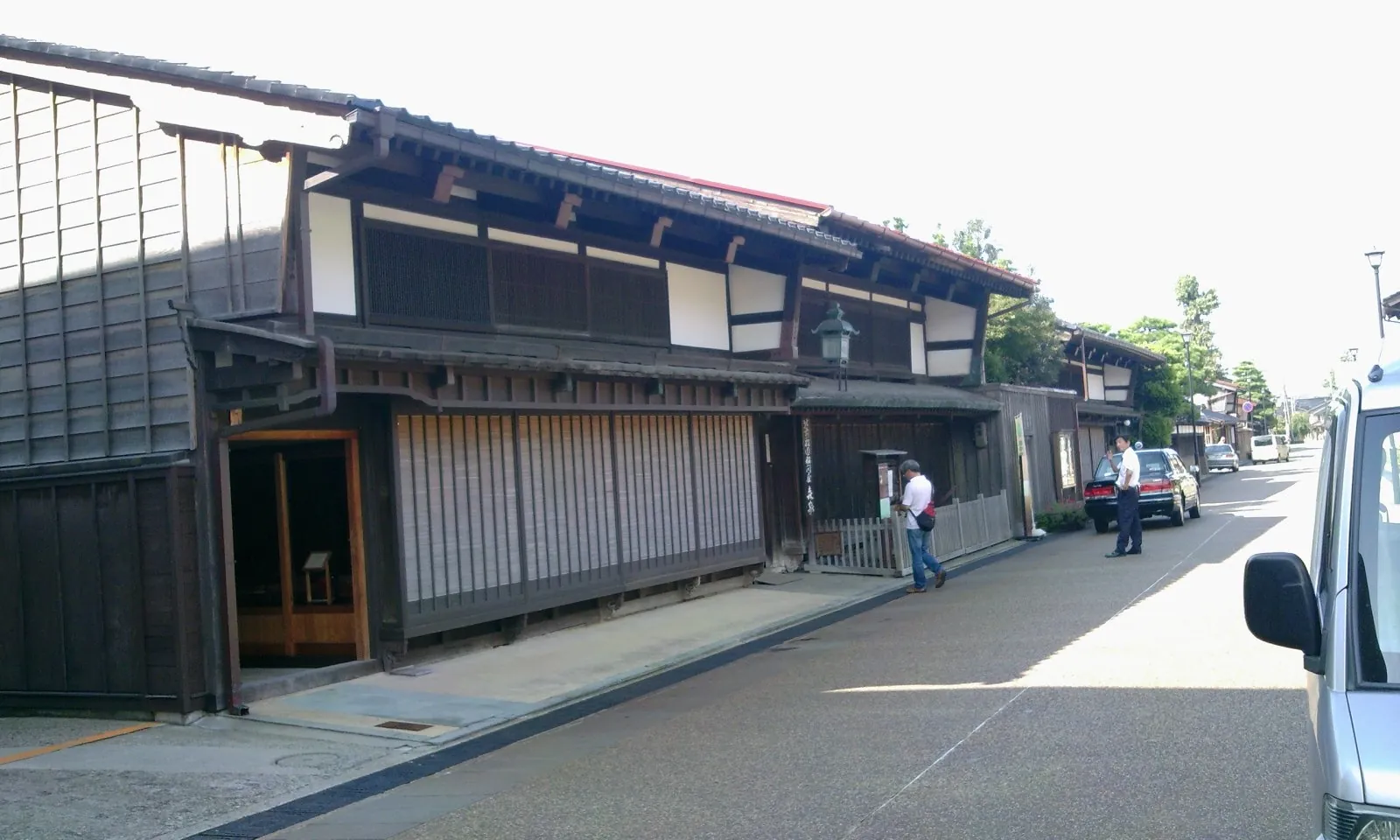
Why So Many Grand Houses on a Single Street?
Walk down Omachi Street in Iwase, the port district on the north side of Toyama City, and a question comes first: why does this one street hold so many imposing houses? Townhouses with broad frontages, thick beams polished black, earthen-floored passages running deep toward the back. This is not the build of an ordinary fishing town.
The answer is shipping. From the Edo period into the Meiji era, Iwase prospered as a port of call for the kitamaebune, the trading ships that worked the Sea of Japan. A kitamaebune was something like a merchant house afloat, buying goods at each port of call and selling them at the next, and a single round trip is said to have brought in enormous profit. The vessels that caught that wealth on land were Iwase's shipping agents.
The Wealth Remained as Buildings

The shipping agents' houses still stand along Omachi Street. Step inside one that is open to visitors and you find massive beams spanning a high open hall, with stone and fine timber carried in by ship used without restraint. Wealth earned at sea was condensed into architecture along a single street — the townscape of Iwase is, so to speak, the kitamaebune's balance sheet.
And yet the street is not overdressed. Between the rows of lattices, traces of daily life remain: a bicycle parked under the eaves, kitchen sounds drifting out toward evening. Squeezed between the sea and a canal, the long, narrow town can be walked end to end without tiring, and being able to walk it with all this everyday life intact is what makes Iwase good.
Today, a Street of Artisans and Sake
In recent years, glass and ceramic artists have set up studios in the old houses along Omachi Street, and the town has come back to life with its sake brewery at the center. From central Toyama, the Toyamako Line tram runs all the way to Iwase, and the ride — watching the view shift from townscape to waterfront — is part of the proper way to approach this port town.
The age of the kitamaebune ended, but the street never became a warehouse for stored-away wealth. The doors of the old houses stand open again today, with people coming and going.