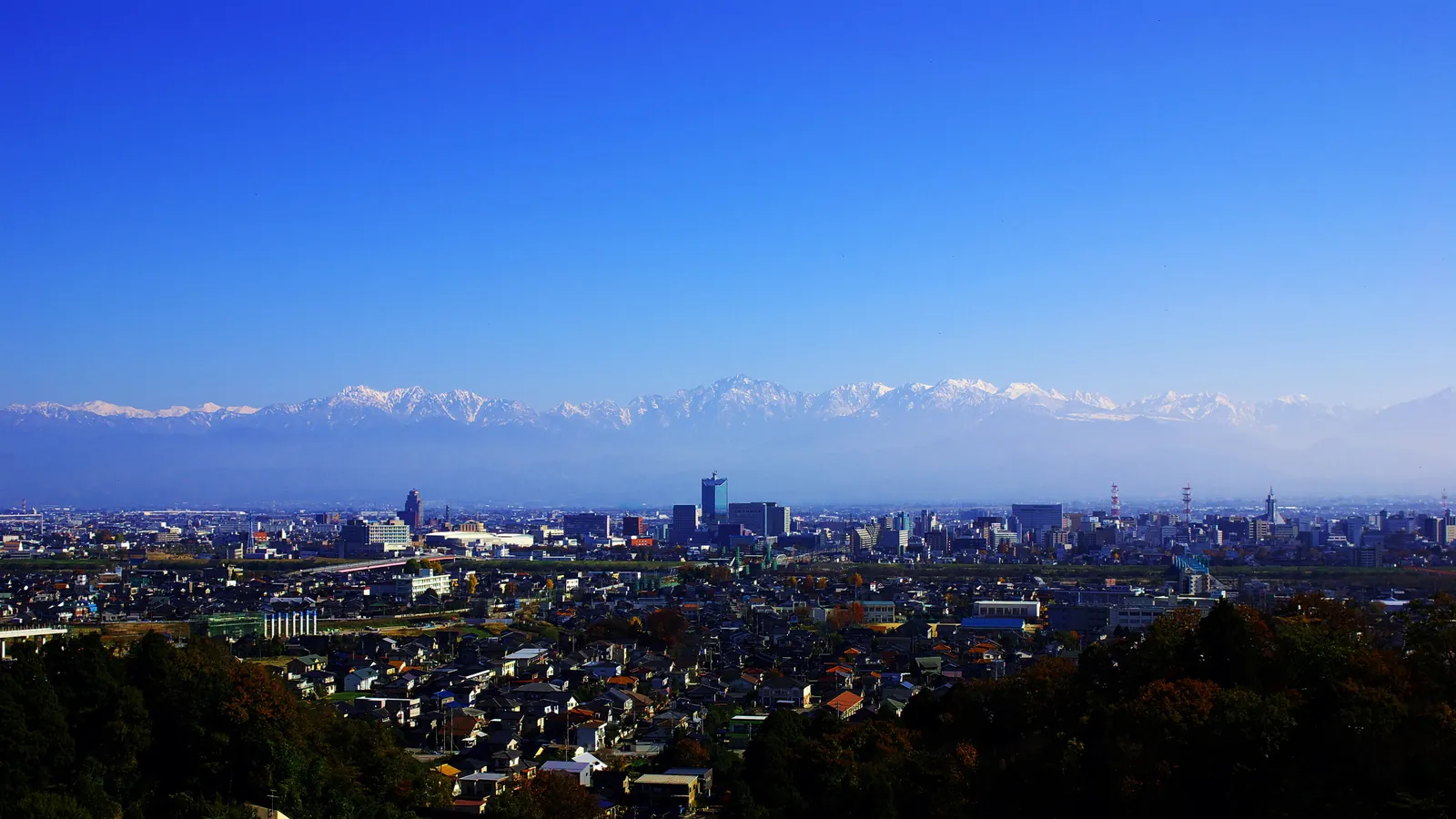
The Answer Is Not Where, but When
Where should you go to see the Tateyama mountain range? It is the first thing people type when they start planning a Toyama trip, and the answer is almost disappointingly simple: from the Toyama plain, you can see it from nearly anywhere. From a downtown intersection, a convenience-store parking lot, a footpath between rice fields — turn your face east and a rank of 3,000-meter peaks is standing there. That a single field of view takes in everything from the low coastal plain to the summits is simply part of daily life in Toyama.
So there is no need to spend time choosing a spot. What you should really choose is when. Standing at the same intersection, there are days when the mountains stand out sharply and days when they dissolve into cloud and haze without a shadow left.
On a Clear Winter Morning, the Air Gains Resolution
The conditions line up best on a cold, clear winter morning. The air cools and clears overnight, and the low morning sun rakes across the mountainsides. The outline of the whitened ridgeline stands out as if cut from the sky, and you can make out the shading of each ravine. The colder the morning — cold enough to see your breath — the closer the mountains look. In the summer daytime, by contrast, the air tends to haze over, and on many days the mountains fade to a pale blue silhouette. The word is "visible" either way, but a winter morning's view is another thing entirely.
In Spring the Paddies Become Mirrors, and the Mountains Double
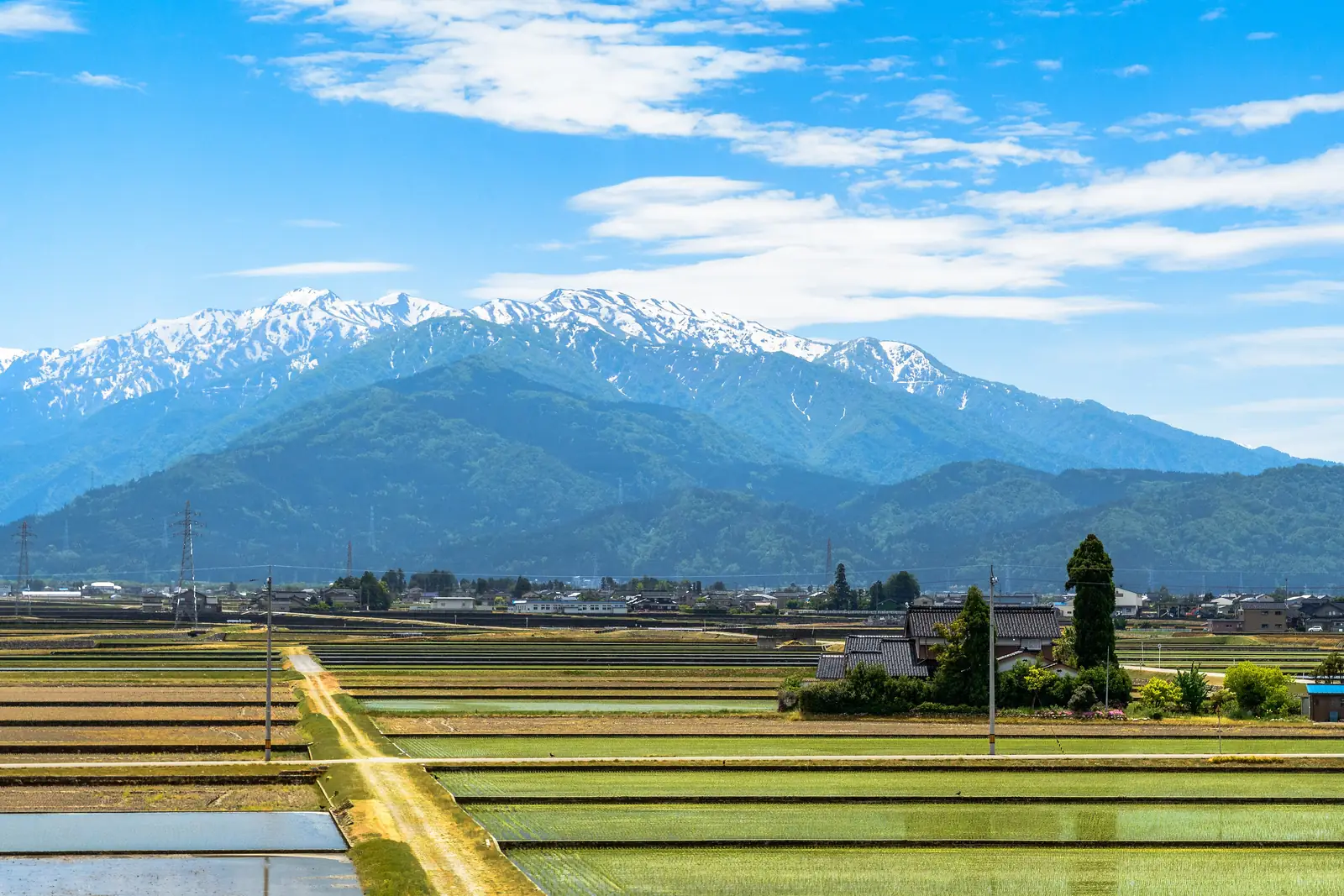
Each season's view has its own leading role. In spring, when the paddies are flooded before rice planting, fields all across the plain turn into mirrors, and the snow-streaked range appears upside down on the water. It is the season when you can walk between two Tateyama ranges, one above and one below. In summer the lingering snow thins and the rock shows darker; in autumn the air begins to clear, and there are days when a freshly snow-capped summit and autumn-colored lower slopes share the same view. And the mountains are at their thickest white in winter. Follow the seasons in order, and you see that the clear winter morning is where they all lead.
For a Choice of Framing: Amaharashi Coast and the Scattered Villages
That said, if you want celebrated framings, the first is Amaharashi Coast, where the snowy range floats beyond the sea — a completely different picture from looking up at the mountains from the plain. The other is the scattered village (sankyoson) of the Tonami plain: beyond farmland dotted with houses ringed by their windbreak groves, the range stands in one long horizontal line. Sea in the foreground, or farmland — the same mountains become entirely different landscapes depending on where you stand.
And the morning conditions can only be used from the place where you wake up. The transparent air of a cold morning begins to slacken as the sun climbs. Whether you come into Toyama the evening before changes what the next morning's eastern sky can mean. The winner is whoever is already awake there in the morning's best hour.