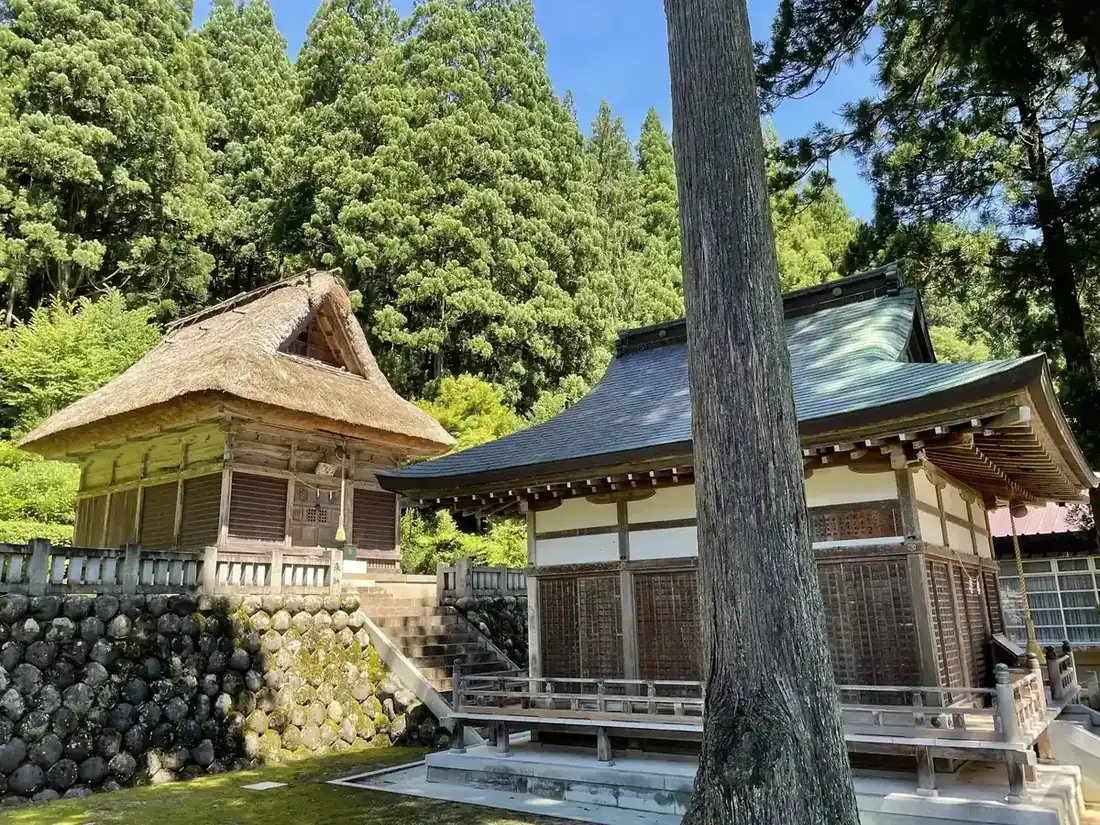
Night in Gokayama, in the hamlet of Kaminashi. Lanterns burn at the dance pavilion of Hakusangu shrine, and into the taut silence comes a dry rush of sound — 108 slats of cypress flexing as one. It is the sasara, and its first stroke is the signal: flute and drum rise, and the song follows. A night of the Kokiriko Festival begins with this sound.
A song of the rice fields, older than the song of the wind
Ask about folk song in Toyama and most people will name Owara Kaze no Bon. But if Owara is a song to calm the wind, Kokiriko is a song of the rice fields. Handed down around Kaminashi in Gokayama, it is said to be Japan's oldest folk song and is held to descend from dengaku, the old performing art of the paddies. At the root of the song lie the mountain rice fields of this valley. Its name survives in old documents such as the Koshi no Shitagusa — proof of how long this valley has refused to let go of one song.
A sasara of 108 slats, bamboo cut to 23 centimeters
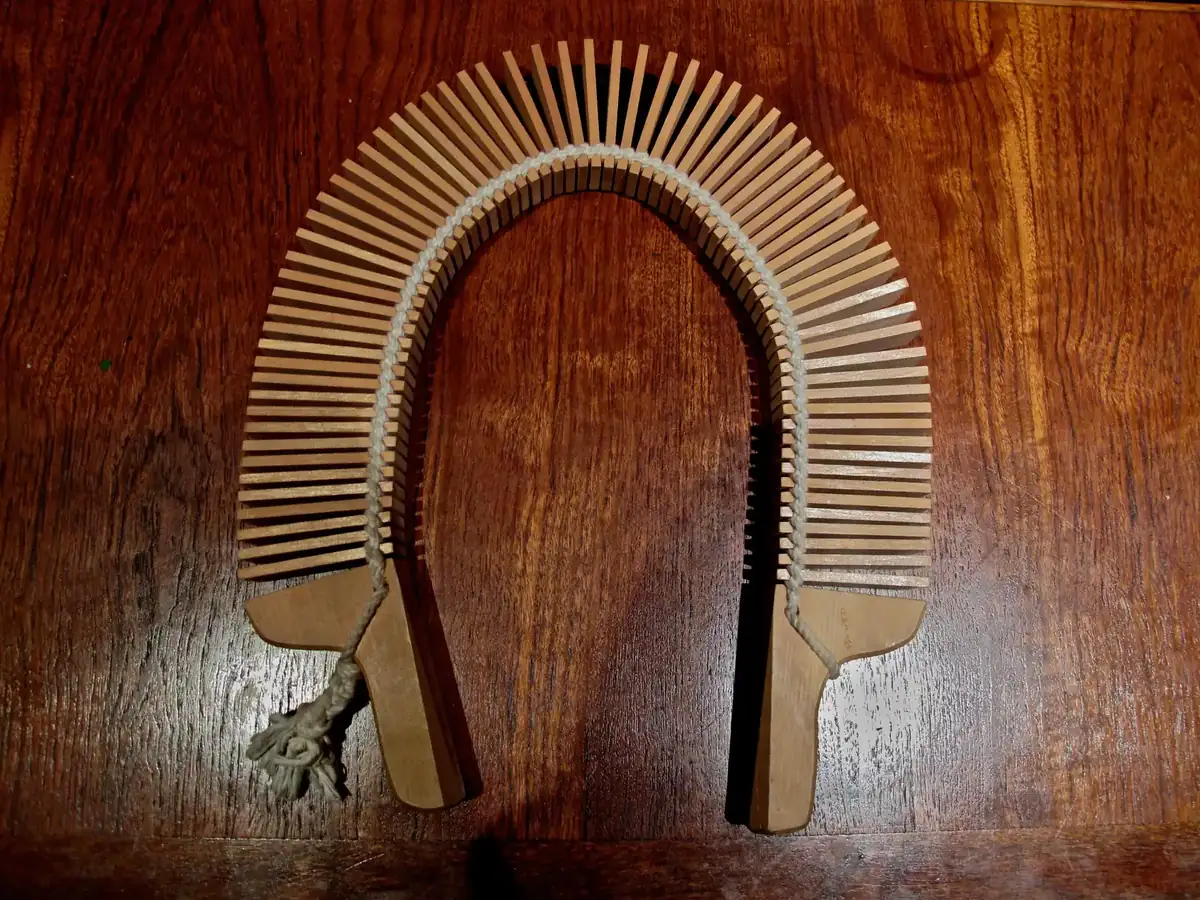
Two humble instruments carry the sound of Kokiriko. The first is the sasara: 108 slats of cypress bound together with cord. Grip both ends and snap your wrists, and the slats clap one after another into a single rasping note. One hundred and eight — the same number as the worldly passions of Buddhist teaching. Ringing out again and again through the festival night, the sound has a dry, bracing quality, as if shedding one burden for every slat.
The second instrument shares its name with the song: the kokiriko, a pair of bamboo sticks cut to shichi-sun-gobu — about 23 centimeters — and struck against each other. The lyrics themselves sing the measurement, telling us the kokiriko bamboo is seven sun and five bu long. The song carries its own instrument's dimensions inside it; song and tool have come down to the present as a single set.
Before a hall built in 1502, it is sung again this year
The festival's stage is Hakusangu shrine in Kaminashi. Its main hall was raised in 1502, and as one of the oldest wooden buildings in the prefecture it is designated a National Important Cultural Property. Gokayama is known for its World Heritage villages, and the depth of the valley's history is carved into this shrine as well. The Kokiriko Festival is held each year on September 25 and 26, alongside the shrine's autumn rites, with kagura, Kokiriko, and lion dances offered on the dance pavilion. In 1973, the songs and dances of Gokayama were selected by the national government as intangible folk cultural properties worth safeguarding.
As the night deepens, the final group dance begins, and spectators who came only to watch may join the circle. Before a hall that has stood for five centuries, a song that may be Japan's oldest is sung once more this year. Kokiriko is not a folk song kept in the records; it is a song in the present tense, coming back to life each autumn night.