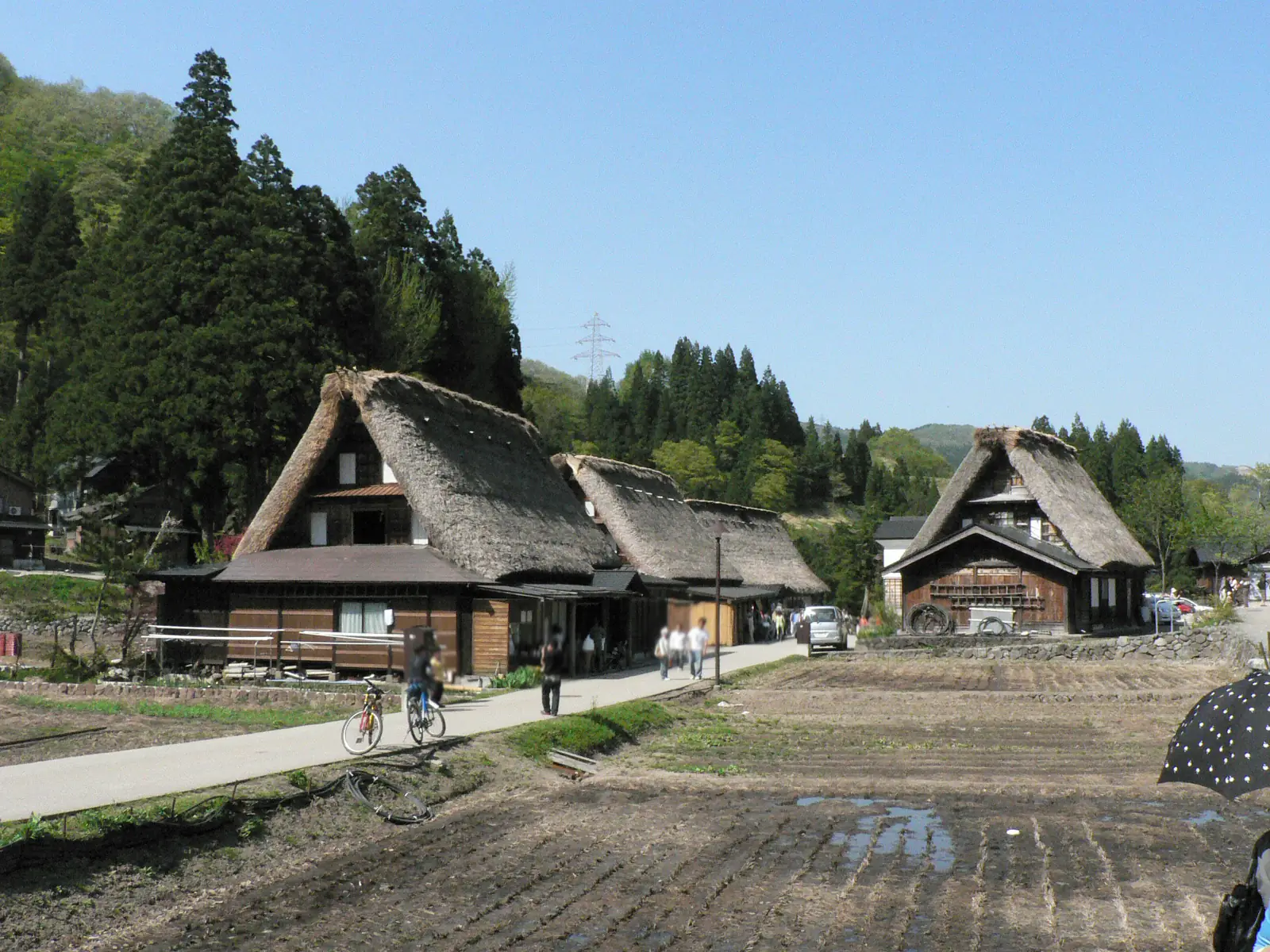
A World Heritage site with the sounds of daily life
Walk through the gassho-style villages of Gokayama and the first thing you notice is the sound of daily life. A hoe working a field, voices at a front door, laundry swaying under the eaves. Ainokura and Suganuma, the two villages in Nanto City, were inscribed as a World Heritage site in 1995 together with Shirakawa-go in Gifu Prefecture — but this is not a preserved exhibit. People still live here, and the life goes on. Why, then, is it still possible to live in houses built to a style centuries old?
Snow decided the shape of the house
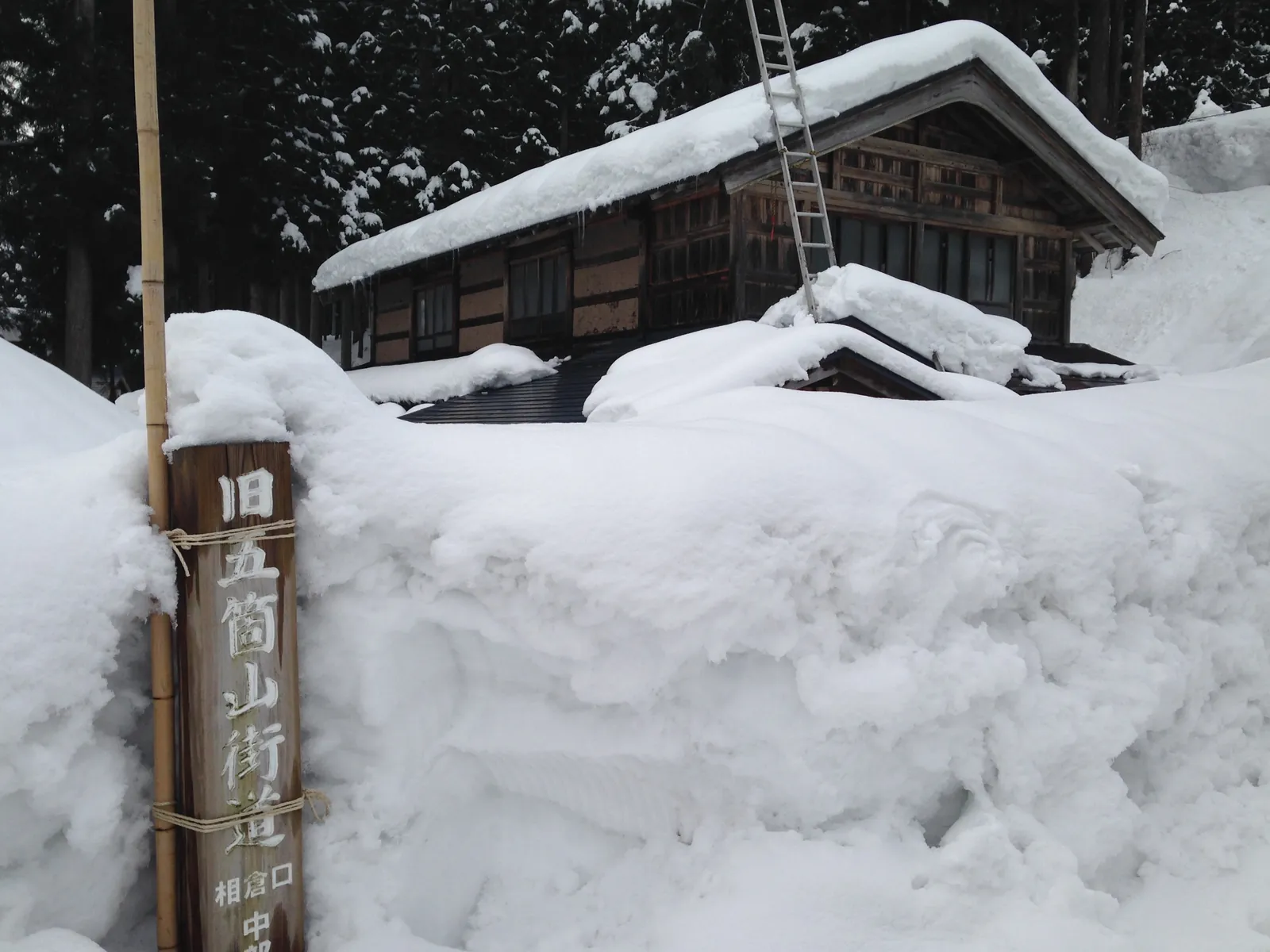
Half the answer lies in the rationality of the house itself. The steep thatched roof, shaped like hands pressed in prayer, is a form for shedding the snow of this valley, one of the heaviest snowfall regions in Japan. The frame in the attic uses no nails; the timbers are lashed together with rope and similar bindings. Joints that are not fixed rigid let the forces of snow load and wind pass through, and go on supporting the great roof. The broad attic was once used for raising silkworms — even the inside of the great roof was space for living and livelihood. This is a house in which the land's condition, heavy snow, became architectural form itself. In a small basin ringed by mountains, the sight of those roofs lined up all facing the same way has a reason behind it that is anything but ornamental.
Living in them is what preserves them
The other half of the answer lies in the fact of continued living itself. A thatched roof will not last without repeated rethatching, and a house stays sound only when people live in it, keep fires lit, and let the air move through. The fire in the sunken hearth was heating, and at the same time a mechanism for protecting the house. The rising smoke cures the thatch and the rope lashings in the attic, keeping insects away and making the roof last. That people live here and burn their fires is built into the maintenance of the building. In these villages, the continuing of daily life and the survival of the houses have become one and the same thing.
Which is why the true face of these villages may show itself only after dusk. When the sightseeing hours end and the crowds recede, the valley falls suddenly quiet, and lights come on, one and then another, in the windows of the gassho houses. It is the hour when the houses turn from exhibits back into homes. The village in daylight and the village after the lamps are lit — you may as well think of them as two different places.