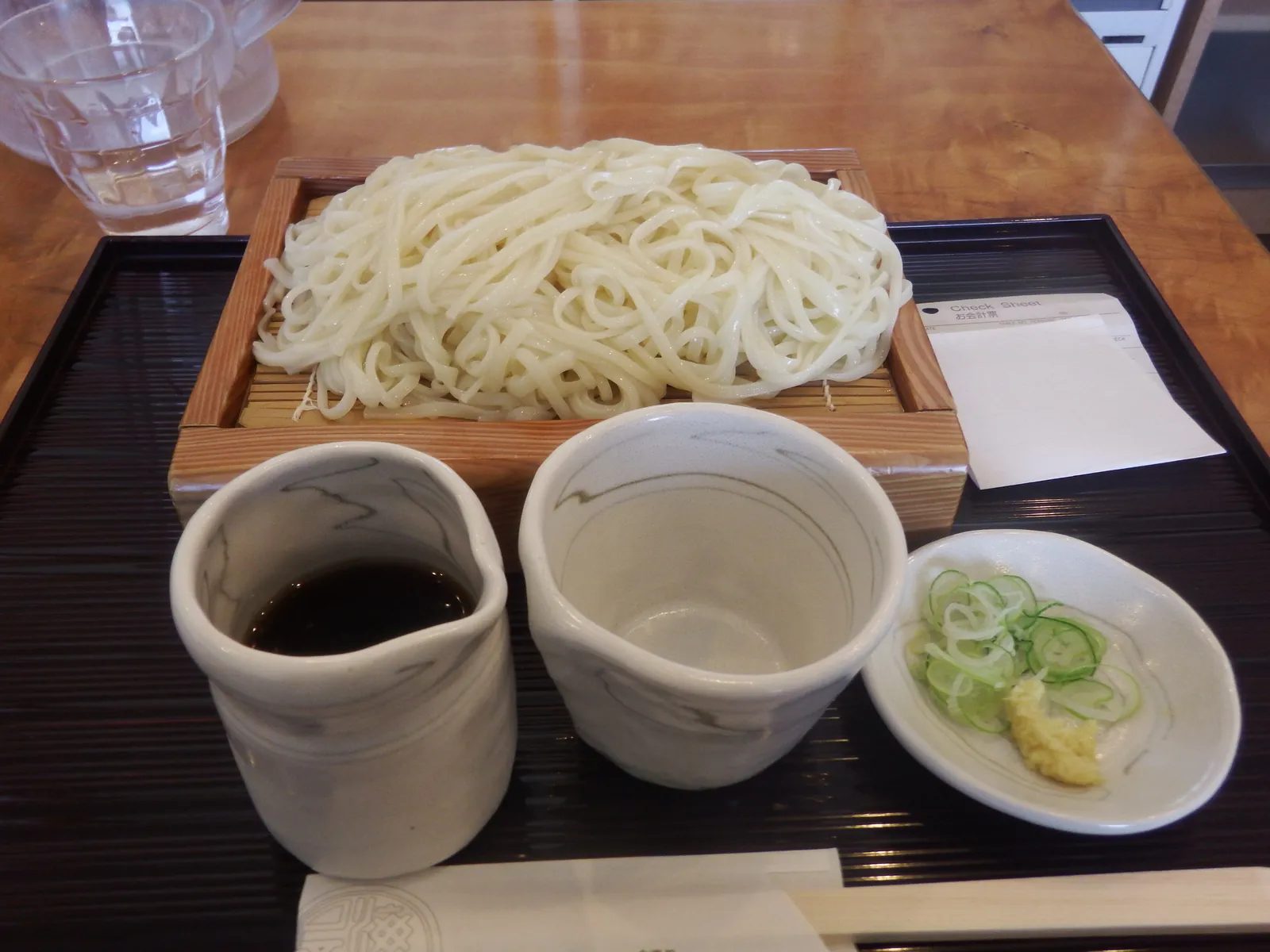
The noodles in the bowl are thin enough to pass for somen, with a fine gloss. Lift them with your chopsticks, though, and the bite that comes back betrays the look entirely. Why is such a thin noodle so strong? The answer lies in a way of stretching that Himi's makers have kept alive.
No Oil — Stretched with a Twist

Himi udon, like Inaniwa udon, is hand-stretched without any coating of oil. On top of that, in Himi the dough is stretched while being twisted by hand — the yori. Twisted as it thins, the dough tightens, and strength is worked into the very core of the noodle. Thin as it is, it carries a firm bite and tenacity, a springy chew, a smooth slide down the throat. That resistance you felt in the bowl is the product of this stretching.
Take a mouthful. None of the frailty the thinness promises is anywhere to be found; the more you chew, the more it pushes back. Strength in a noodle has nothing to do with thickness — the tips of your chopsticks will teach you that.
Purveyor to the Kaga Domain: A Line 250 Years Long
The roots of this method lie in Wajima, on the Noto Peninsula. Wajima's somen-making techniques are said to have reached Himi around the middle of the Edo period, and the craft has been handed down for more than 250 years since. The noodles were once called ito udon — thread udon — and are said to have served the Kaga domain as its purveyor. Consider the standing such patronage demanded, and you can imagine the labor folded into a single thin strand.
Cold in Summer, Hot in Winter
There are no rules for eating Himi udon. Besides the thin noodles there are thicker cuts and somen-like strands, and the bowl changes its face with the seasons.
- In summer, cold. Tightened in icy water, the thin noodles' bite stands out, and they slip down glossed with dipping sauce.
- In winter, hot. The bite holds even in steaming broth, and the noodles keep their outline to the last mouthful.
- They come as dried noodles, so pack some in your luggage and Himi can continue later, in a pot at home.
When autumn deepens and the sea off Himi turns toward winter, the choice makes itself: the hot bowl. Thin noodles sway beyond the steam, and as you draw them in, the warmth comes with them. The reason this craft has lasted 250 years is, in the end, right there in the bowl.