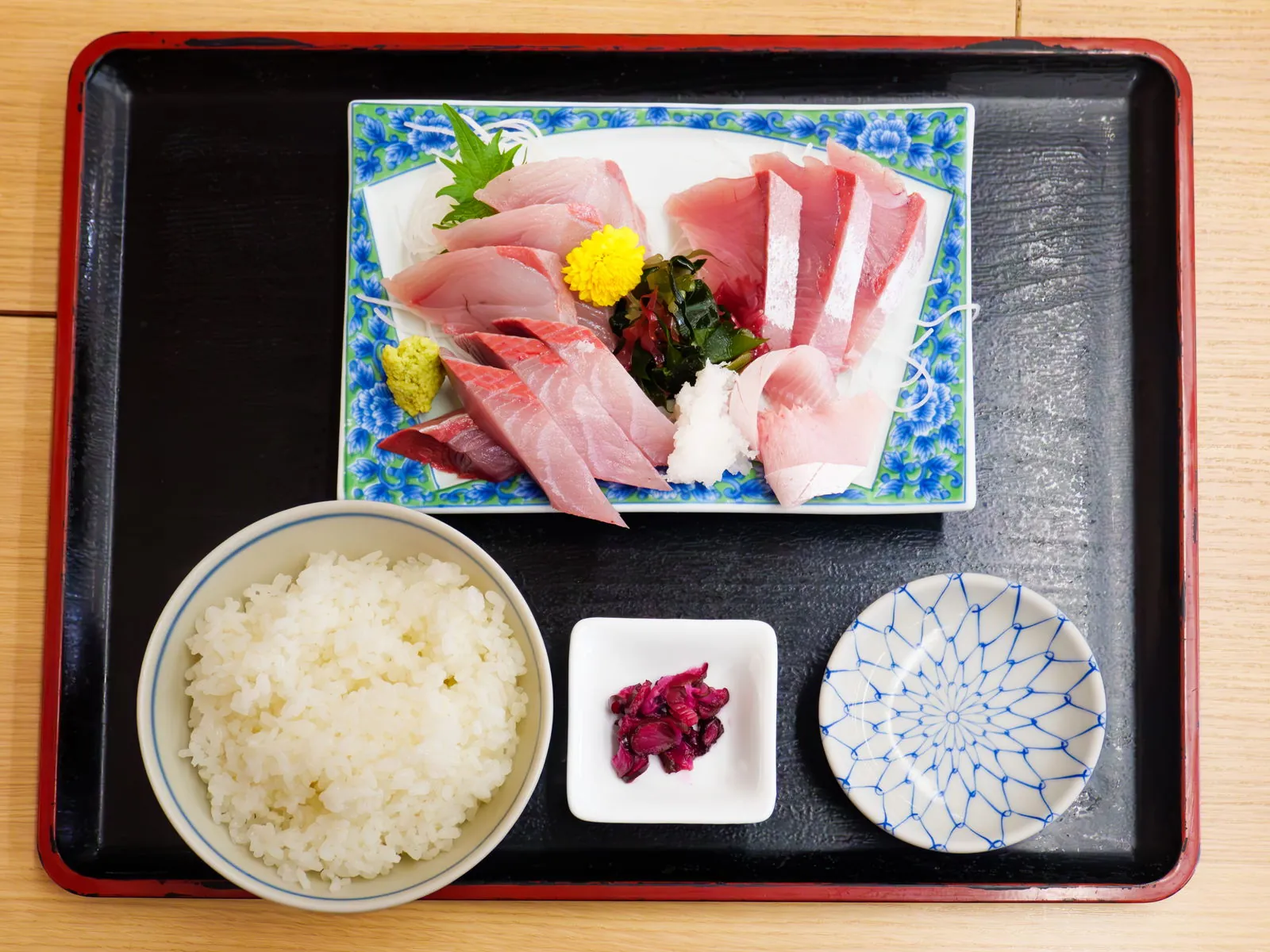
When the thunder rolls, the fishing begins
In early winter in Himi, the sky sinks to lead-gray, and the days multiply when thunder rolls in with the roar of the sea. After a squall of sideways graupel passes, the air at the port pulls taut. Local people call the thunder of this season buriokoshi — the yellowtail-waking thunder. It comes just as the Sea of Japan begins to turn rough and schools of buri, loaded with fat, enter Toyama Bay. The sea's worst-tempered season and this fish's finest season happen to fall exactly together.
Himi's yellowtail fishery is built around fixed nets. Great nets are set across the paths of the migrating fish and left to wait, taking only what swims in; nobody chases the schools. The nets stay planted in the sea, and the fish enter on their own swimming strength. Because they are not chased, the fish take little damage or bruising, and with the fishing grounds inside the bay, the run to port is short. Being a fishery of waiting is, in itself, the reason for the freshness.
The auction floor on the morning after a rough sea is where this fishery's answers are checked. Fish are carried in while it is still dark before dawn, and buyers in rubber boots ring the thick bodies laid out on the floor, sizing them up. Spirited calls fly in cold that keeps every breath hanging white, and of the winter yellowtail taken in Himi's fixed nets, only those that meet the standard may carry the name Himi Kanburi — a name treated as a class apart among the fish of winter.
The fat in sashimi, the fat in buri-shabu
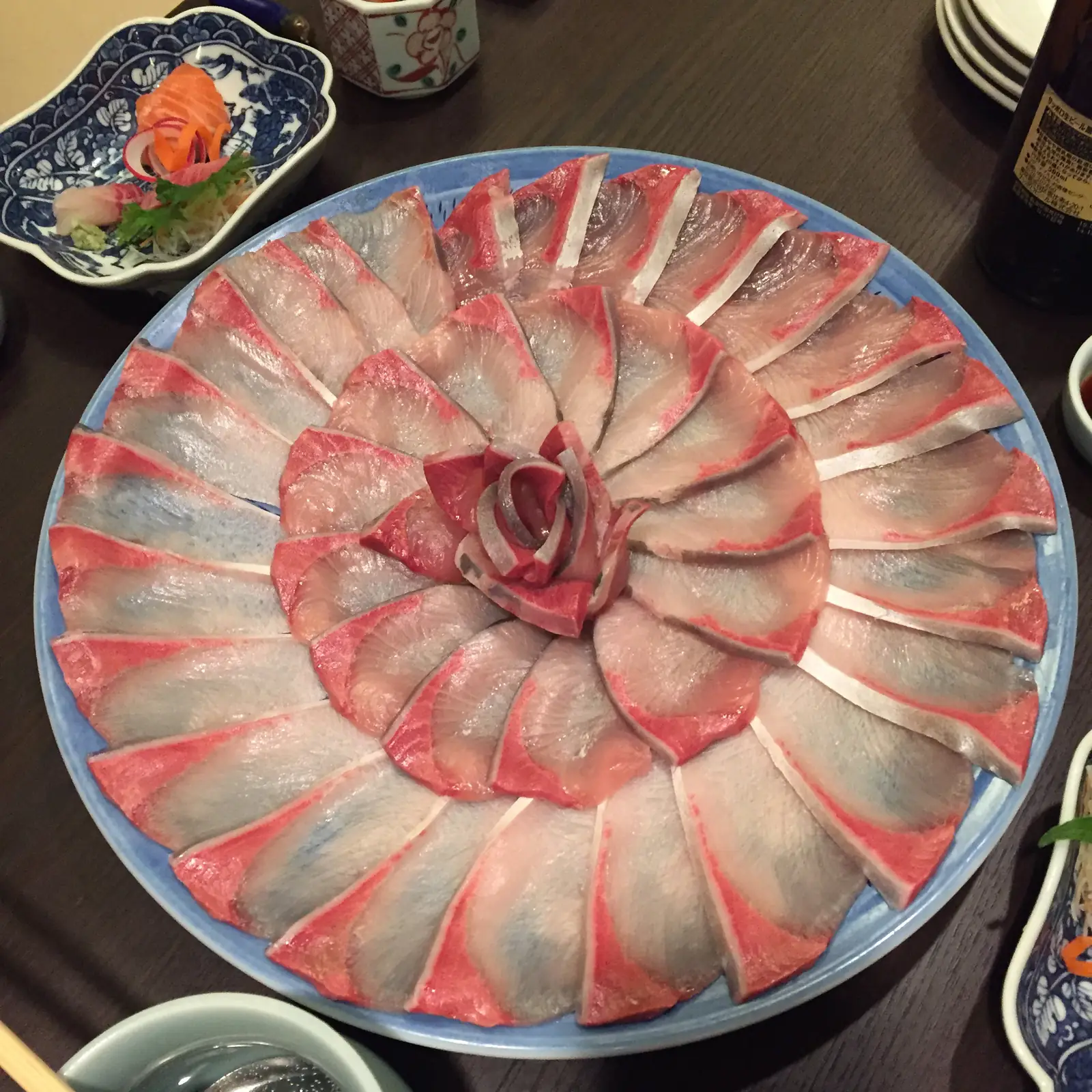
Kanburi's fat shows a different face depending on how it is eaten. As sashimi, a cut from the belly begins to melt the moment it enters the mouth, its fat rich enough to bead the soy sauce on the tongue. The back is another matter entirely, firm and clean-edged — hard to believe it is the same fish.
In buri-shabu, you can watch that fat let go with your own eyes. Pass a thin slice through the kombu broth and the cherry-pink pales in a breath, the fat on its surface blooming out into the liquid. Judging the moment to lift it out with your own chopsticks is the pleasure of this hot pot. Cold sashimi and warm shabu: the same kanburi, and yet what happens in the mouth could not be more different.
The season will not wait
Kanburi season is confined to a stretch of winter, and its peak shifts with each year's sea. The buriokoshi thunder rolls with no regard for anyone's plans. So if you are aiming for winter in Himi, turn the thinking around. The season will not wait for your dates. Fit your dates to the season.