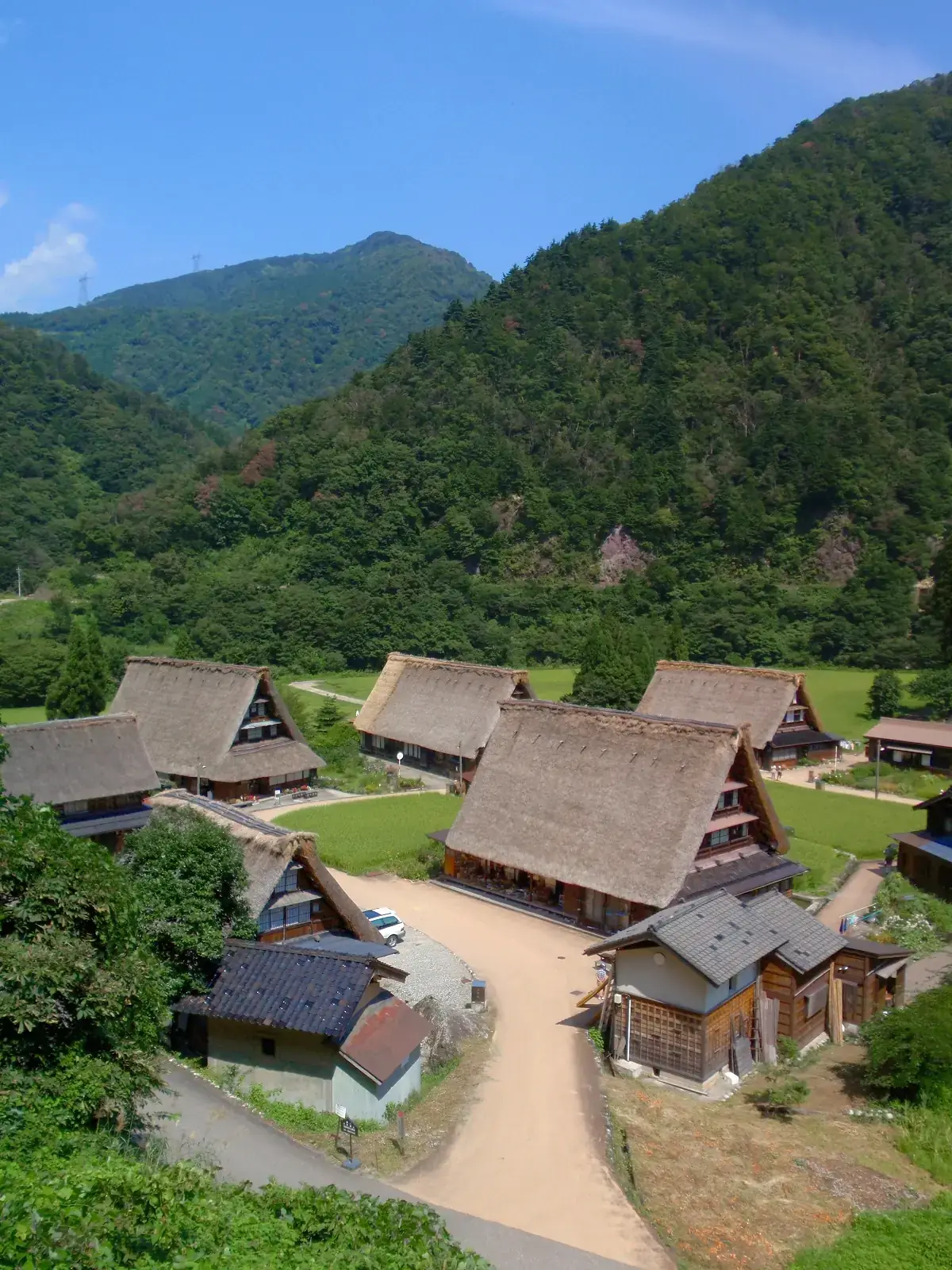
On a morning of falling snow in the valleys of Gokayama, steep roofs shaped like hands pressed in prayer stand up white against the hills. The same morning in the town of Yatsuo, low eaves and slender lattices run on and on along the slopes. The same Toyama, the same snowy morning — and yet the houses could hardly look more different. There is a clear reason for the difference.
The gassho farmhouse was designed by snow and silkworms
The steep thatched roof of Gokayama's gassho-style farmhouses is, first of all, an answer to snow. Its pitch keeps the deep snow of the mountain valleys from piling up on the roof, and the frame above is a timber structure joined without nails that has borne the weight of the snow. And the broad attic created by that steep pitch was put to use for raising silkworms. Snow and livelihood, the two together, designed that triangle. The Gokayama villages are also inscribed on the World Heritage list.
The machiya was designed by trade and frontage
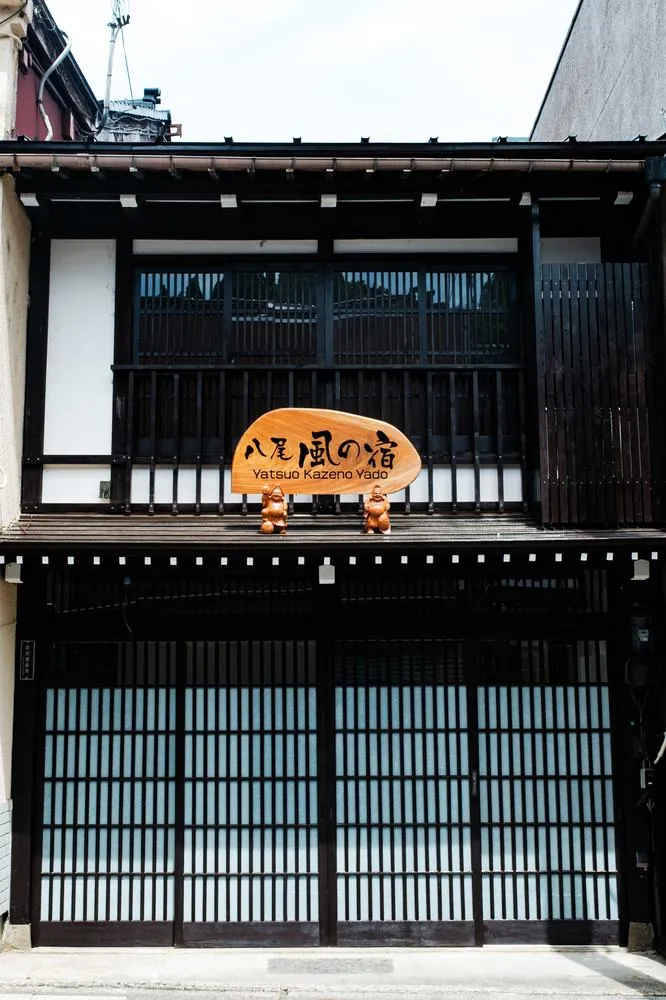
The machiya townhouses of Yatsuo and Iwase, by contrast, are narrow across the front and deep toward the back. Frontage on a street full of passersby was prime ground for commerce, and it made better sense to divide it narrowly and stand eave to eave. Snow in the towns never ran as deep as in the mountains, so it was the use of frontage, more than the pitch of the roof, that decided the shape of the house. Because the houses stand wall against wall with their neighbors, the street gains an unbroken line of facades. The lattice is a tool of town living, softening the gaze of the street while letting light and air pass through.
The two houses share a common vocabulary as well — thick beams, earthen-floored entries, sunken hearths. Wooden houses of the same snow country, they grew into shapes this different simply because of where they stood. By car, the gassho valley and the sloping town of tiled roofs are close enough to compare within a single day.
The mountains had snow and silkworms; the towns had trade and the street. The difference in climate and livelihood became, quite directly, the angle of the roof and the width of the frontage.
The shape of a house is a land's résumé. In Gokayama's triangular roofs and in Yatsuo's narrow frontages alike, you can read what each place has spent its history living with.