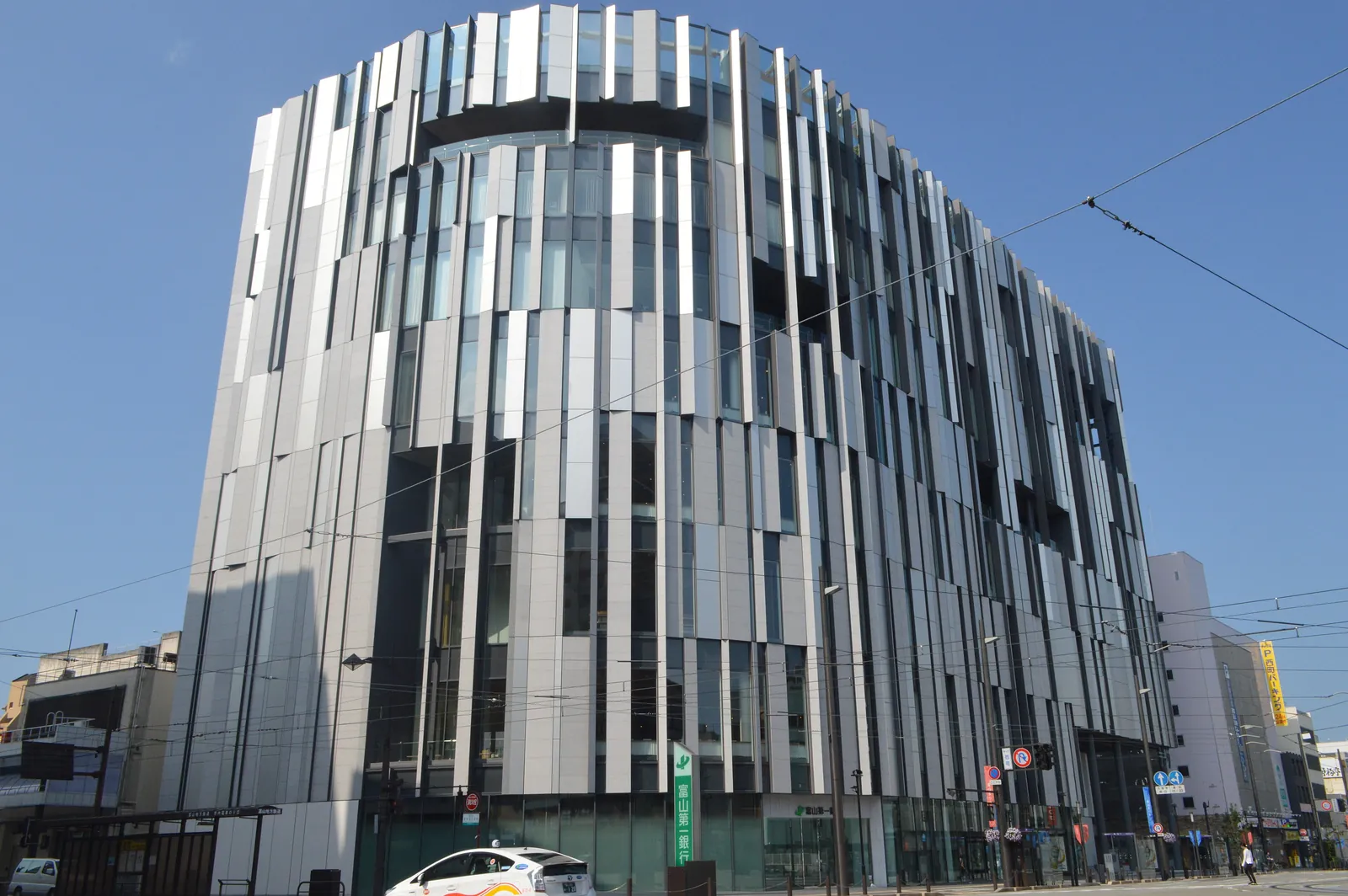
The top floor of TOYAMA Kirari, a complex in the heart of Toyama City. Stand on the floor named the Glass Art Garden and a large permanent installation of contemporary glass art glows around you, from overhead down to your feet. Rain or snow outside, this light does not change. Wrapped in light refracting through glass, try winding the clock back — because this radiance descends from medicine bottles, three hundred years ago.
Start with the light on the top floor, then rewind
TOYAMA Kirari is a complex housing the Toyama Glass Art Museum among other facilities, designed by the architect Kengo Kuma, its exterior evoking the Tateyama mountain range. The permanent display on the top floor is, in a sense, the summit of the time this city has poured into glass. So where did that time begin? Follow it back and you arrive not at art, nor at craft, but at medicine.
It began with medicine bottles
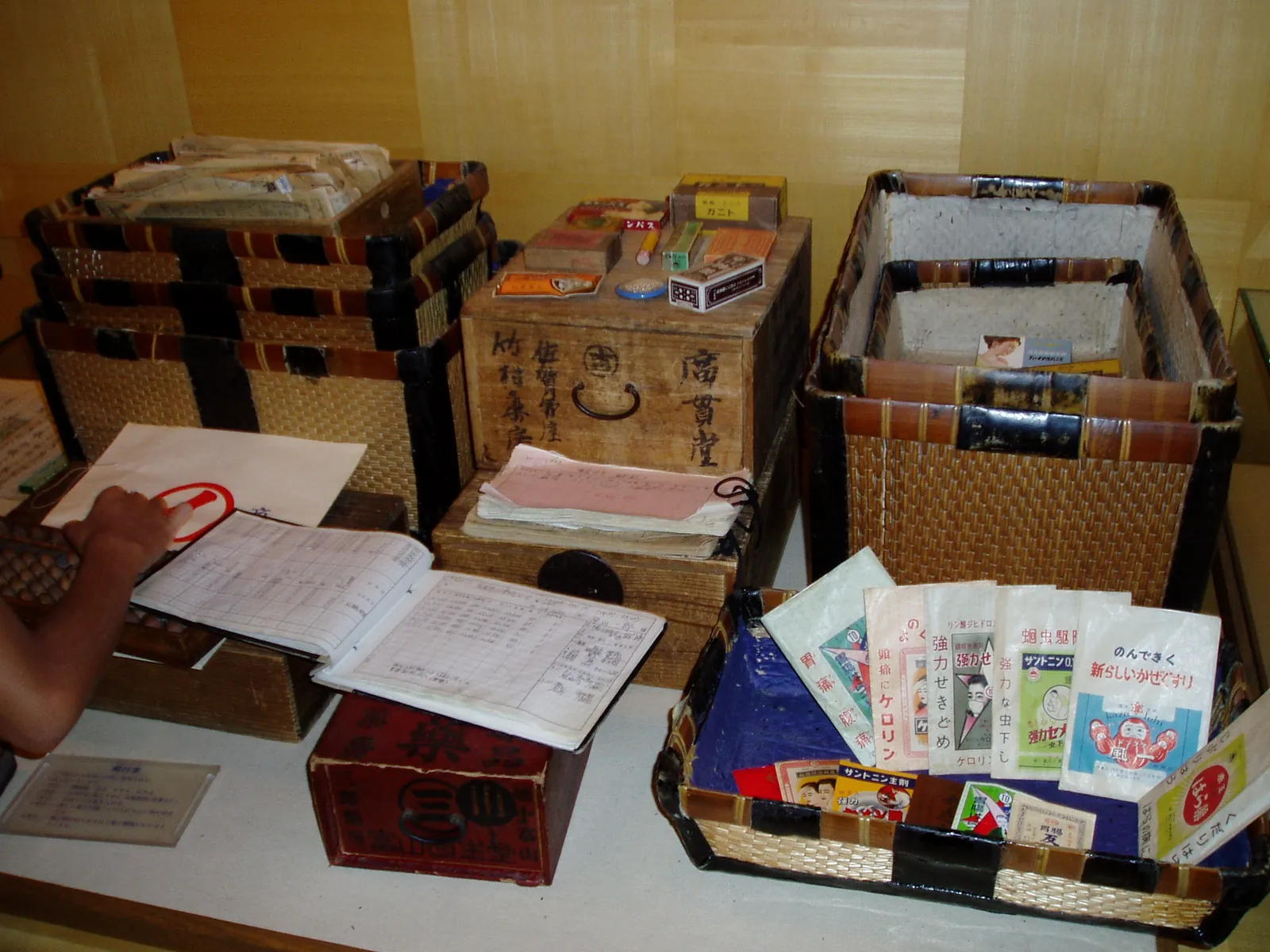
In 1690, the story goes, the lord of the Toyama domain gave a pill called Hankontan to a daimyo doubled over with stomach pain at Edo Castle, and it worked at once — the episode that is said to have launched Toyama's medicine trade across the country. Payment could wait; first, let the household use the medicine. Under this creed of "use first, profit later," Toyama's medicine peddlers found their way into family medicine chests all over Japan.
The real subject comes next. From the Meiji era onward, the manufacture of glass medicine bottles flourished in Toyama. Before the war, the area around Toyama Station is said to have held more than ten glass factories. In this city, glass was an industry before it was ever an art. The clear wall of a medicine bottle was the first pane of the future city of glass.
A school and a studio inherited the factories' memory
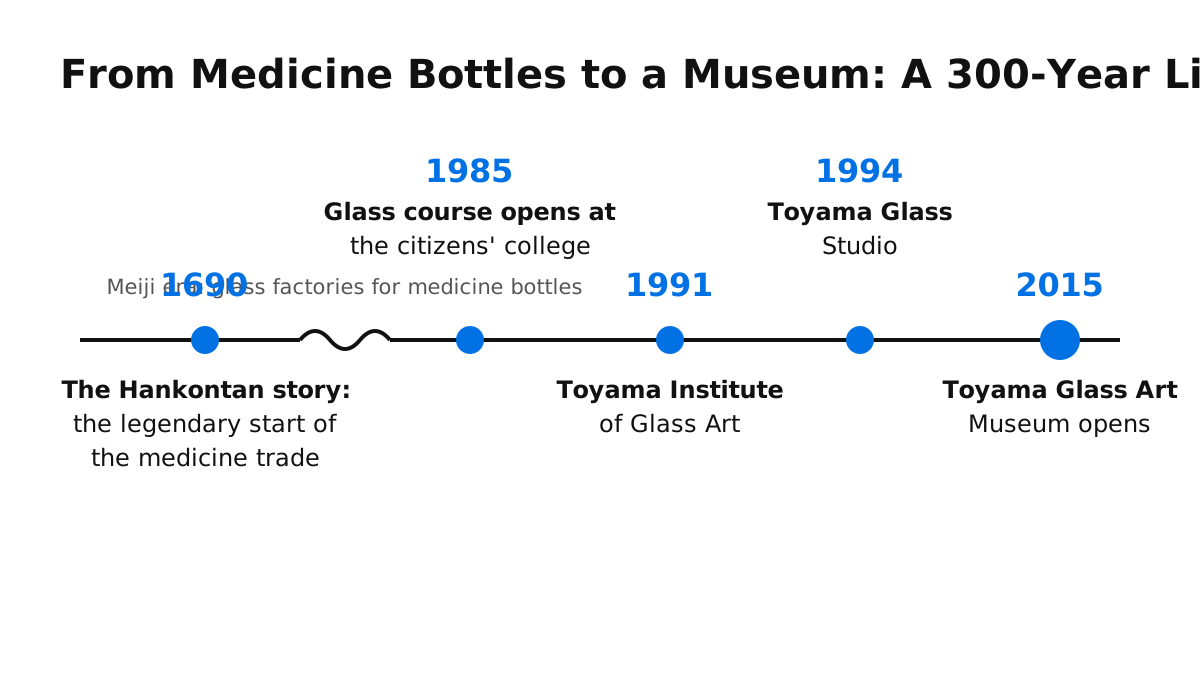
After the war, the glass industry declined. But Toyama City chose to carry its memory forward, as a deliberate program of town-building around glass art. The starting point came in 1985, when a glass course opened at the citizens' college. In 1991 came the Toyama Institute of Glass Art, the only public institution in Japan devoted to training glass artists, and in 1994 the Toyama Glass Studio was established as a base where artists could work. A place to learn, and a place to make. An industry that had nearly vanished was replanted in the city as a system for raising people.
In 2015, the lineage became a museum
Then, in August 2015, the Toyama Glass Art Museum opened as the culmination of that town-building. What began as the business of medicine bottles gained, in turn, its place of education, its place of creation, and at last its place of viewing. Over three hundred years, four stages — industry, education, creation, appreciation — joined into a single line.
Go back up to the floor of light. The glow refracting around you did not fall on this city out of nowhere. It traveled from the little bottles the peddlers carried across Japan, through the classroom and the studio, into the museum's galleries. Even if you stepped into this building simply to get out of the rain, stand on the top floor and you are standing inside three hundred years of light.