
Written with the characters for "phantom fish," the name is read genge. The letters look honorific; the original meaning was the exact opposite. Genge meant "the lowest of the low." This deep-sea fish from the floor of Toyama Bay has climbed, in name alone, from the very bottom of the ladder to the character for "phantom."
The Fish They Called "Lowest of the Low"
No fishery targets genge on its own. It comes up in bottom-trawl nets set for sweet shrimp and other catch, mixed in among the fish the boats are actually after — bycatch, in a word. Nor does it look like merchandise. Genge (a deep-sea eelpout) lives at depths below 200 meters, runs about 20 centimeters long, and is sheathed from head to tail in a thick layer of gelatin: slick, pale, less a fish than a length of water made solid. Overlooked beside the fish that mattered, it was dubbed ge-no-ge — "the lowest of the low" — by the people of the shore. That, so the accepted account goes, is where the name comes from.
Rewritten as "Phantom Fish"
Then, at some point, the name flipped. The characters assigned to it read "phantom fish," and the fish nobody had glanced at crossed over to the prized side. That trembling gelatin is said to be rich in collagen, which gave the reappraisal one more push. Today it stands, as "Toyama Bay genge," in Pride Fish, a nationwide program in which fishing communities put forward the fish they are proudest of. If Himi's winter yellowtail is the king of the cold-season bay, genge is the upset hero come up from underneath. Turn the king's story inside out, and you get this fish.
In a Bowl of Soup, It Shows Its Worth
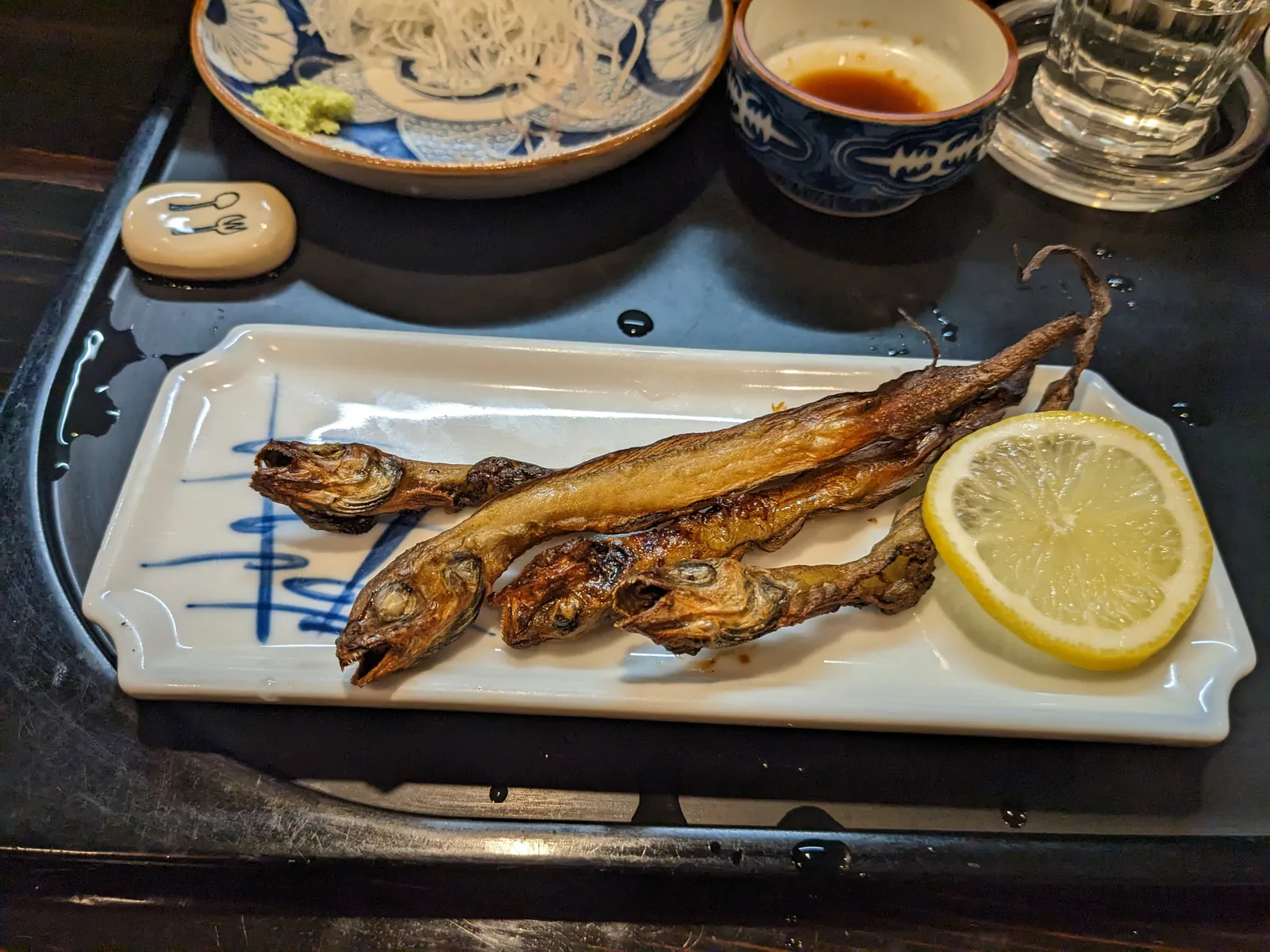
In the fishing villages, genge has long gone into miso soup and clear broth. These days it is also deep-fried, turned into tempura, or dried — but the bowl of soup is where it proves itself. In the hot liquid, that gelatin loosens and melts, lending the broth a faint, silky thickness. Lifted with chopsticks, the flesh threatens to fall apart; in the mouth it slips away, leaving a thin, warm film on the lips. The more the fish's looks startled you, the quieter this one bowl will leave you.
The bottom-trawl season runs from autumn into spring: it opens on September 1 and lasts until around May. Genge suits midwinter best of all, when a hot soup is exactly what you crave.
It was the people of the shore who named it "the lowest of the low." And it was the same people who kept dropping it into their miso soup. Those who gave the fish its lowliest name had known the best way to eat it all along — the character for "phantom" merely caught up later.