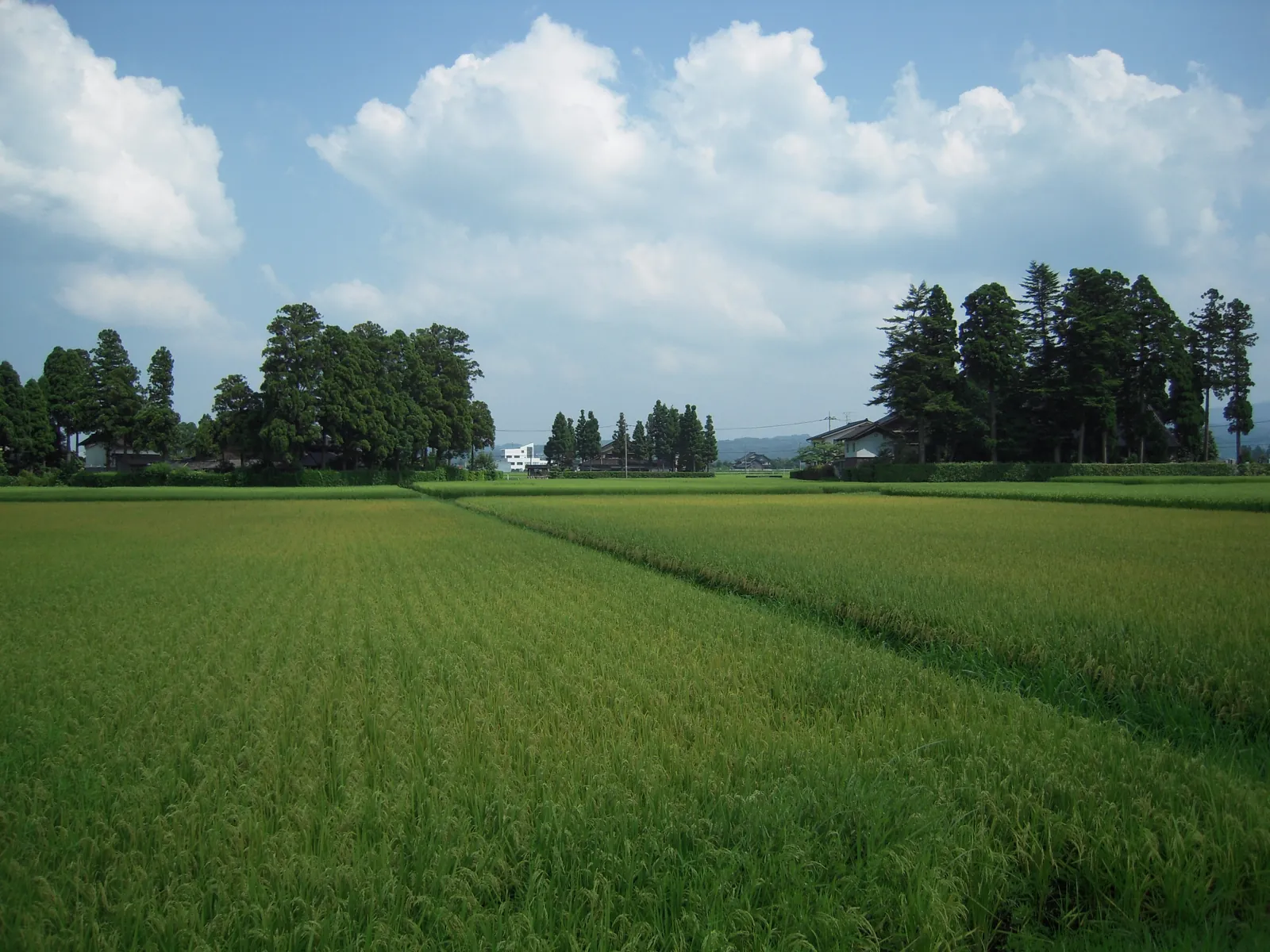
On a May Evening, Paddies Across the Plain Reflect the Sky
Stand on the Tonami plain on an evening in rice-planting season, and flooded paddies run from your feet to the horizon, every one of them holding the colors of the sunset. Floating on the water are houses wrapped in plump stands of green. Each home, grove and all, dots the water-mirror like an island. This landscape, called scattered village (sankyoson), is at its most intense for a few short weeks around May, between the flooding of the paddies and the rising of the young rice.
The Kainyo Are Not Ornament
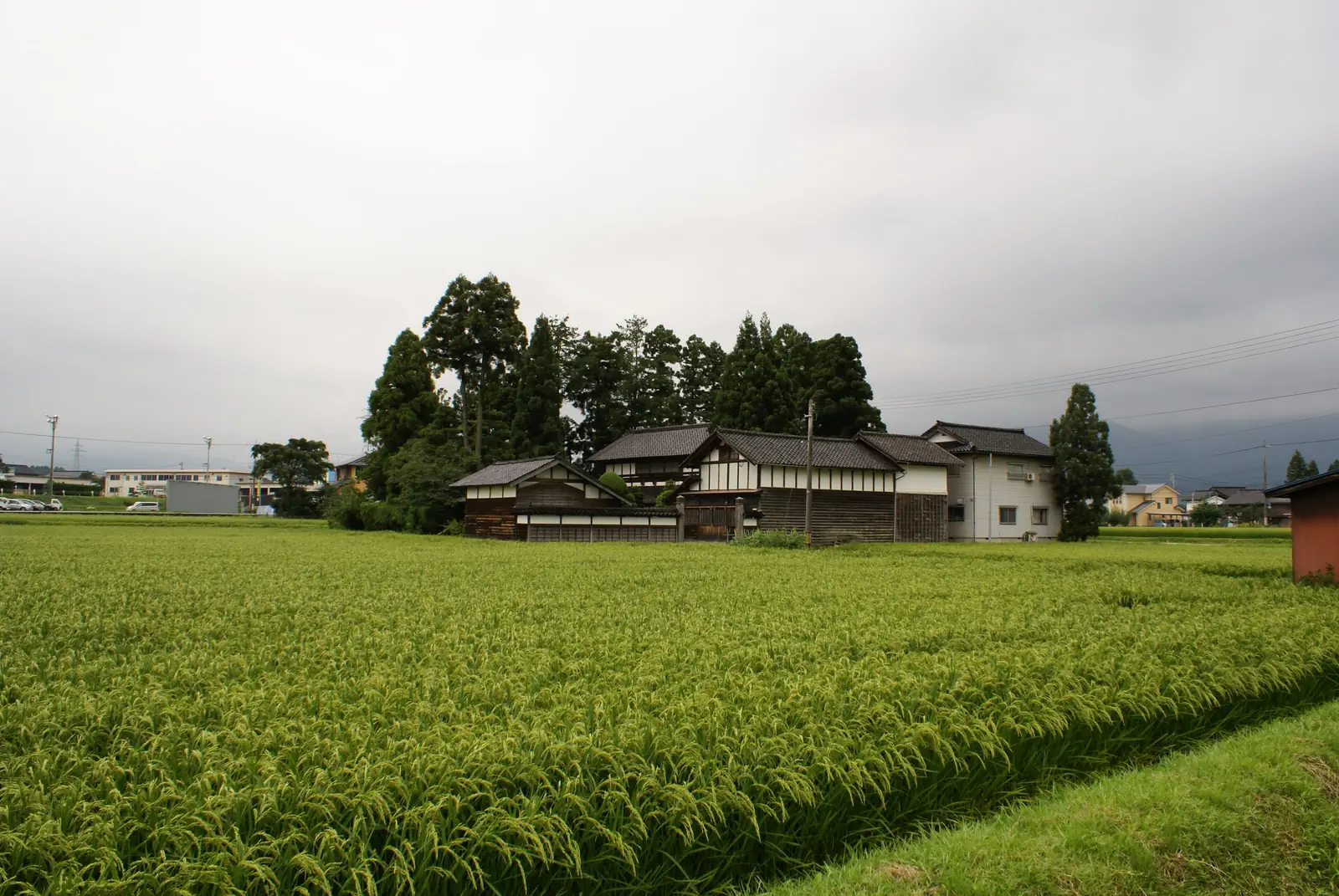
The groves that surround the houses are called kainyo (windbreak groves) in this region. They are stands of trees that protect each house from the seasonal winds and snow that sweep across the plain in winter; in summer they block the sun, and in earlier times fallen branches served as fuel and the trees as timber for building. And the houses each stand within their own fields because of the shape farming took here — living beside the paddy, working beside the paddy. Not a village of houses gathered together, but a village scattered, each house attended by its fields and its grove. This dispersal is no scenic view that anyone designed; it is an accumulation of the necessities of daily life.
Look Down from the Hills, and the Shape Appears
From within the plain, the scattered village looks like nothing more than one grove after another. Its overall shape appears only when you look down from a viewpoint on the hills that rim the plain. Green islands float as far as the eye can see, and as the sun sinks, countless paddies turn in sequence from gold to crimson. The newly planted seedlings are still too slender to hide the water, and the calmer the evening air, the more precise the mirror becomes. When the sun is fully down, the lights of the houses scatter across the whole plain, as if the ground were reflecting a sky of stars.
The season of the water-mirror is short. When the rice grows tall the water disappears under green; autumn turns the plain to golden ears of grain, and winter to a field of snow. Yet the true nature of this plain's beauty stays the same the year round: the necessities of living became, just as they were, a landscape.