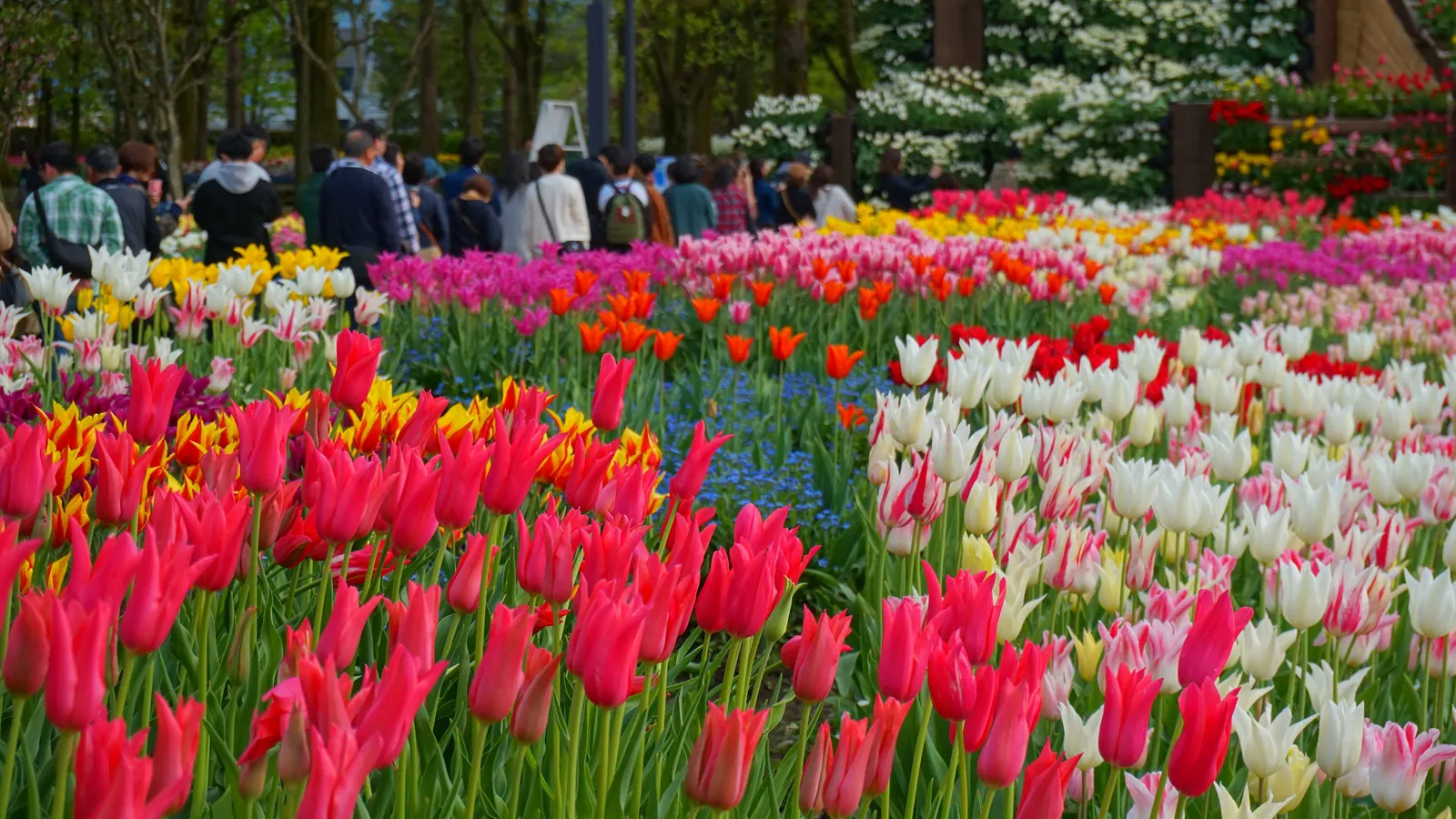
Why Snow Country Became a Home of Flowers
Why did the snowbound Tonami plain become a major producer of tulip bulbs? Not some southern flower garden, but a Hokuriku plain that sinks into a single sheet of white all winter. The pairing is no coincidence; it was a necessity that grew out of how Tonami lived.
The key to the answer is rice. Tulip bulb growing in Tonami is said to have begun as a second crop worked around rice farming. Bulbs were raised in the paddies after the rice harvest, bloomed in spring, then were lifted and shipped. A flower calendar was fitted into the gaps of the rice calendar. Well-drained alluvial-fan soil and the abundant snowmelt that waters the plain supported this double life of the fields.
Snow Was Not an Enemy but a Blanket
Surprisingly, the snow itself was an ally. Deep snow works like insulation laid over the ground, protecting the bulbs in the soil from hard frost and drying wind. What is a burden to people becomes a quiet bed for the bulbs. In snow country, winter was not an obstacle to growing flowers but one of its conditions.
In time, the tulip became the official flower of Toyama Prefecture. Not a producer's signboard, but the prefecture's own flower — a sign that for this land the tulip became something more than a cash crop brought in from outside.
Beyond the Bands of Color, Snow-Streaked Mountains
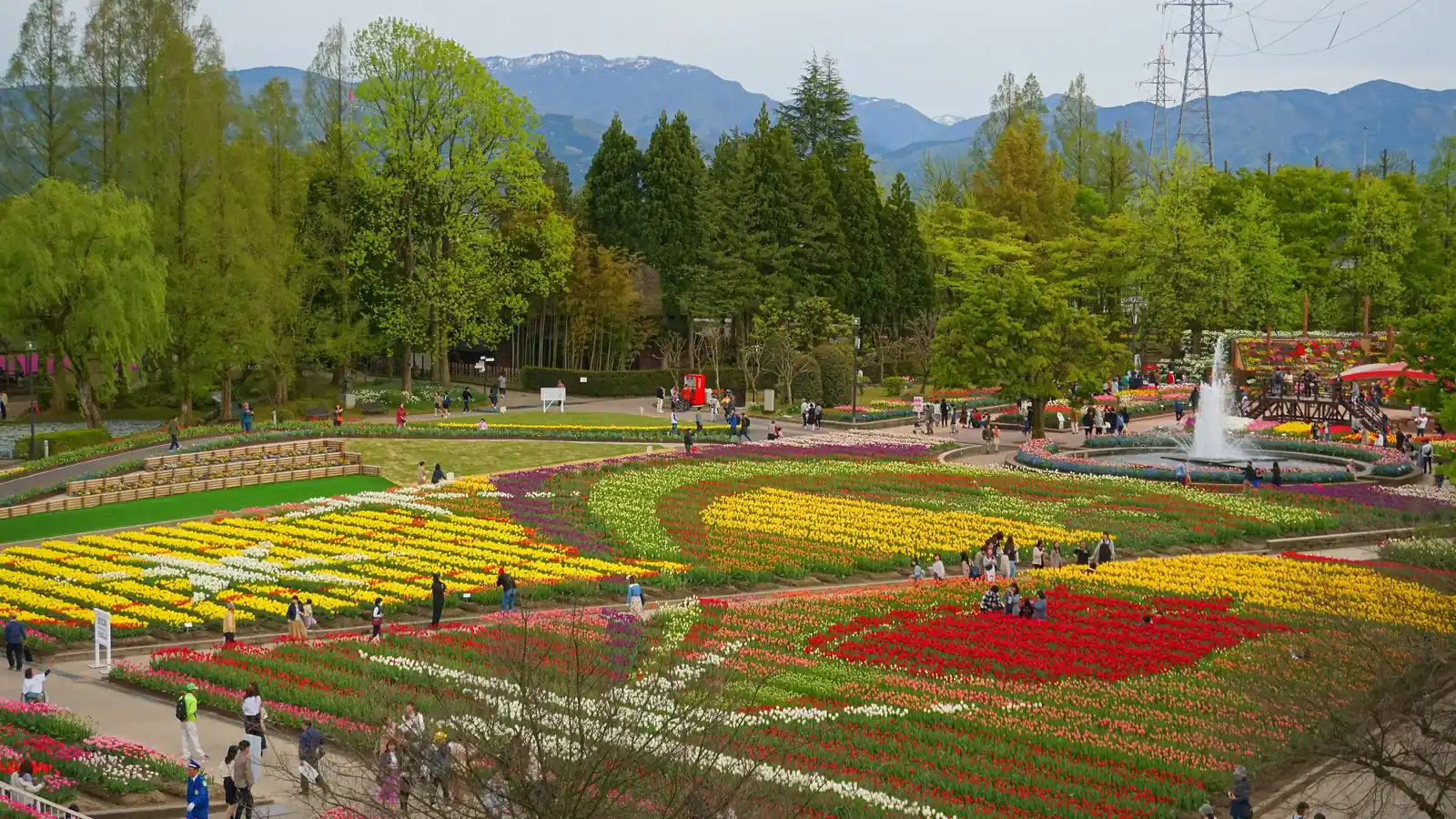
In spring, the fields of the Tonami plain become bands of pure color. Rows of red, yellow and white run straight along the furrows, and beyond them stands the Tateyama mountain range, still wearing its snow. A view that holds the colors of flowers and the white of snow in a single frame belongs to this plain alone.
A bulb field, however, does not let its flowers bloom for long. To fatten the bulbs, the blossoms are picked once they reach full bloom. The bands of color last only a few weeks of spring — and precisely because they are short-lived, the colors stay vivid in the eye.
Because there is a winter sealed in snow, there is snowmelt water, the ingenuity of a second crop, and the colors of spring. Tonami's tulips are the answer this land's winter arrived at.