Not the Same Kind of Old Streetscape
When walking Takaoka, lumping Kanayamachi and Yamachosuji together as the same "old streetscape" costs you half the experience. One is a town of metal casters, the other a town of merchants. Born of different origins, the two streets reward different ways of looking. The conclusion first: in Kanayamachi, look at the lattices and at your feet; in Yamachosuji, look at the walls. That alone changes how you walk.
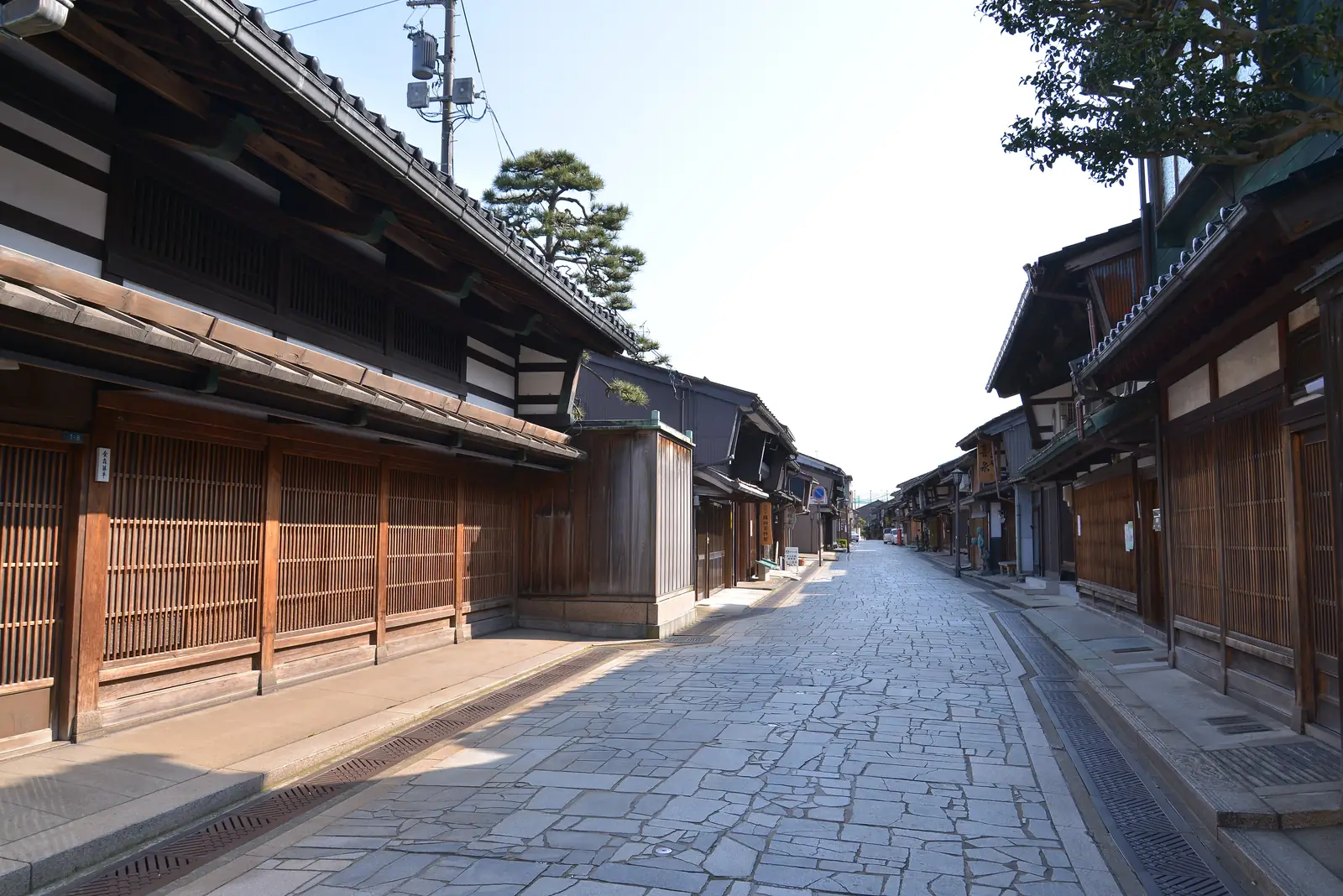
Kanayamachi is a craftsmen's quarter that began when Maeda Toshinaga, the founder of Takaoka, invited metal casters to settle here. Houses fronted with fine wooden lattices line the street, pieces of copper are set into the stone pavement, and metal ornament hides in eaves and signboards all along the way. As you walk, the sound of metal being polished sometimes drifts out from behind the lattices. The source of Takaoka's bronze ware lies in this quarter.
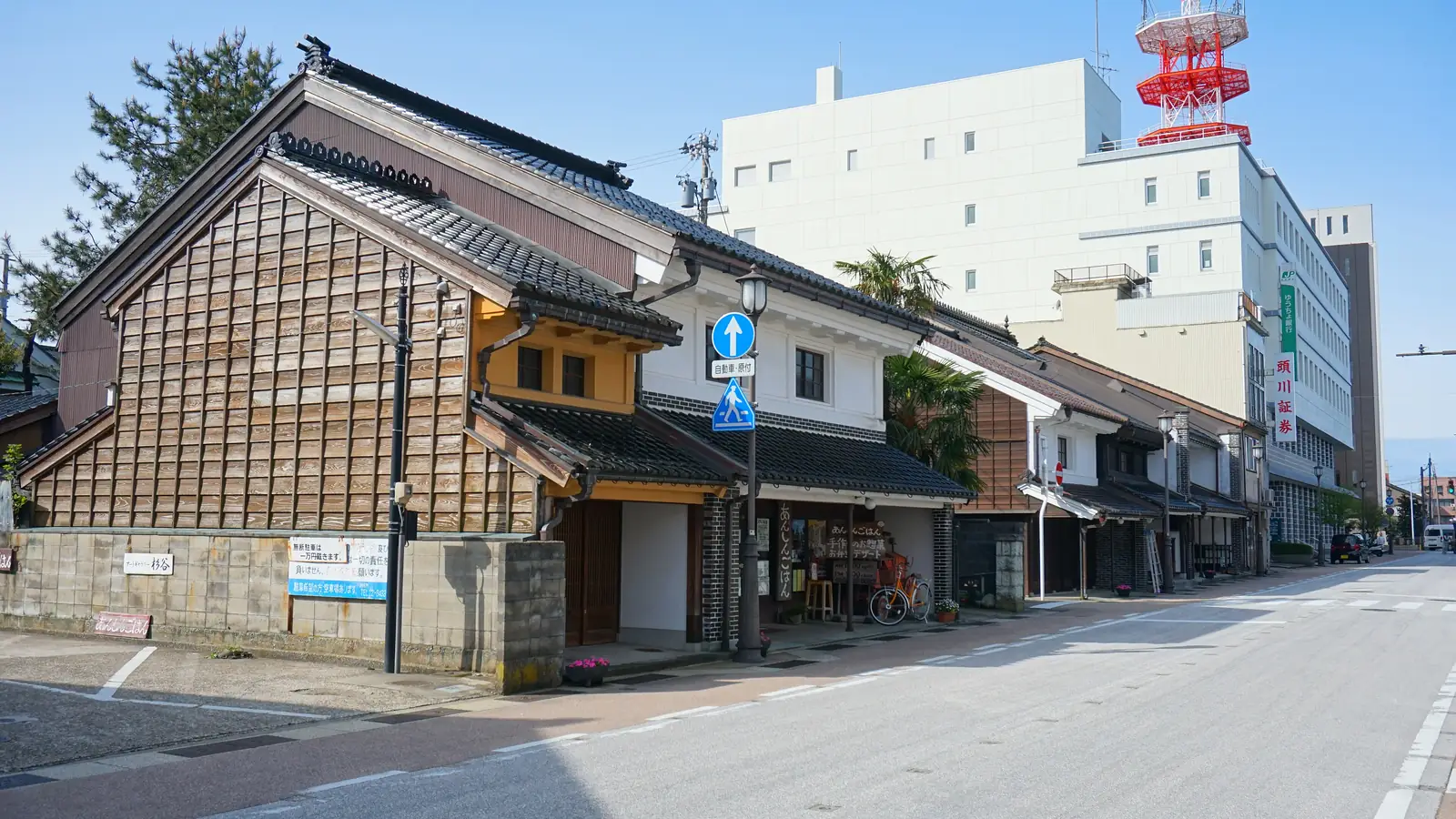
Yamachosuji, by contrast, is the town of merchant families who prospered in trade. After a great fire in the Meiji era it was rebuilt with fire in mind, and earthen-walled storehouse-style shops stand in rows, their imposing black plaster walls mixed with brick and Western-style ornament. A town with goods and counting rooms to protect differs even in the thickness of its walls.
What to Look for on Each Street
- In Kanayamachi — the run of fine wooden lattices, copper glinting in the stone pavement, cast-metal details under the eaves
- In Yamachosuji — black-plastered storehouse buildings, thick fire walls, Western-style windows and column ornament
- Getting around — the two streets are within walking distance of each other; do not turn back after seeing only one
- Timing — morning and evening are quiet, when the shadows on lattice and plaster are at their deepest
On Festival Day, the Two Towns Meet
Every year on May 1, Yamachosuji becomes the stage for the Takaoka Mikurumayama Festival. Festival floats adorned with metalwork and lacquerwork parade along the storehouse-lined street — the wealth stored up by the merchants' town and the skills honed by the craftsmen's town meet on top of a single float. Walk the two streets with fresh eyes first, and the meaning of this festival stands out in relief.
The craftsmen's town inscribed its life in lattices and stone pavement; the merchants' town, in plastered walls. A town's character shows in the floors and walls of its streets.