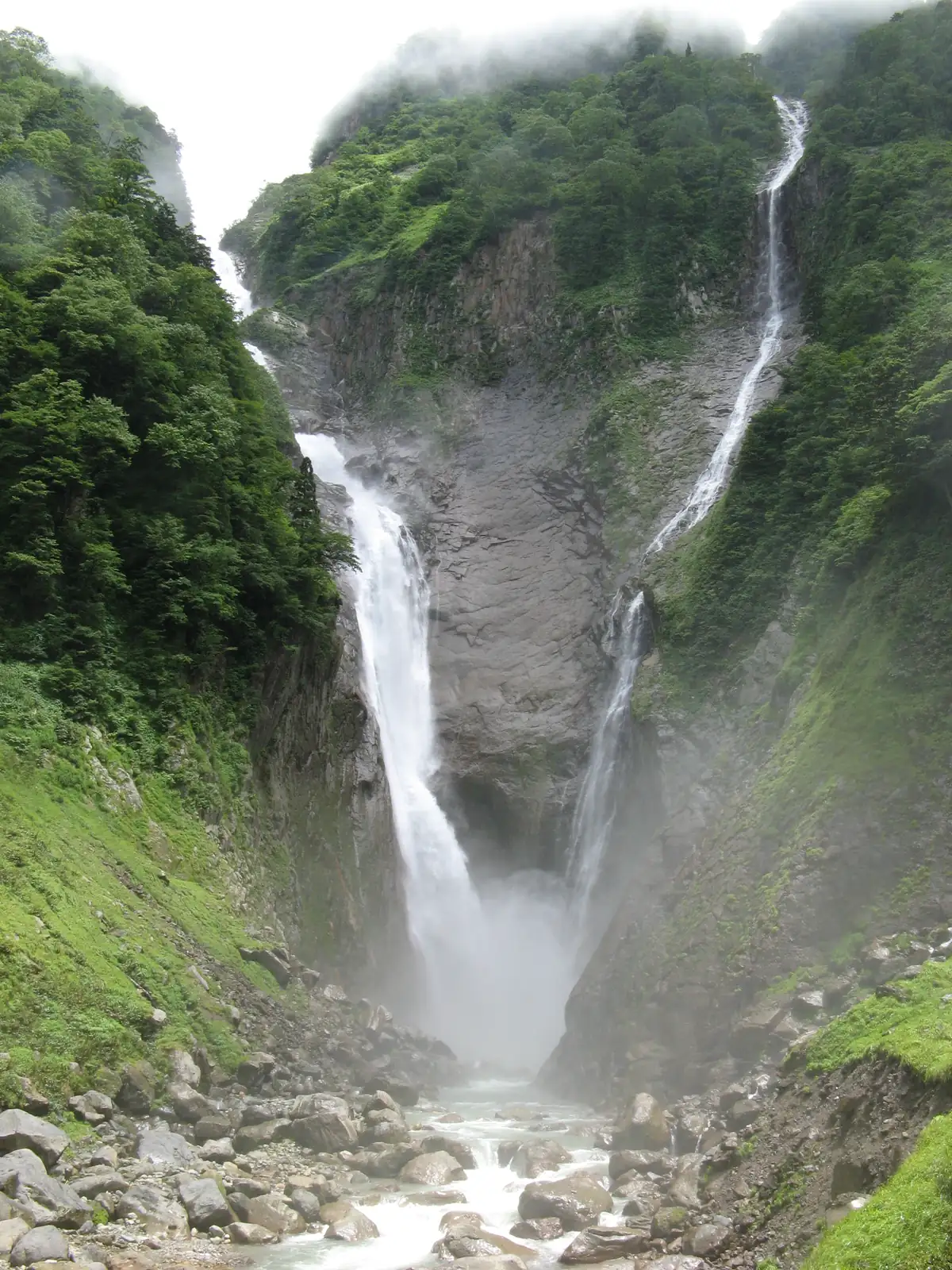
In Spring, a Second Waterfall Appears Beside the First
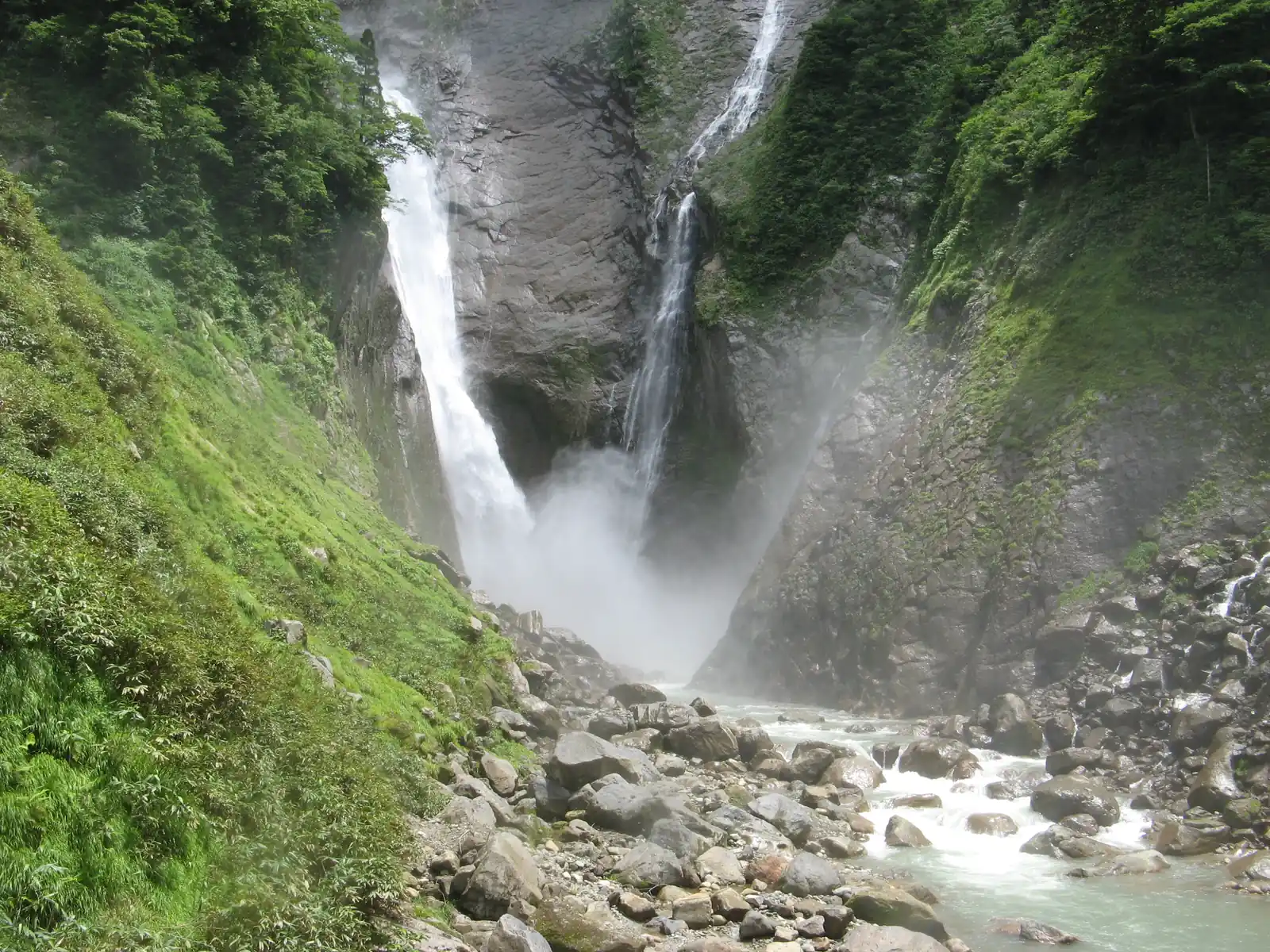
Almost everyone who looks up at Shomyo Falls in spring brings home the same question: there are two waterfalls — what is the other one? Right beside the 350-meter drop of Shomyo Falls, another band of water, thinner and longer, plunges down. Called Hannoki Falls, it appears only when snowmelt is abundant. Its name may be on the map, yet come at the height of summer and there can be no trace of it at all.
The Answer Lies in Tateyama's Snow
The explanation is a difference in water sources. Shomyo Falls keeps pouring throughout the year, but Hannoki Falls is fed mainly by snowmelt, and its flow rises only in the season when the mountain snow thaws in a rush. The area around the Tateyama mountain range receives some of the heaviest snowfall in the world. When spring arrives, the winter snow stored in the mountains turns to water all at once — and the overflow appears on the cliff face in the form of a second waterfall.
Shomyo Falls itself drops its 350 meters in four tiers. Facing you at the head of a V-shaped valley, the white ribbon of water standing upright on the sheer rock wall is unmistakable even from far along the walking path. Its drop is said to be the greatest in Japan, and at the peak of the snowmelt the swollen flow fills the whole valley with the sound of water. Draw near and the spray rides the wind to your face; the roar reaches your chest before your ears. When the light strikes at the right angle, a rainbow hangs in the wind-blown mist.
A Name Born from the Sound of the Water
The name Shomyo is said to come from the way the sound of the water resembled voices chanting the shomyo nembutsu, a Buddhist invocation. The falls have long been bound up with the mountain worship of Tateyama, and standing before the roar, you begin to understand a little how an earlier age could hear the voice of the Buddha in it.
The second waterfall is a seasonal line that spring's meltwater draws on the cliff. Once the thaw passes its peak it thins, vanishes, and appears again the next spring. Look at the falls and you can read how much snow remains in the mountains. Here, the volume of water tells you the season.