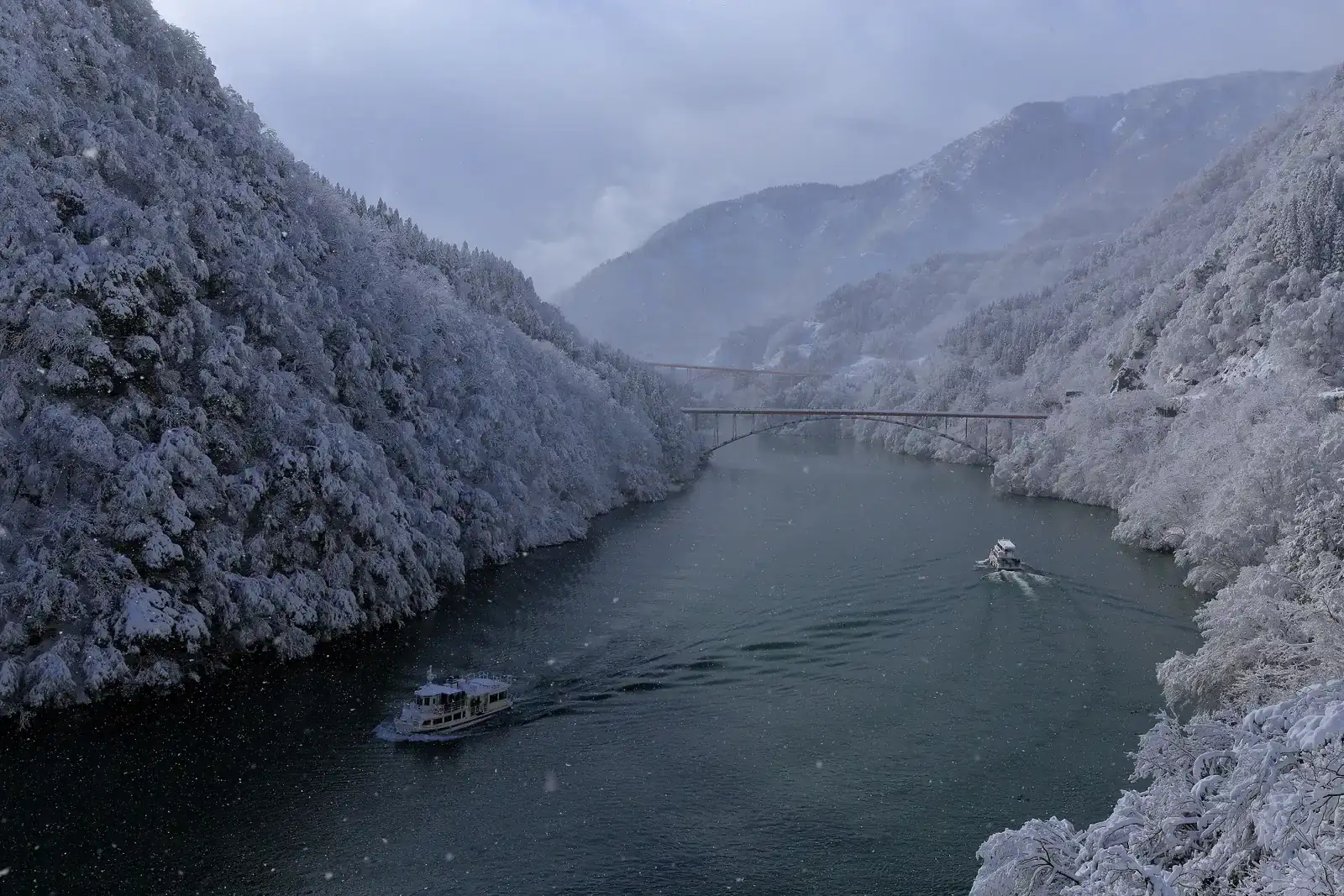
After the Engine Falls Silent
When the sightseeing boat slows, there is a moment when the sound of the engine suddenly lightens. What remains is only the slap of water against the hull and the wind crossing the mountains above. Until the engine turns again, the passengers all gaze at the water in silence. In Shogawa Gorge, the deep green surface mirrors the mountains on both banks, and the boat glides across that mirror.
There is a reason for this stillness. Shogawa Gorge is a ravine where a dam raised the water level, leaving a river as calm as a lake. A river that makes no rushing sound carries the small sounds of the mountains clearly — which is why birdsong reaches you from so far away.
A Front Door That Opens Only onto the Water
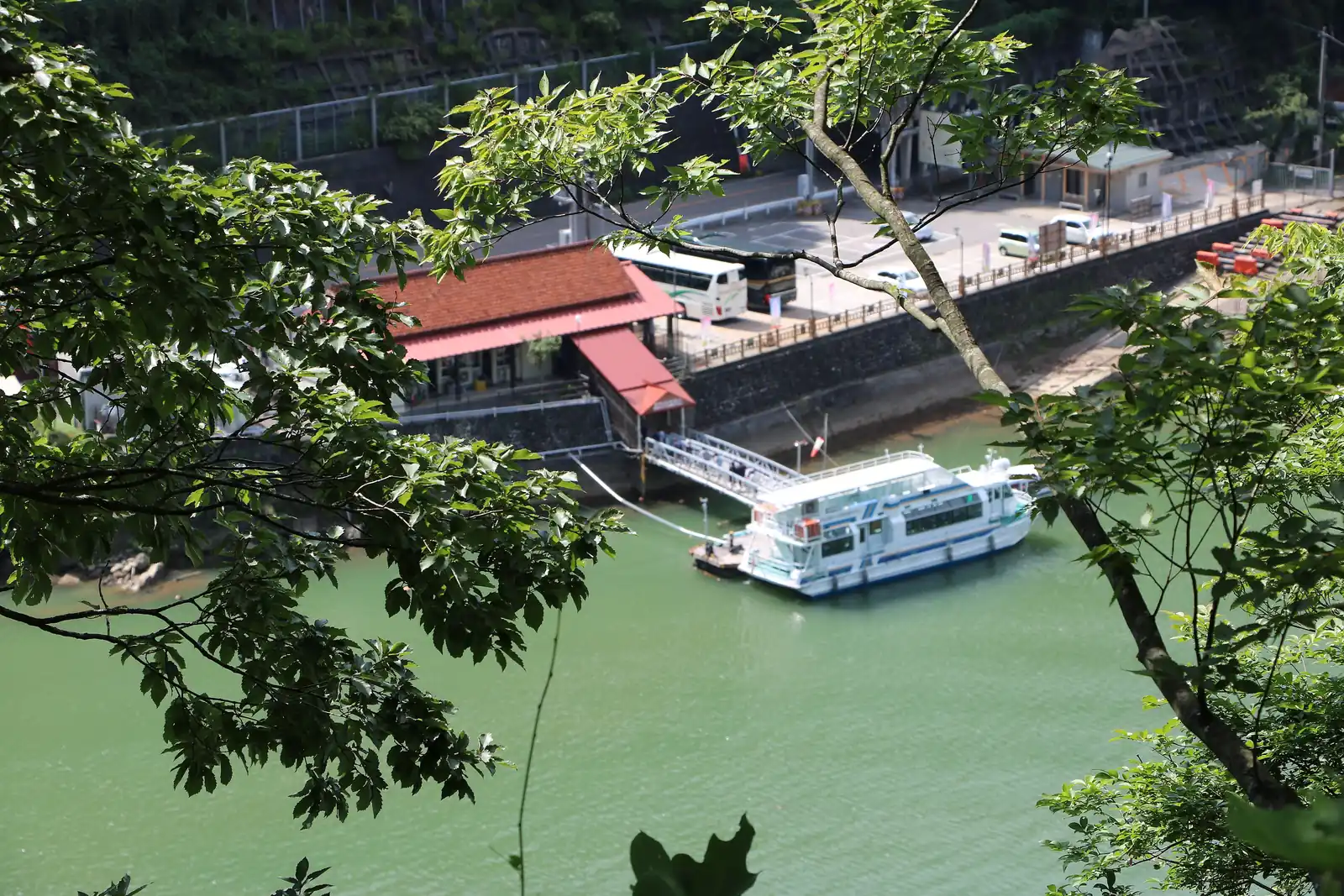
The sightseeing boat carries you deep into reaches of the gorge that no road can see. A thin road may appear on the mountainside across the water, but it eventually breaks off, and from there on the gorge belongs to boats alone. And in this ravine there really is a hot-spring inn that can only be reached by boat. To get to this solitary inn, connected to no road, you have no choice but to board a boat at the pier. A place whose only front door opens onto the water still exists in this day and age.
For those of us who live assuming a car can take us anywhere, this unreachability rings fresh. You cannot approach faster than the boat travels, and the boat decides when you arrive. The gorge's own time begins the moment you hand over control of the journey.
A Mirror That Changes Color with the Seasons
The mirror of the water changes what it reflects with each season. Spring brings mountain cherry blossoms and new green; summer, a dense deep green; in autumn the foliage of whole mountainsides catches fire on the water; and in winter, capped with snow, the gorge becomes an ink-wash painting. Mist rises easily in the morning, and before the tour boats begin to move, the gorge is a world of birdsong and water alone. Step off the boat and look back, and the watery road you have just traveled bears not a single trace.
Because no road ever reached it, this stillness has survived untouched. Shogawa Gorge is a landscape that inconvenience preserved.