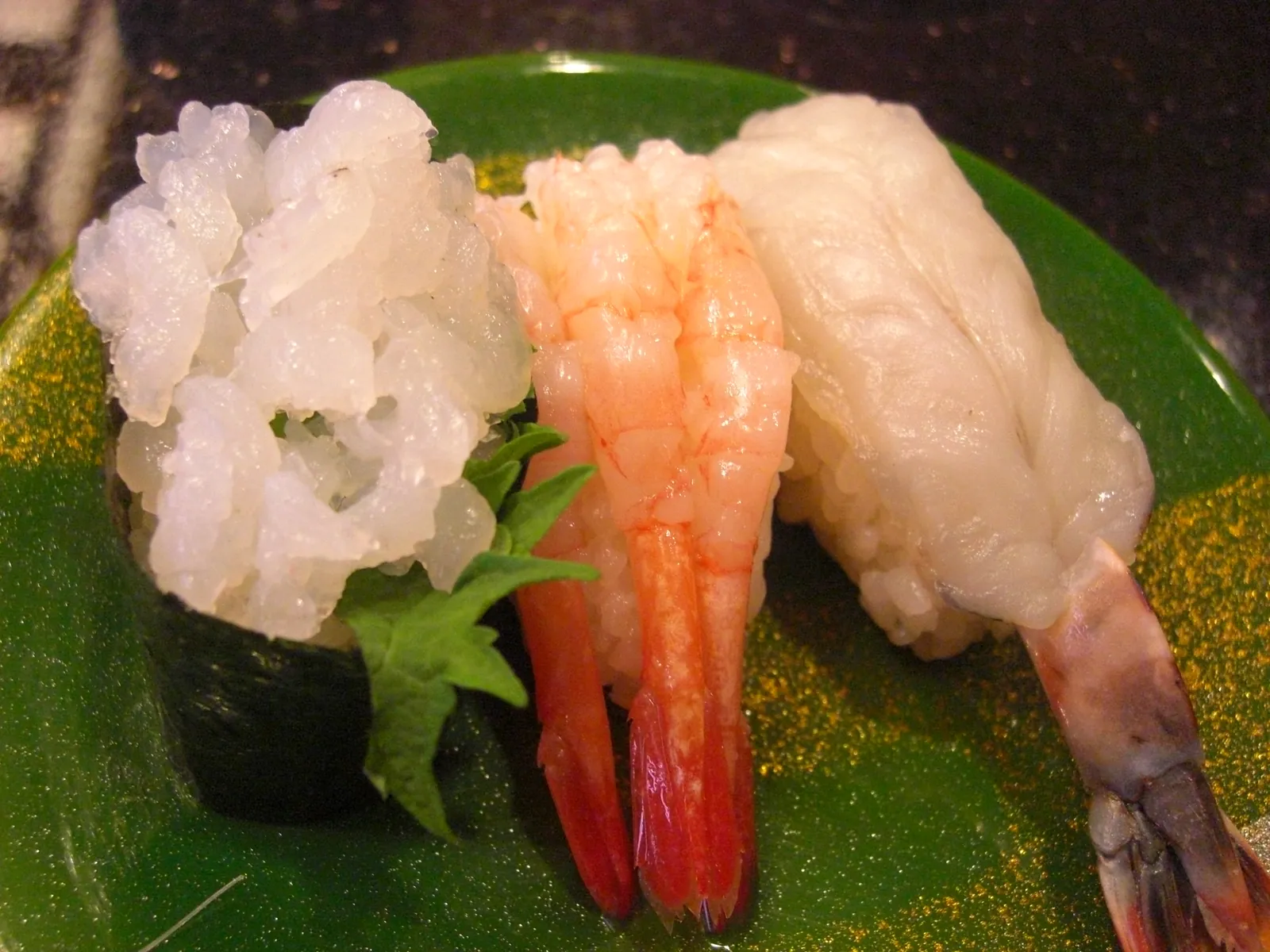
The answer lies in the shape of the bay floor
Why are shiroebi (white shrimp) caught only in Toyama Bay? Strictly speaking, shiroebi themselves live in other seas as well. But Toyama Bay is said to be the only place in the world where they gather in numbers large enough to support a fishery. The key is the topography of the bay floor.
The floor of Toyama Bay is cut by deep undersea canyons that plunge from close to shore down into the depths. Shiroebi school in the deep water of these canyon channels, and the fishing takes place directly above them. In other words, deep-sea fishing grounds lie within a short run of the shore. In a sea where shallow shelves stretch on and on, this would be impossible. That creatures of the deep are this close is what makes the bay so singular — and the reason shiroebi fishing is viable in Toyama Bay.
A pale cherry-pink, translucent body
Freshly landed shiroebi are a pale, pinkish translucent, glowing faintly when they catch the light. The nickname "jewel of Toyama Bay" comes from this appearance. The body is small, and the flesh yielded by a single shrimp is the merest sliver.
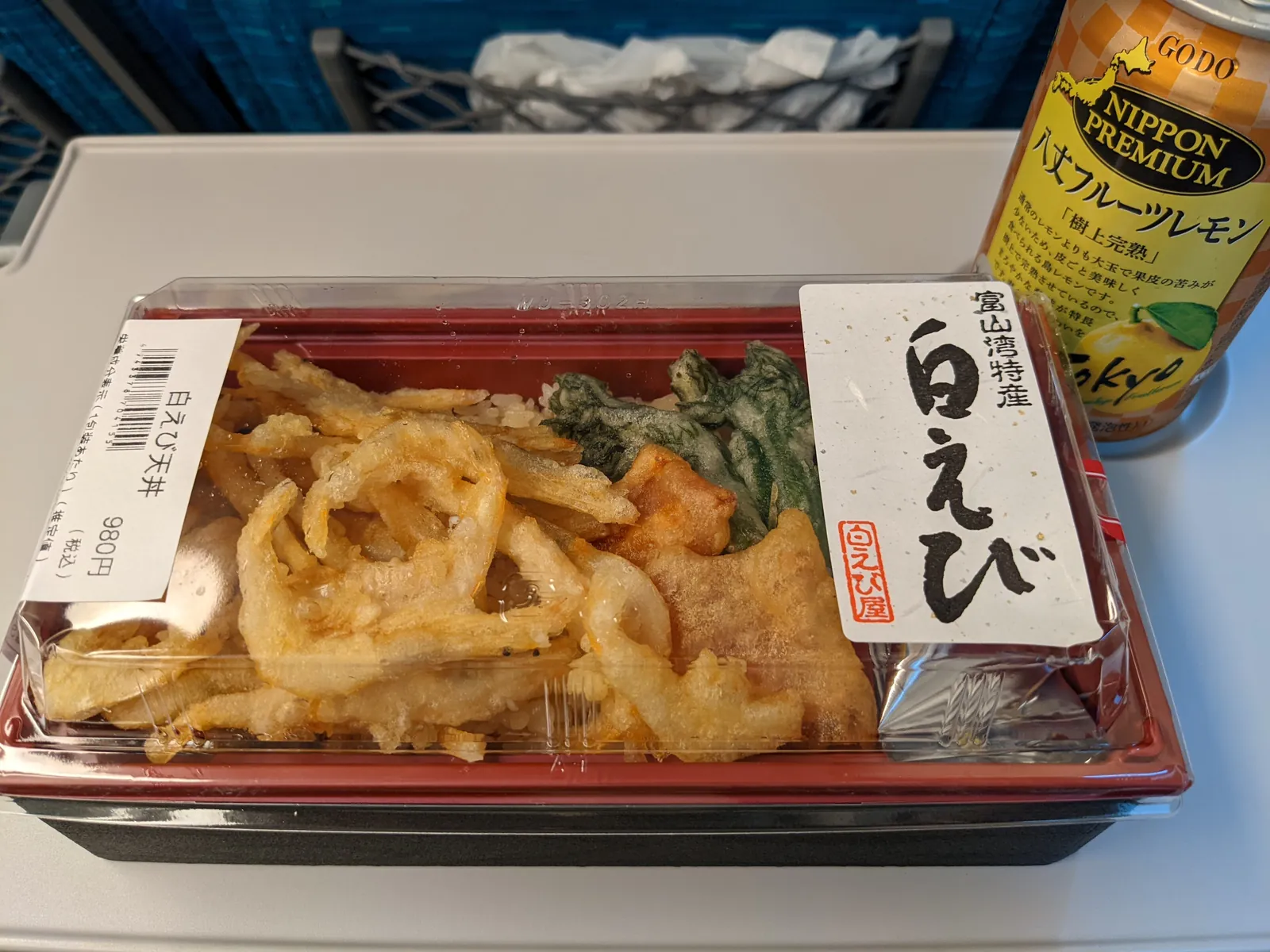
Which is why shiroebi sashimi is a mass of labor. The tiny shells are peeled one shrimp at a time, the translucent flesh gathered until, at last, there is a single mouthful. On the plate the flesh folds softly over itself, and lifted with chopsticks it lets the light shine through. The sweetness and gentle stickiness on the tongue lie on the far side of all that work. Fried as kakiage it turns fragrant; cured as kobujime (kombu-cured sashimi) its savor deepens; as a sushi topping it takes the leading role on gunkan rolls and rice bowls. Whatever the preparation, at the center of it is that small, small flesh.
Smallness becomes the unit of luxury
Shiroebi's luxury sits at the opposite pole from the boldness of a large fish. Small bodies raised from a deep canyon, peeled by human hands one shrimp at a time, finally amounting to a single plate — think of how many dozens of shrimps' handwork one serving represents, and the weight of each mouthful changes. With every bite, you taste the labor folded into it. In Toyama Bay, smallness becomes the unit of luxury.