Open the box carried home from the wedding and there it is: a splendid whole sea bream, tail proudly arched — or so it appears. Lay it on the cutting board and put a knife to it, and what emerges beneath the red skin is pure white fish paste. It is kamaboko — fish cake — in the shape of a sea bream. At weddings in Toyama, this one fish has long played the leading role among the gifts guests take home.
A Sea Bream Shaped to Be Sliced
Saiku kamaboko (decorative fish cake) is made by tinting fish paste, forming it into auspicious shapes, and steaming it. The classic is the sea bream; cranes and turtles, pine-bamboo-plum, even Mt. Fuji join the lineup. Used mainly as a wedding gift, it also goes by the names "celebration kamaboko" and "wedding kamaboko," and it appears in the national compendium of traditional foods — a taste of Toyama with its pedigree in order. It looks like an ornament, but it is food. And not merely food to be eaten: it is food whose meaning lies in being cut.
The Gift Is Not Complete Until the Neighbors Get Their Share
This sea bream is not meant to sit on display in the alcove. The family that receives it takes a knife to it, slices it up, and delivers the pieces to relatives and neighbors. The custom is called osusowake — sharing out one's good fortune, also known as ofukuwake — and one fish ends up divided across many tables. Happiness is not to be kept to oneself; the kamaboko sea bream is the apparatus that makes sure of it.
It is said to have begun as a stand-in for the real thing. A genuine sea bream, that most auspicious of fish, is simply not to be had when the catch fails or the sea turns rough. A kamaboko sea bream, on the other hand, ignores the weather, slices cleanly in a way a real fish never does, and keeps well. Count up the substitute's apologetic little advantages and they turn out, one by one, to be exactly the strengths you want in something made for sharing. Somewhere in there, most likely, is why the custom has been handed down so long.
Toyama Kamaboko Comes Without the Board
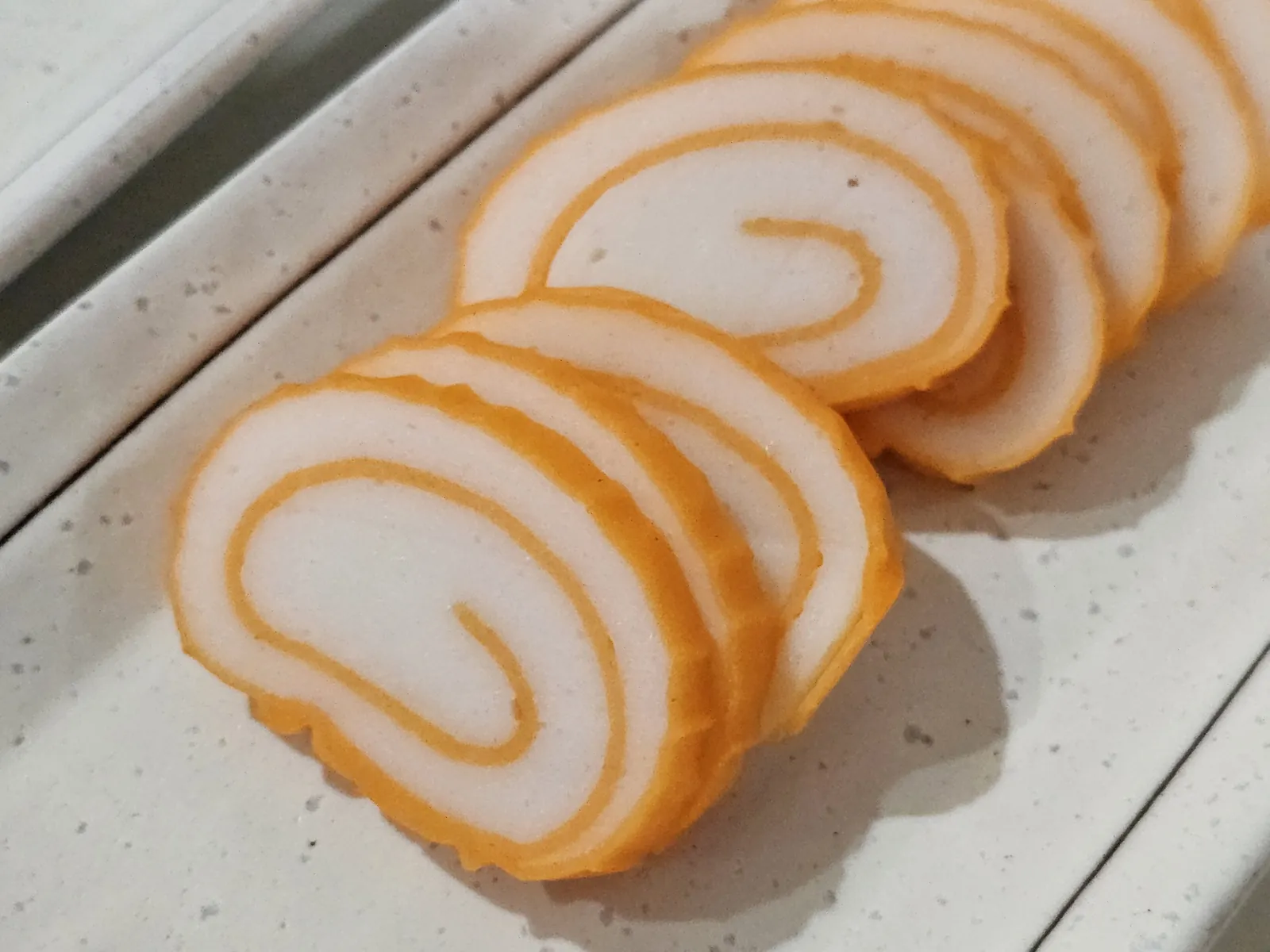
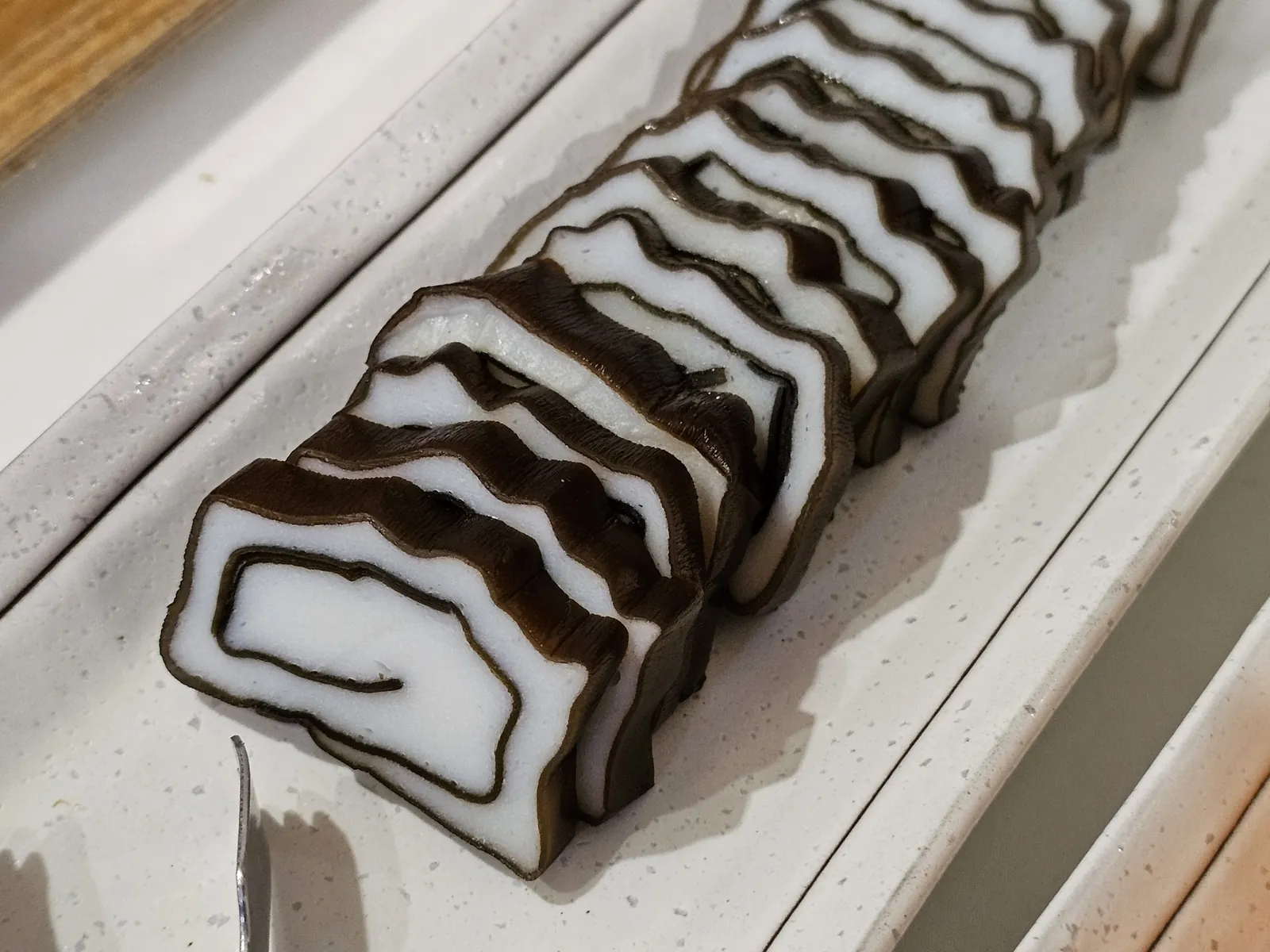
Slicing away at saiku kamaboko, you notice something: there is no wooden board attached. The board-mounted kamaboko most people picture first is not the mainstream in Toyama. Kamaboko here does without the board and is generally steamed. On everyday tables you find rolled kamaboko instead — akamaki with its red spiral, and kombumaki, rolled with kelp. The kombu roll is said to have begun when kelp carried in on the kitamaebune trading ships was wrapped around the paste in place of a board. From the celebratory sea bream to the everyday spiral, the shapes change freely — precisely because they were never tied to a board.
A slice of the divided sea bream goes onto a small plate and off to the house next door. What saiku kamaboko carries is not so much the taste of fish as a portion of the celebration. The shape is a sea bream; the substance is congratulations.