The Answer to the Paradox Is a Single Sea Route
No kombu kelp grows in the sea off Toyama. And yet kombu sits in Toyama's kitchens as if it had always belonged there. Sashimi is cured between sheets of kelp, rice balls are wrapped not in nori but in wisps of tororo kombu, and even kamaboko fish cakes come wrapped in it. How did a place that harvests none become this fond of kombu?
The answer lies out on the water. From the Edo period into the Meiji era, the kitamaebune trading ships that plied the Sea of Japan called at Toyama's ports loaded with kombu from Hokkaido. The route that carried kelp southward is also called the Kombu Road, and Toyama's ports sat along the way. The port towns prospered with the kombu cargoes, and the taste worked its way down into home kitchens. Many people from Toyama, in turn, crossed over to Hokkaido to work in the kelp harvest, and producer and consumer are said to have been bound by human ties as well. A foodstuff carried in by sea became, over the generations, the taste of the land itself.
The Wisdom of Kobujime
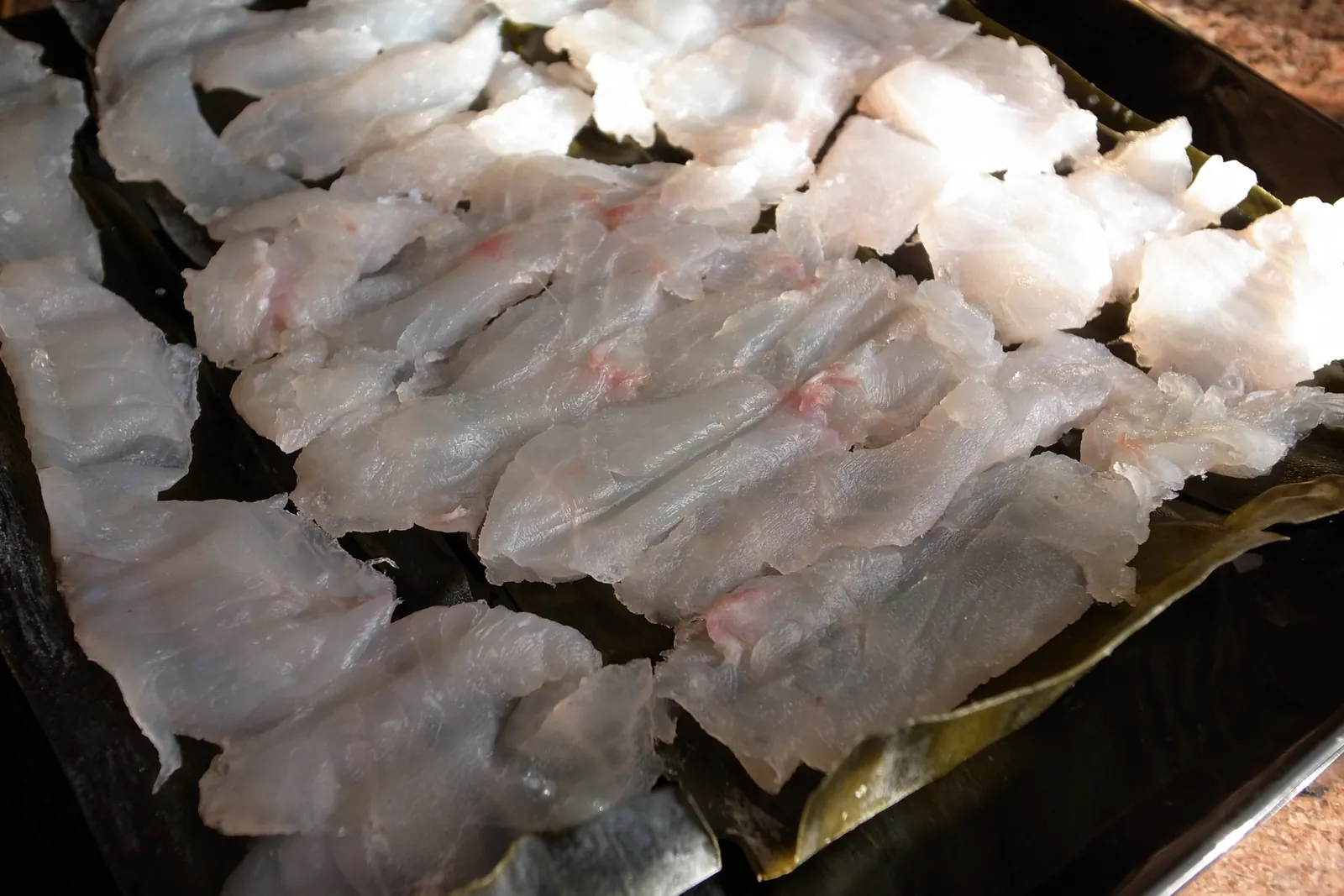
At the summit of Toyama's kombu culture stands kobujime (kombu-cured sashimi). Press slices of raw fish between sheets of kombu and let them rest: excess moisture is drawn out, the flesh tightens and turns silky, and the kelp's savor seeps in, transforming it into something deeper than plain sashimi. In the days before refrigeration, a device for keeping fish a little longer — and eating it better — survived unchanged as a local dish.
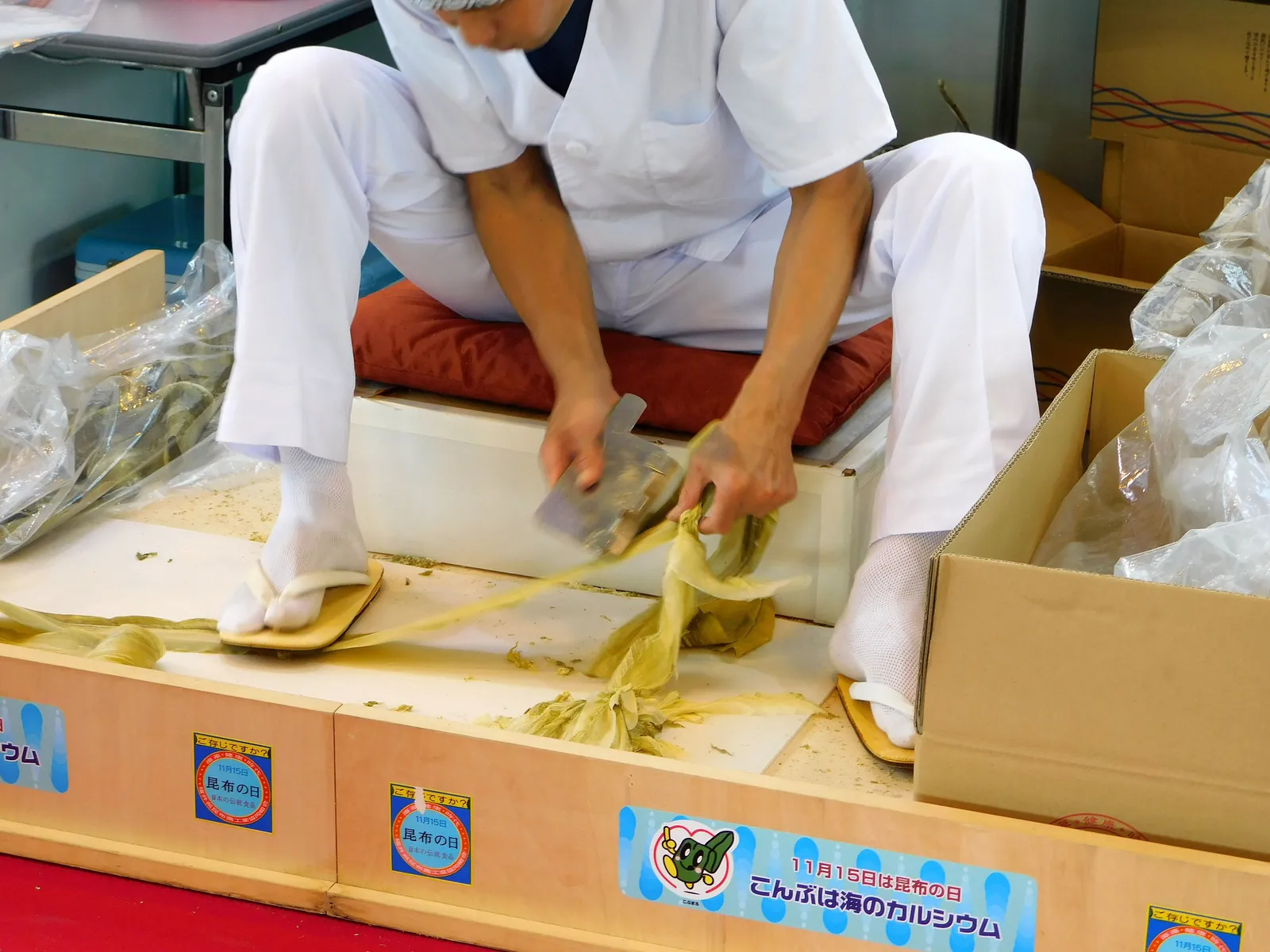
On the everyday side, there is the tororo kombu rice ball. Wrapped in kelp shaved into airy fluff instead of nori, it is a fixture of Toyama's shop shelves and an everyday sight in lunch boxes. Its faint tang and savor soak into the rice — an unpretentious taste.
A Local Taste from Across the Sea
Neither kobujime nor tororo kombu is made from anything out of Toyama's own sea. Yet it would be hard to find flavors more distinctly Toyama. Ships carried it, kitchens raised it, generations passed it on, until a taste from across the sea quietly became the taste of home. The way this contradiction resolves itself is exactly where the food culture of a port region gets interesting.