Do not stop at just one
If you are buying masu-zushi (pressed trout sushi) in Toyama, here is the conclusion up front: do not settle for one — buy two or more and compare them. Each maker's masu-zushi is distinctly its own, and which one tastes best genuinely divides opinion. The first box is just a souvenir; from the second on, it becomes a game of finding your own taste.
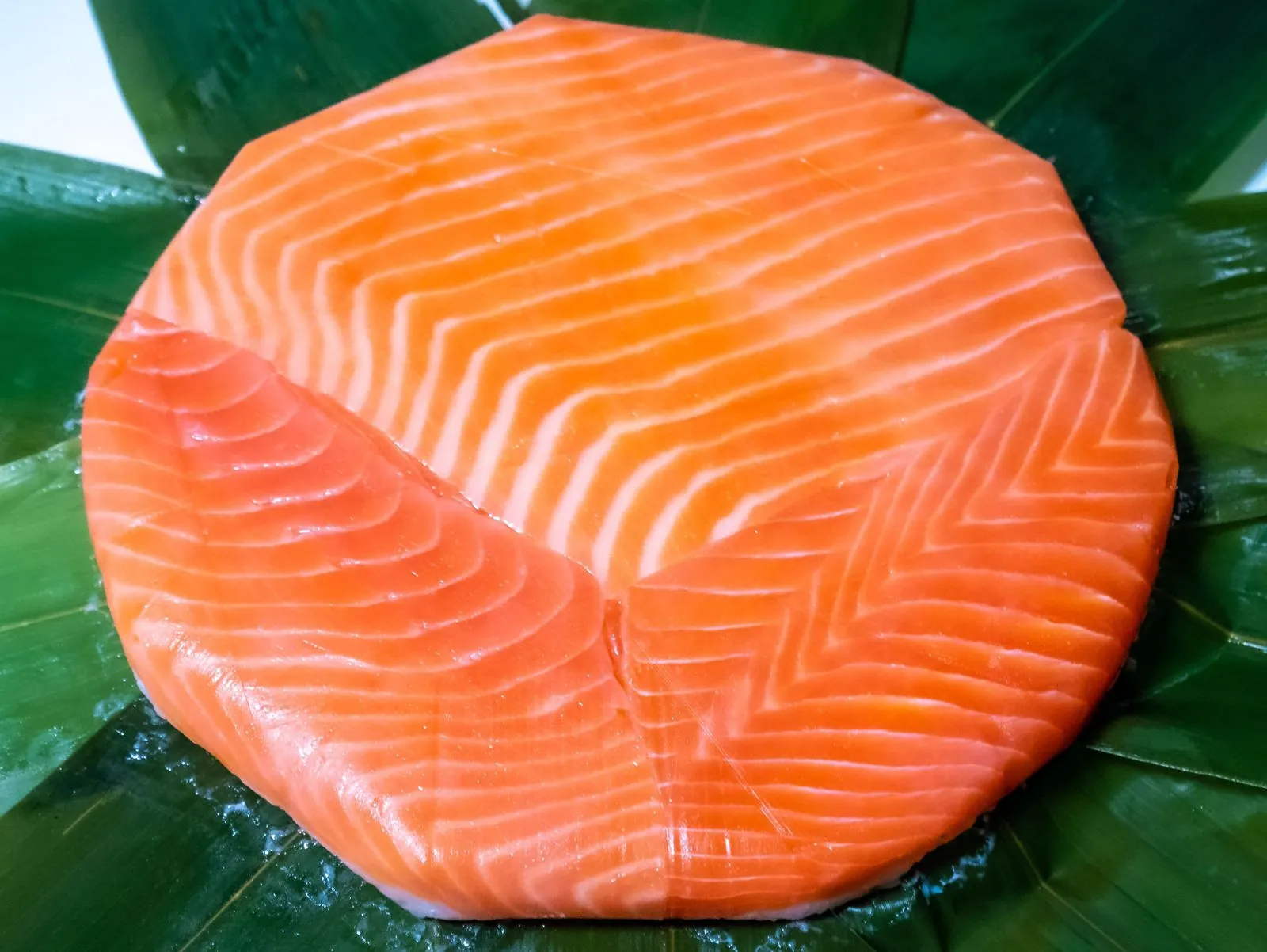
The form is shared. A round bentwood container is lined with bamboo leaves, salmon-pink trout is laid over vinegared rice, and the whole is wrapped in leaves folded in a radial pattern and pressed — an old style of pressed sushi, said to have won its reputation when it was presented to the shogunate in the Edo period. Lift the lid and the first thing you see is the green of the overlapping bamboo leaves. Each leaf you peel back releases a waft of fresh, grassy scent, until beneath the last one a glossy circle of salmon pink appears whole — the ritual of opening is itself part of the feast.
Three things to look for
The differences appear once the leaves are open. There are three main points of comparison.
- The thickness of the trout — from thick cuts where the fish takes the lead, to thinner ones that merge with the rice
- The vinegar — from bright and sharply tart to soft and restrained
- The pressing — from firm and dense to light and airy in the mouth
Under the single name masu-zushi, there are as many combinations of these three as there are makers. Station kiosks and souvenir shops carry several makers side by side, so the comparison begins the moment you choose.
There is a knack to cutting, and to the order you eat
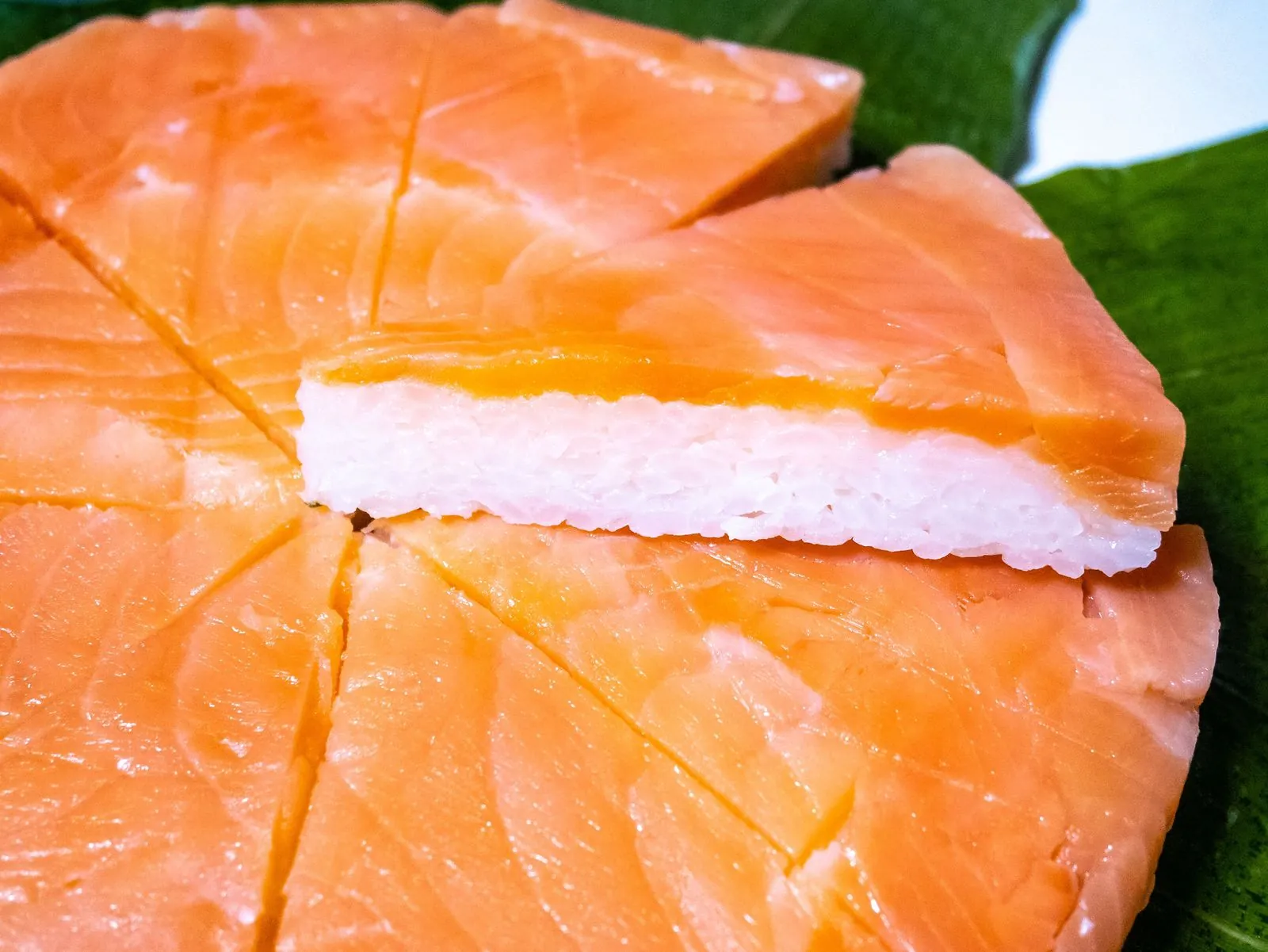
A few practical steps as well.
- Cutting — open the leaves and, leaving it in its container, slice radially from the center like a cake
- Order — start with the milder vinegar; a strong one first will blunt the subtlety of the next
- Comparing — match slice against slice from the same position; the pressing is firmer at the center than at the edge
Use the first as your benchmark and measure the second against it. Sliced and laid side by side, the differences in thickness, vinegar, and pressing are far bigger than you would imagine — enough to turn a souvenir into a close reading of food.
Keep one for the morning
The comparison has a sequel. Masu-zushi spread across Japan as a station bento — food made to travel, with no need to open it on the spot. In the evening, slice one up and pair it with local sake, working out which direction your taste runs. And buy one extra — so that the next morning, in the kitchen of your lodging, you can open the bamboo leaves once more.