There Is No Line, Anywhere
How many years old does a house have to be to count as a kominka (traditional Japanese house)? The question comes up often, but in fact no line exists that would answer it. There is no legal definition of a kominka; rules of thumb about age are sometimes quoted, but all of them are merely convention. If age does not decide it, what is it that makes a kominka a kominka?
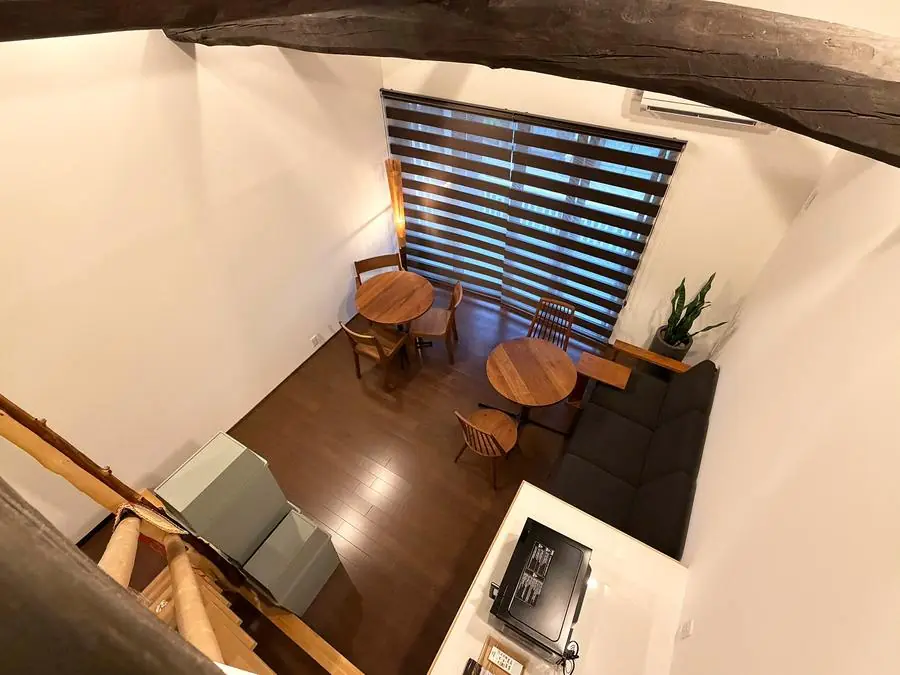
The clue is in the construction. A frame of massive beams and posts; a doma, an earthen-floored space you can enter without taking off your shoes; strings of rooms that merge into one great hall when the sliding doors are lifted out. These ways of building, which have all but disappeared from today's housing, are the real substance of the word. The age is only a result; what deserves your eye is the skeleton of the house.
A house of joined timber, refined over generations against its local climate, is also a record of technique in itself. In deep-snow country the shape of the roof changes; in merchant towns, the use of the street frontage changes. Houses differ from region to region because each was an answer to its own piece of land.
In Toyama, many of those answers were addressed to snow. The gassho-style farmhouses of Gokayama pitch their roofs steeply to shed the deep snowfall, while massive beams and a powerful roof frame bear the weight of the snow that stays on all the same. Their broad attics are also known to have doubled as workspaces for raising silkworms. In the towns of the plain, meanwhile, the machiya townhouses narrowed their frontage and stretched deep, joining trade and daily life along a single earthen-floored passage. Even within one prefecture, the depth of the snow and the nature of the work reshape a house this much. The thickness of a single beam records the weight of that land's winters.
A Surer Measure Than Age: Once Demolished, It Never Comes Back
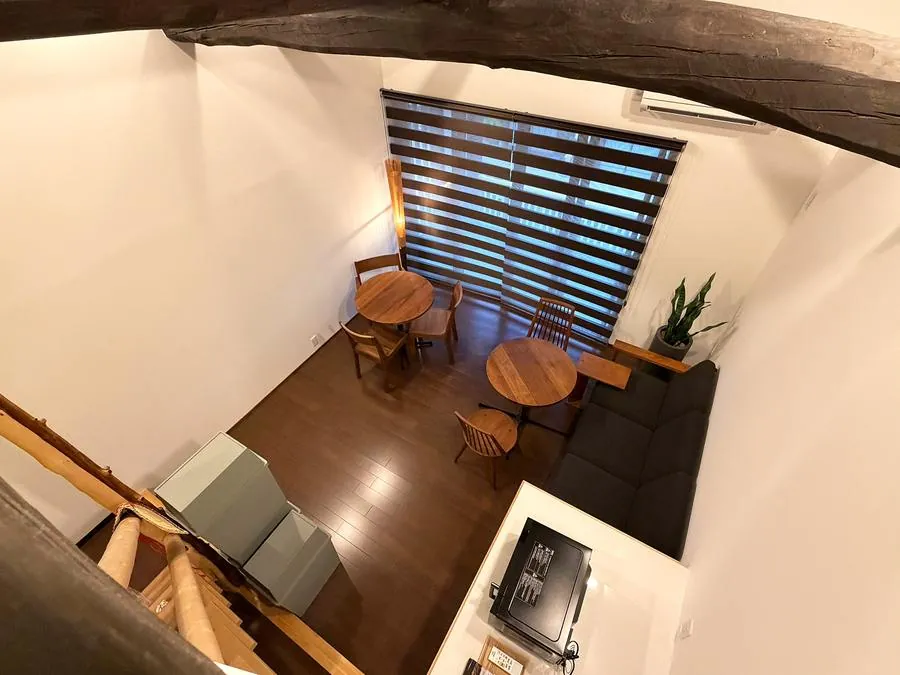
The other clue is how hard these houses are to reproduce. The beams and posts of a kominka often use timber of a girth that is difficult to obtain today. Building a new home with the same joined-timber frame has become a rare thing. Tear one down, and the same house will never stand again. This irreversibility is a surer measure of a kominka than any count of years.
That is also why staying in one has a clear point. Not gazing at an exhibit through glass, but passing the night and meeting the morning inside that very frame. The heft of the beams when you look up at the ceiling, the cool air of the doma — these are things you can only confirm with your body, not from a book.
The definition can stay vague. But a night of sleep under those massive beams is concrete through and through.