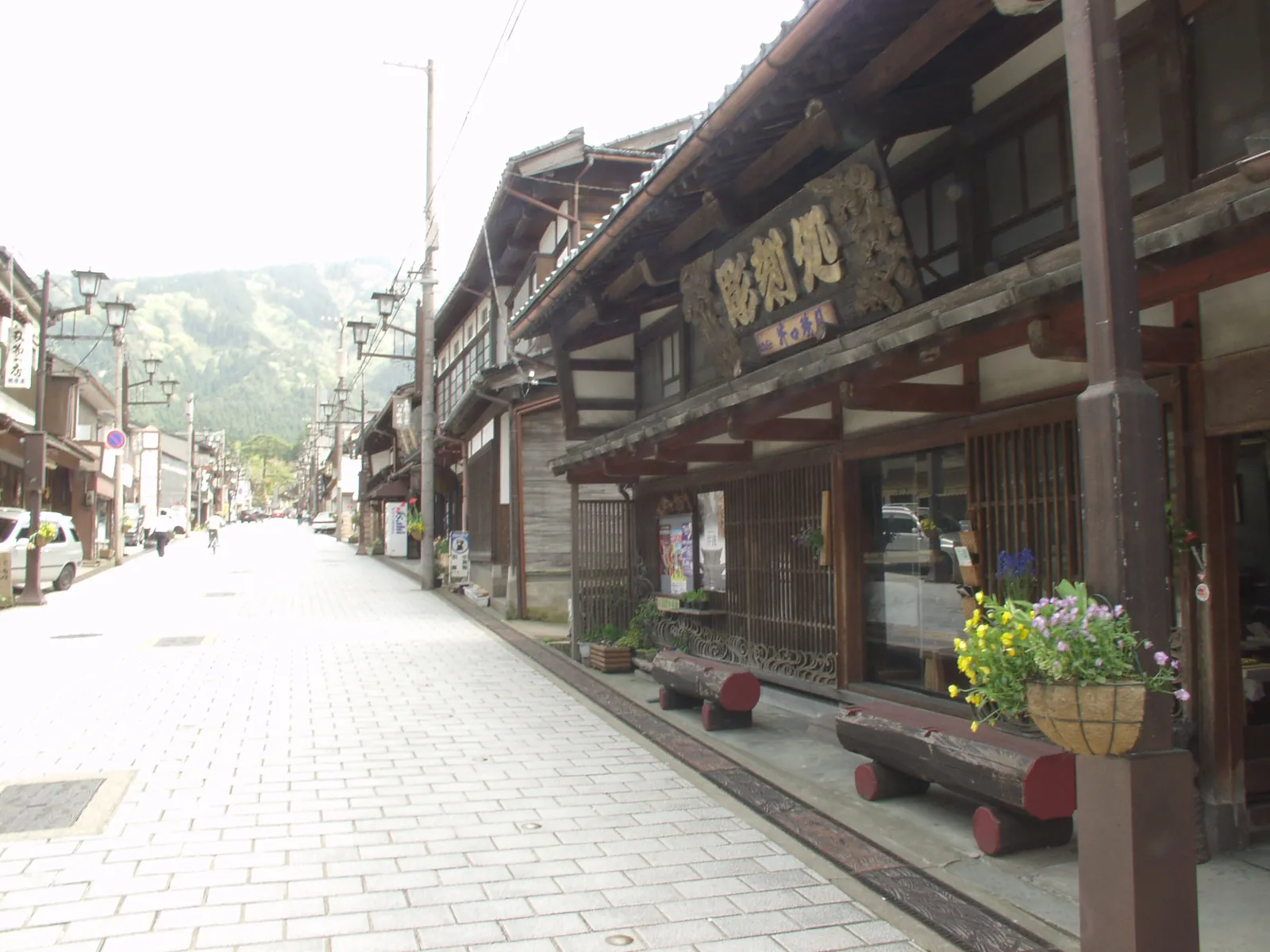
The Sound of Mallets Spills into the Street
A dry knock, knock echoes along the stone-paved street. Turn toward the sound and you find a workshop with its doors thrown open, a craftsman striking the butt of a chisel with a wooden mallet. On Yokamachi Street in Inami, in the city of Nanto, this sound runs in the background of the town all day long.
Nor is it a single sound. A hard, high note here; a soft, low one there. The tone shifts subtly with the wood being carved and the way the blade enters it. Stop to watch, and the craftsmen never pause. The scent of wood drifts from the doorways, and carving shavings pile up around their feet. Towns where the workplace opens straight onto the street like this are rare anywhere in Japan.
Nameplates, Shop Signs, Even the Transoms
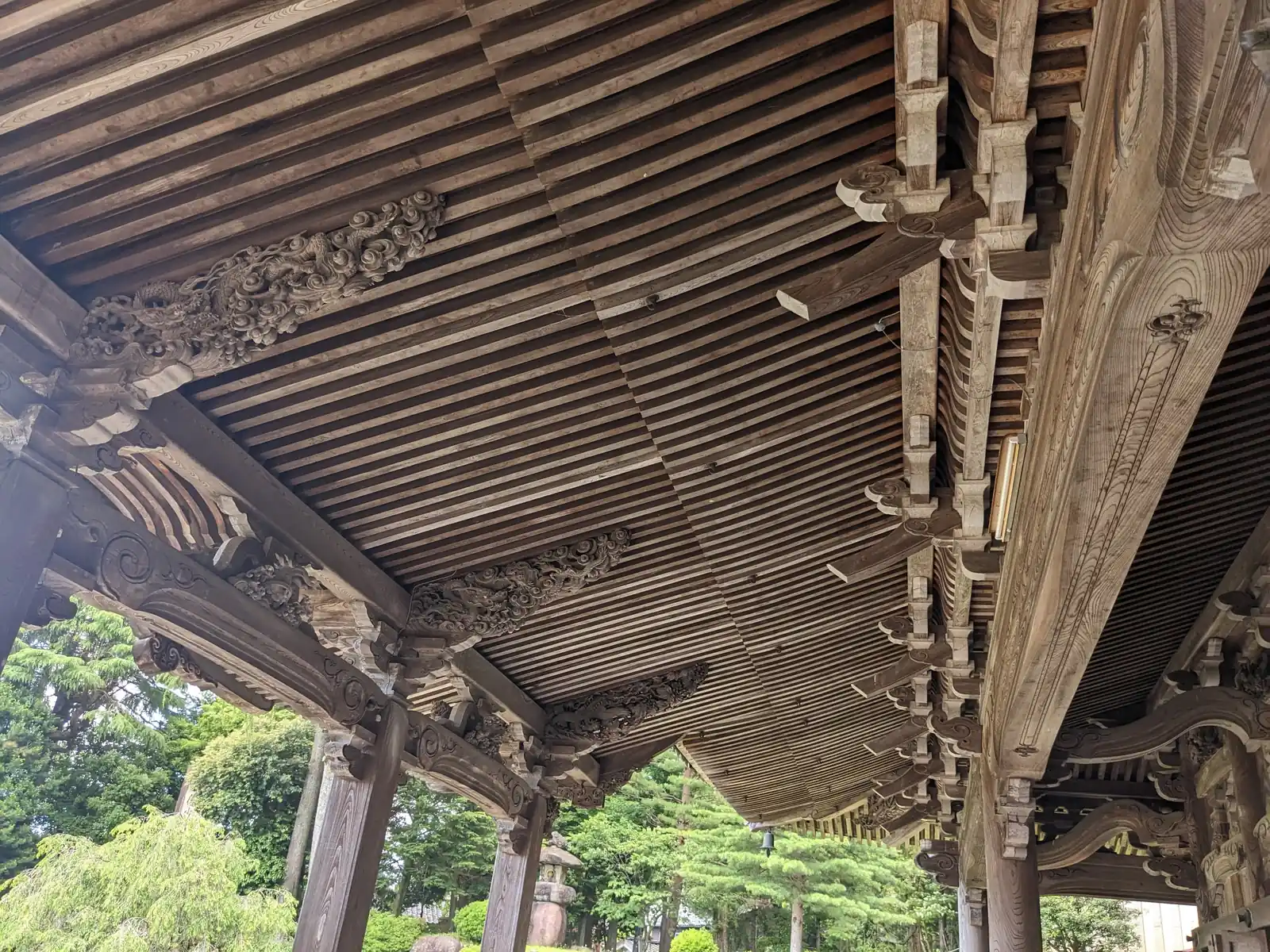
Walk on and you begin to notice that the carving is not confined to the workshops. House nameplates are carved wood, shop signs are carved wood — and even the bus stop sign is a carving. Look up and carvings sit under the eaves; peer in and more hide behind the lattices. Hunting for them slows your pace without your noticing, your eyes busy above and below. The whole town feels like an exhibition hall with no price tags.
Rebuilding a Temple Became the Town's Industry
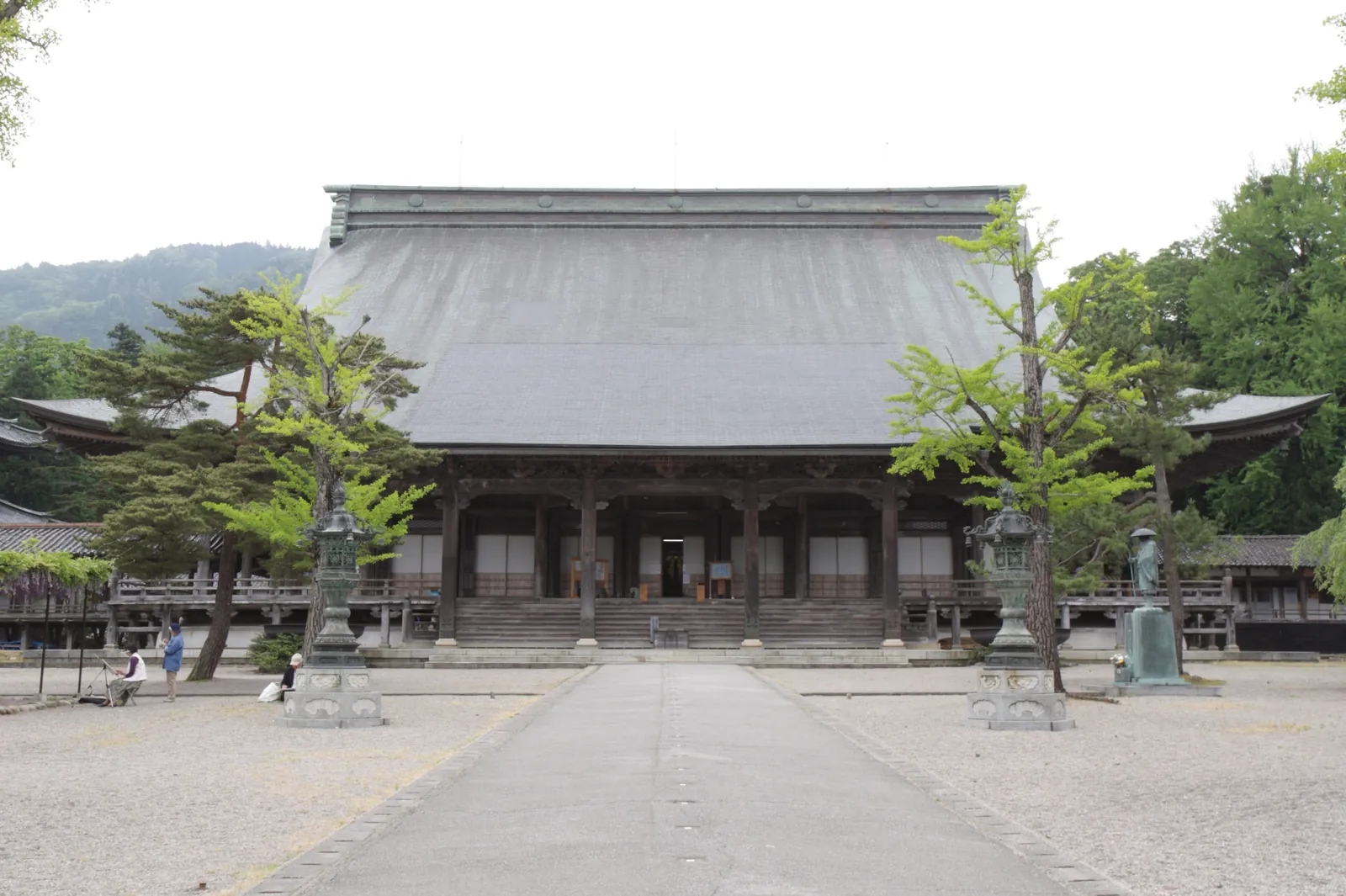
This density has a history. Inami grew up as the temple town of Zuisenji, and in the work of rebuilding the temple after it burned down, local carpenters are said to have inherited the techniques of master carvers invited from Kyoto. The job of raising a temple again became, in itself, the beginning of a town of woodcarvers.
Visit Zuisenji, standing at the end of Yokamachi Street, and you can see where those skills led. The temple gate and the Taishido hall are covered in dense, intricate carving — they show what centuries of that sound you heard in the workshops have built up.
In the evening, after the sightseeing crowds have thinned, the mallets are still tapping in the workshops. This is not a preserved townscape but a town where something is being carved today. A town that makes sound is a town that is alive.