Before dawn, mist rises from the surface of the sea
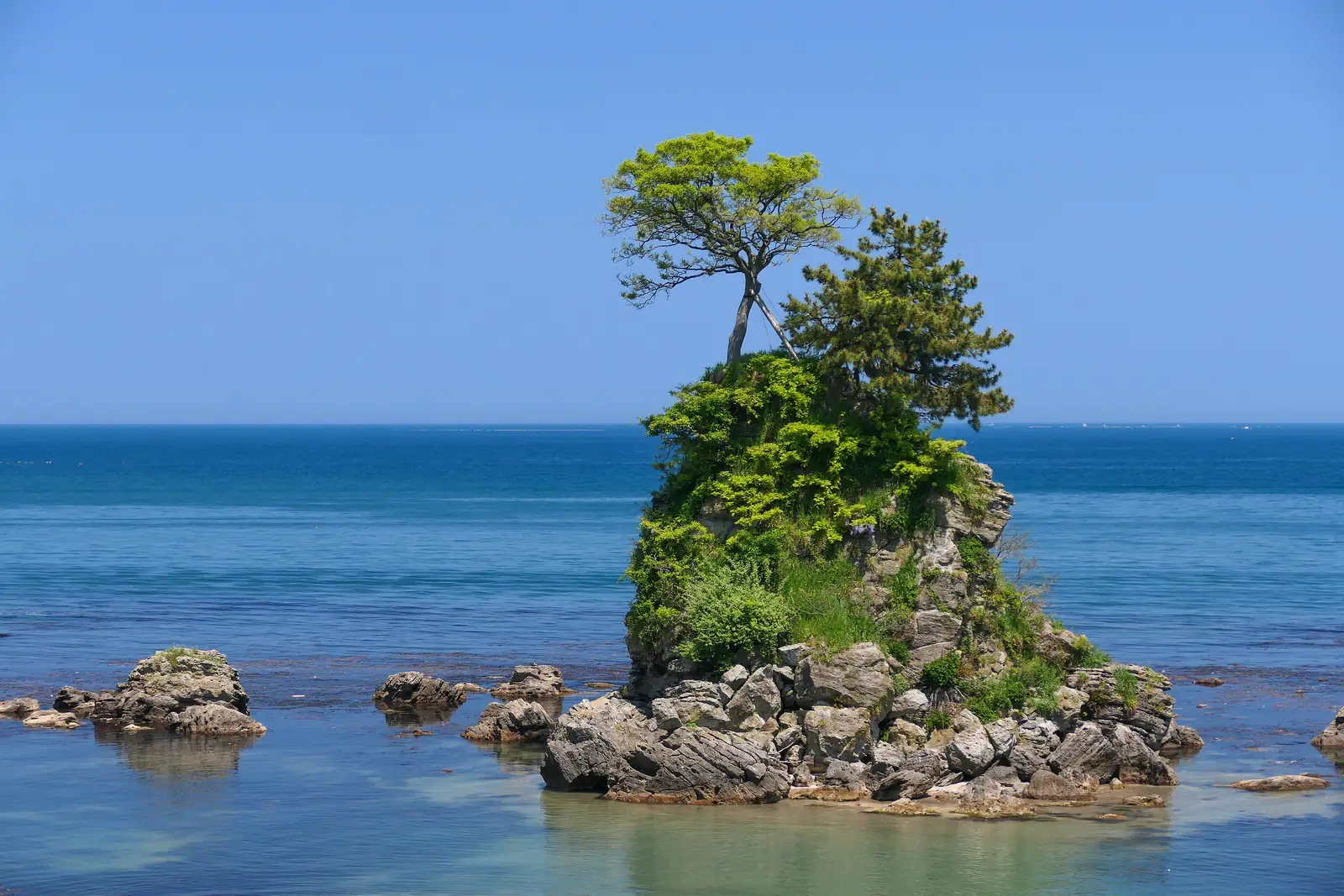
Standing on the beach at Amaharashi Coast on a still-dark winter morning, you can see something like steam climbing off the water. The phenomenon is called kearashi — sea smoke. As the day breaks, the mist takes on the colors of the sunrise, and beyond it the silhouette of Onnaiwa rock and the Tateyama mountain range across the sea rise into view. Sea, mist, and snow-covered mountains layered into a single frame: for this scene, tripods line the beach from before first light on winter mornings.
Kearashi is, at heart, fog rising off the sea. When air that has chilled hard overnight flows in over seawater that stays relatively warm even in winter, the moisture just above the surface cools into mist. The greater the gap between water and air temperature, the more readily it appears — which means the harder the morning's freeze, the better your chances. The sea looks as if it were steaming for the same reason a hot bath steams on a cold morning.
A coastline where 3,000-meter peaks rise across the water
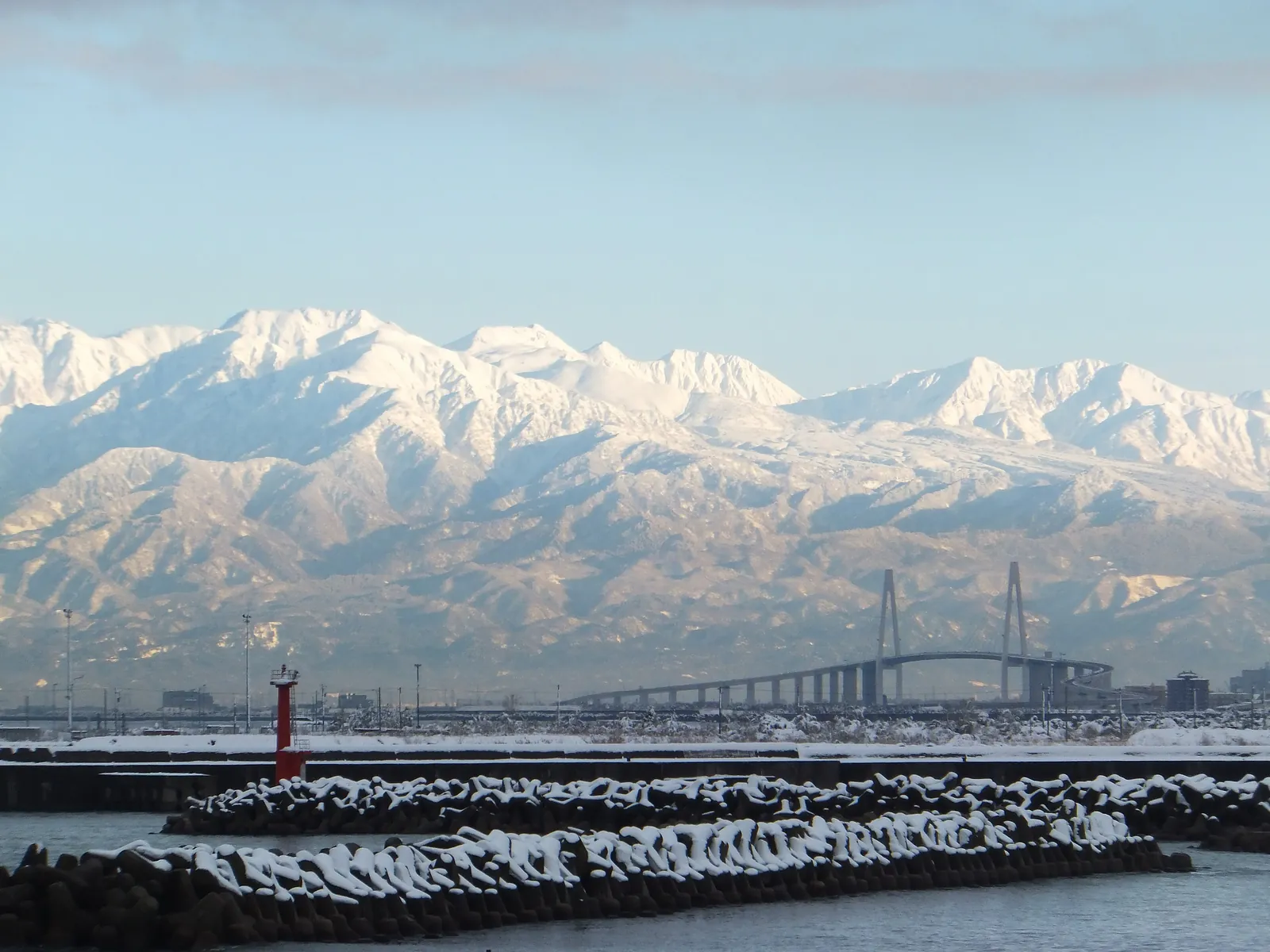
Even on days without sea smoke, the composition of this coast does not waver. Coastlines where you can look across a bay at mountains of 3,000 meters can be counted on one hand worldwide. Onnaiwa sits in the water just off the beach, and behind it the snowy ridgeline runs level across the horizon. Rock in the foreground, sea in the middle distance, high mountains beyond — that three-step depth has made this spot a fixture of paintings and photographs since long ago. A railway line runs right beside the shore, and the trains passing with the sea and mountains in view have become part of the scenery too.
The name Amaharashi comes from a legend
What survives as the origin of the name is a legend of Minamoto no Yoshitsune. Fleeing north to Oshu, Yoshitsune and his party are said to have waited out a passing shower in the shelter of the rocks on this beach, and a rock called Yoshitsune-iwa still stands here today. The coast has also long been known as a place celebrated in classical poetry. A name that means waiting for the rain to clear captures exactly how this coast is to be approached. This is a place for waiting.
Kearashi has its conditions: a morning of hard frost, gentle wind, and clear sky. On most days they do not line up, and anyone arriving at noon will find no trace that the phenomenon ever happened. You stand on the beach with numb fingers and watch the eastern sky slowly loosen out of indigo. The sea steams only for a brief window around daybreak, and it shows itself only to those who waited for the morning.