The same ticket, a different route each season
If you are researching the Tateyama Kurobe Alpine Route, the first thing to decide is not the destination but the season. There is only one line across the Tateyama mountains — from Tateyama Station in Toyama Prefecture to Ogizawa in Nagano, linking cable cars, buses, and other modes of transport — yet what you see depends entirely on when you go. Go in spring and you get a corridor of snow; in summer, alpine flowers and lingering snowfields; in autumn, foliage that arrives a step ahead of the plain below. You cover the same ground, but the experience is a different thing altogether.
Yuki no Otani, the snow corridor, exists only in the spring opening period
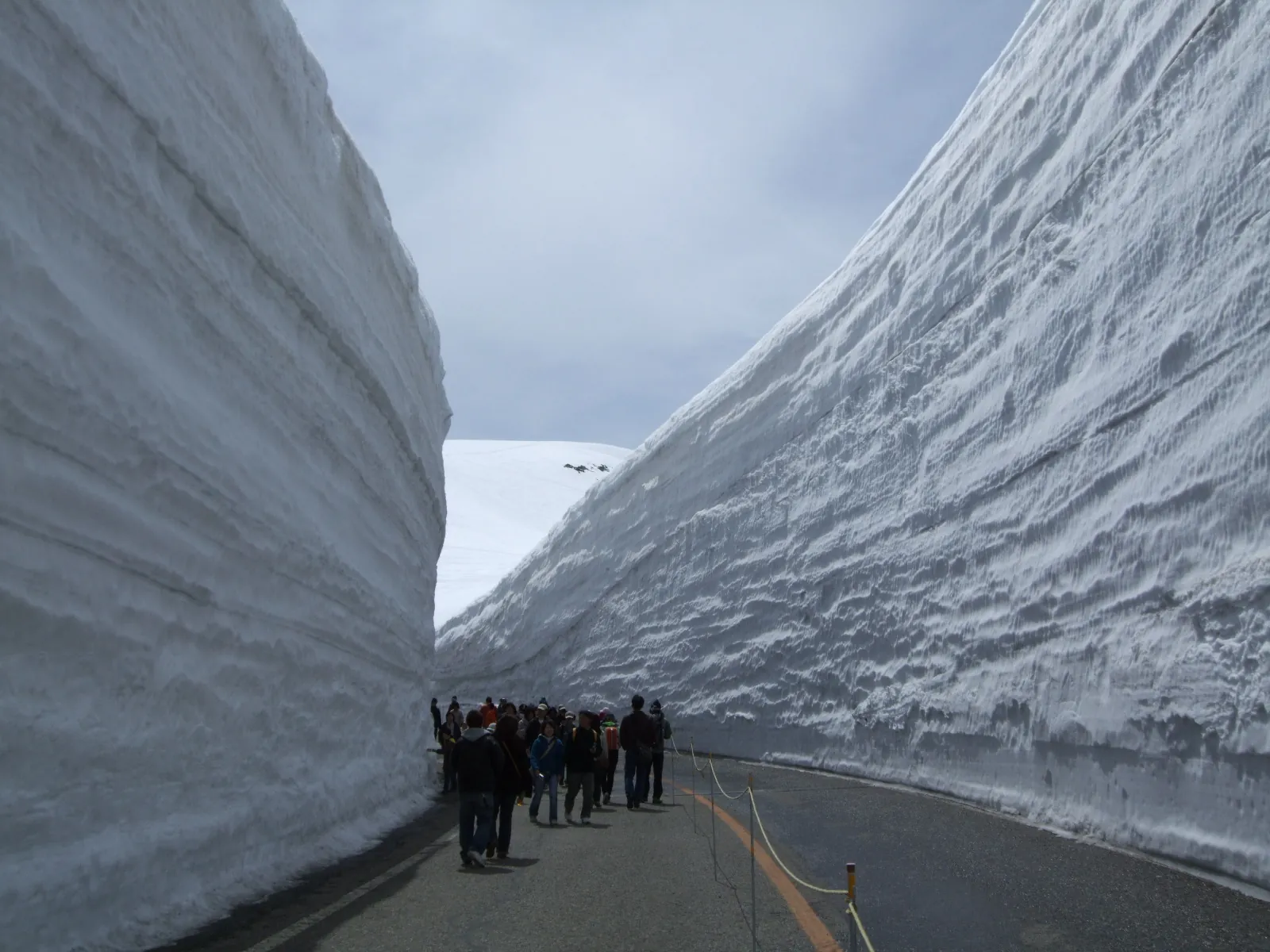
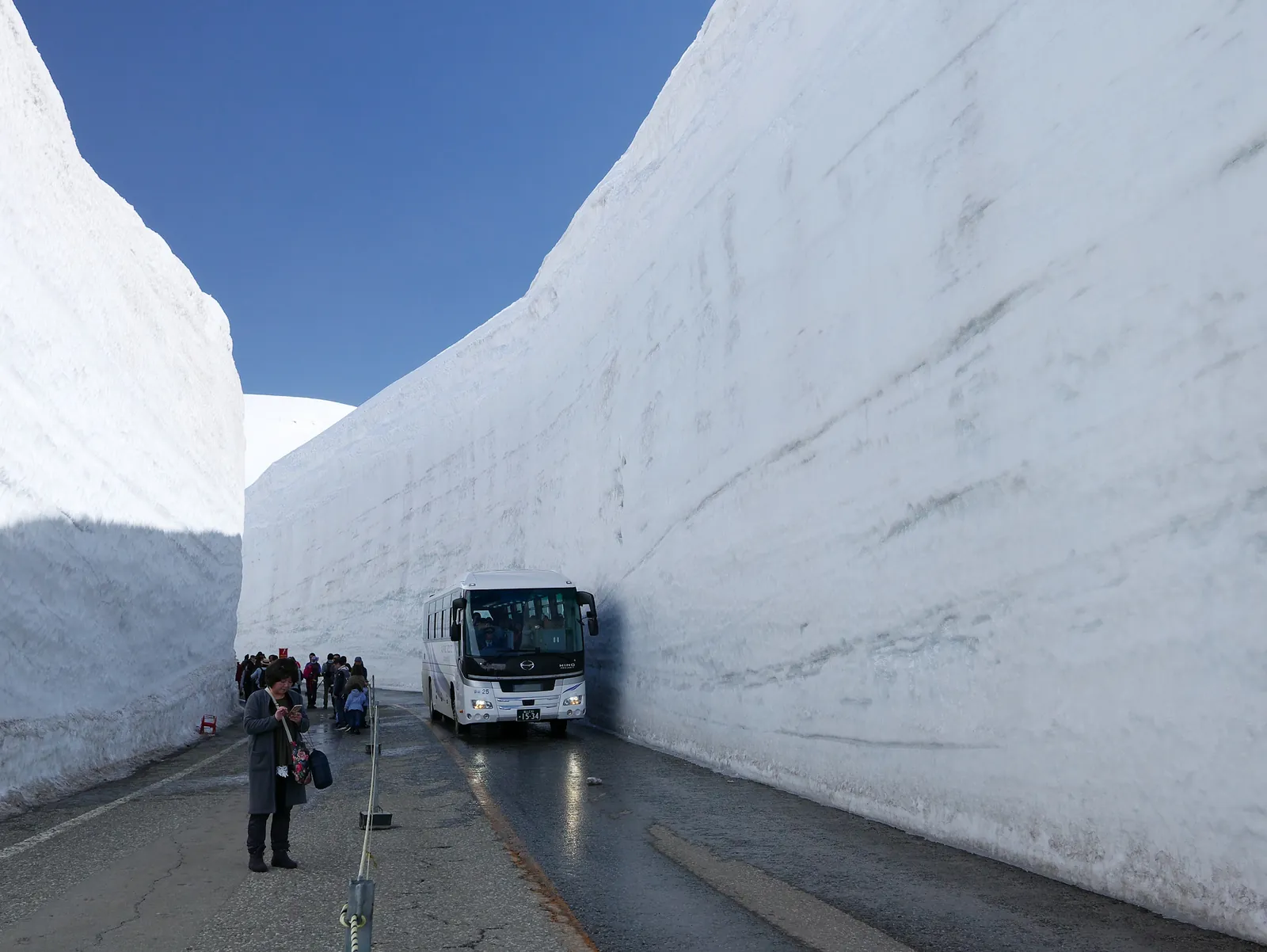
Yuki no Otani, the wall of snow that has become the route's calling card, appears only during the spring opening period. Clearing the road leaves walls of snow towering on both sides, and you can walk the valley between them. The height of the walls varies with each winter's snowfall, but this corridor — deep enough that the sky narrows to a ribbon overhead — is open only to those who choose this season. Down on the plain it may be cherry-blossom time while up on the mountain it is still deep winter; that gap is part of what you come to taste.
With every transfer, the air turns one notch colder
What holds true in every season is the pleasure of watching the scenery and the air change with the altitude. Each time you step off one vehicle, the air on your cheeks is one degree cooler. Someone who took off a jacket at the station below puts it back on at the next transfer, and closes it up at the one after that. The cable car's steep track climbs through a stand of cedars; through the bus windows the forest shifts to beech and low shrubs; and then, past the tree line, you come out into a world without trees. A landscape of nothing but rock, snow, and sky, met by the cold, thin air of the moment you step off. There are not many places in Japan where you can stand at this height without climbing on your own legs. In winter, snowfall among the heaviest in the world closes the road, and the whole route goes to sleep.
- Spring opening period — Yuki no Otani. Even when it is spring below, dress for midwinter on top
- Summer — alpine flowers and lingering snow. The sun is strong; you will want both a hat and a jacket
- Autumn — the foliage starts at the top of the mountain and runs ahead of the lowlands
- All year — mountain weather changes fast. Bring shoes you can walk in and rain gear
The knack for planning comes down to one thing: never read the mountain's calendar by the lowland's. A day at the top of the route runs on a different calendar from the seasons below.